
How Do Set Screw Shaft Collars Differ from Clamp Style Collars in Performance?
In power transmission systems, automation assemblies, and precision motion equipment, the Shaft Collar plays a critical role in positioning, spacing, and securing components along a shaft. Yet many engineers still ask: how do set screw shaft collars differ from clamp style collars in performance? The answer lies in holding strength, shaft protection, vibration resistance, torque capacity, and long-term reliability under load.
At Raydafon Technology Group Co.,Limited, we manufacture both set screw and clamp style Shaft Collar solutions for global OEM customers. Based on decades of industrial supply experience, we understand that selecting the wrong collar can result in shaft damage, slippage, premature wear, and system downtime. In this guide, we break down the real-world performance differences, compare structural design, and provide detailed technical parameters to help engineers make informed decisions.
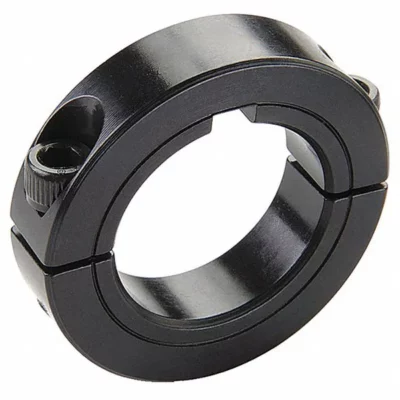
Table of Contents
1. What Structural Differences Define Set Screw and Clamp Style Collars?
2. How Do They Differ in Holding Power, Torque Capacity, and Shaft Protection?
3. Which Applications Benefit Most from Each Type?
4. Conclusion
5. FAQ
What Structural Differences Define Set Screw and Clamp Style Collars?
The core structural difference between set screw and clamp style Shaft Collar designs determines how force is transmitted to the shaft and how securely the collar holds position under load.
Set Screw Shaft Collar Structure
A set screw collar uses one or two threaded screws that tighten radially against the shaft surface. When the screw is torqued, the point presses into the shaft material, generating friction and sometimes a slight indentation.
- Single-piece solid ring design
- One or two alloy steel set screws
- Point contact locking mechanism
- Compact radial footprint
- Suitable for harder shafts
This design is simple and cost-effective. Our factory produces set screw Shaft Collar units in carbon steel, 304 stainless steel, and 316 stainless steel, depending on corrosion requirements.
Clamp Style Shaft Collar Structure
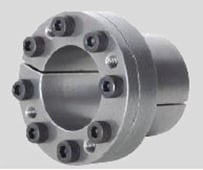
Clamp style collars use a split body design. Tightening a cap screw compresses the collar evenly around the shaft, distributing force circumferentially rather than at a single point.
- One-piece or two-piece split design
- Uniform 360 degree clamping force
- No shaft marring
- Higher torque transmission capability
- Ideal for precision positioning
At Raydafon Technology Group Co., Limited, we machine clamp style Shaft Collar products using CNC turning centers to ensure concentricity within tight tolerances. Our internal quality control ensures dimensional accuracy for high-precision assemblies.
Typical Technical Parameters
| Material | Carbon Steel C45 / Stainless Steel 304 / Stainless Steel 316 / Aluminum 6061 |
| Inner Diameter Range | 3 mm to 150 mm |
| Outer Diameter Tolerance | ISO h9 or customized |
| Surface Treatment | Black Oxide / Zinc Plating / Polished / Passivated |
| Hardness | HRC 28 to 40 depending on material |
| Screw Grade | Class 8.8 / 10.9 / Stainless A2-70 |
We design every Shaft Collar to comply with international shaft standards including DIN, ISO, and ANSI dimensions. Our production system ensures consistent bore accuracy and surface finish for smooth installation. Raydafon Technology Group Co.,Limited focuses on balancing mechanical strength and machining precision. Our engineering team provides customized bore diameters, keyway options, and double-split designs when required.
How Do They Differ in Holding Power, Torque Capacity, and Shaft Protection?
Performance differences between the two types become evident under dynamic loads, vibration, and high torque conditions.
1. Holding Power Comparison
Set screw collars rely on localized pressure. This creates strong axial resistance but depends heavily on shaft hardness. Softer shafts may deform. Clamp style collars provide uniform friction around the shaft circumference, offering superior holding force without surface damage.
| Performance Factor | Set Screw Collar | Clamp Style Collar |
| Axial Holding Force | Moderate to High | High |
| Torque Transmission | Medium | High |
| Shaft Surface Damage | Possible indentation | None |
| Vibration Resistance | Good | Excellent |
| Reusability | Limited if shaft marred | Excellent |
2. Torque Capacity
Clamp style Shaft Collar products transmit torque more efficiently because of distributed clamping pressure. This makes them ideal for servo systems, robotics, and precision automation equipment. Our factory tests torque resistance under simulated operating loads to validate performance. Raydafon Technology Group Co.,Limited applies calibrated torque tightening to ensure accurate clamp performance ratings.
3. Shaft Protection
In high-precision assemblies such as linear guides and encoder systems, shaft integrity is critical. Clamp collars prevent shaft scarring, maintaining dimensional accuracy. Set screw collars may create small dimples. In heavy-duty industrial environments, this may not be an issue. However, in precision machinery, clamp style solutions are preferred.
4. Installation Efficiency
- Set screw type is fast to install in confined spaces
- Clamp style requires slightly more radial clearance
- Two-piece clamp collars can be installed without removing other components
At Raydafon Technology Group Co.,Limited, we offer both types to meet different installation constraints and mechanical load requirements.
Which Applications Benefit Most from Each Type?
Choosing the right Shaft Collar depends on application environment, load type, and maintenance expectations.
Applications for Set Screw Collars
- Conveyor systems
- Packaging equipment
- Agricultural machinery
- Low to moderate torque systems
- Applications using hardened shafts
These systems prioritize cost efficiency and compact installation. Our factory supplies bulk production orders for industrial OEM assembly lines.
Applications for Clamp Style Collars
- Robotics and automation
- CNC machinery
- Servo motor positioning
- Medical equipment
- High vibration environments
Raydafon Technology Group Co.,Limited manufactures high-precision clamp style Shaft Collar components with superior concentricity and surface smoothness to support advanced machinery performance.
Environmental Considerations
- For corrosive environments choose stainless steel 316
- For food processing choose polished stainless steel
- For lightweight design choose aluminum
- For heavy load choose high carbon steel
We provide full material traceability and inspection reports to ensure compliance with international industry standards.
Conclusion
How do set screw shaft collars differ from clamp style collars in performance? The difference lies in force distribution, torque capacity, shaft protection, vibration resistance, and long-term reliability. Set screw collars offer compact and economical positioning solutions, while clamp style collars deliver superior holding strength and shaft safety.
Raydafon Technology Group Co.,Limited continues to supply high-quality Shaft Collar products engineered for durability, precision, and global industrial performance. Our commitment to machining accuracy and material selection ensures stable operation across demanding applications. If you are selecting a Shaft Collar for your next project, our engineering team is ready to support you with drawings, samples, and competitive quotations. Contact Raydafon Technology Group Co.,Limited today to optimize your mechanical system performance and secure reliable long-term supply.
FAQ
Q1: How Do Set Screw Shaft Collars Differ from Clamp Style Collars in Performance?
Set screw collars lock by pressing a screw into the shaft surface, creating localized holding force. Clamp style collars apply uniform circumferential pressure, offering stronger torque transmission, better vibration resistance, and no shaft damage.
Q2: Which collar type provides better torque transmission in automation systems?
Clamp style collars provide better torque transmission due to even pressure distribution around the shaft, making them ideal for servo motors and precision positioning systems.
Q3: Are set screw collars suitable for soft shafts?
Set screw collars can mark or deform soft shafts. For aluminum or unhardened shafts, clamp style collars are recommended to prevent surface damage and maintain dimensional accuracy.
Q4: Can clamp collars be reused without performance loss?
Yes. Because clamp collars do not damage the shaft surface, they can be removed and reinstalled multiple times while maintaining reliable holding performance.
Q5: How do I choose between single-piece and two-piece clamp collars?
Single-piece clamp collars are compact and strong. Two-piece collars are ideal when installation must occur without removing adjacent components. The choice depends on assembly constraints and maintenance requirements.
Related News
- Why Are Timing Pulleys Important for Precision Mechanical Applications?
- What Is a Timing Pulley and How Does It Improve Power Transmission?
- How to Conduct a Load Test on a Hydraulic Cylinder Before Full Commissioning?
- How Are Hydraulic Cylinders Driving Automation in Vertical Farming Systems?
- How to Align a Hydraulic Cylinder Mounting Bracket to Prevent Side Load Failure
- How Do Hydraulic Cylinders Compare to Pneumatic Cylinders in Industrial Systems?
Leave me a message