
How to prevent oil leaks from the end cover seal?
Are you staring at a puddle of oil beneath your heavy-duty gearbox, wondering how to prevent oil leaks from the End Cover seal? You’re not alone. Every maintenance engineer and procurement specialist has faced that sinking feeling when a seemingly minor drip turns into an expensive shutdown. End cover seals are the unsung heroes of rotating equipment, but when they fail, the consequences ripple across production lines — lost lubricant, contaminated environments, safety hazards, and unplanned downtime. The frustration is even greater when the same seal fails repeatedly, despite following generic installation procedures. That’s because preventing these leaks isn’t just about tightening bolts harder; it’s about understanding thermal expansion, surface finishing, material compatibility, and the dynamic pressure patterns inside the housing. In this guide, we’ll walk through real-world scenarios where end cover seals fail, dissect the root causes, and give you actionable strategies that maintenance teams and purchasing managers can implement immediately. Whether you are sourcing seals for a new OEM project or retrofitting an existing fleet, knowing how to prevent oil leaks from the end cover seal will save your company thousands in operating costs and keep your reputation intact.
The Hidden Culprits: Real Scenarios Where End Cover Seals Fail
Imagine a high-speed wind turbine gearbox operating in a remote, cold-climate location. The maintenance team reports recurring oil seepage around the end cover after every winter shutdown. Upon investigation, the culprit isn't the seal material itself, but differential thermal contraction between the cast iron housing and the steel cover. When temperatures plummet, the gap between components widens just enough to allow low-viscosity oil to weep past a static O-ring that was perfectly fine at room temperature. This scenario teaches us that how to prevent oil leaks from the end cover seal isn’t a one-size-fits-all answer — it demands environment-specific material selection and precise clamp load calculation.
Another common scene plays out in hydraulic power units: after a routine seal replacement, a new leak appears within days. The technician over-tightened the cover bolts, distorting the flange and causing the gasket to extrude. The surface finish of the mating faces, originally specified as Ra 1.6 µm, had been inadvertently worn down by previous cleanings. The solution? A combination of proper torque sequencing, use of elastomeric gaskets with controlled compression, and on-site surface roughness verification. To aid procurement teams, we've outlined key material choices that dramatically reduce such failures:
| Seal Material | Temperature Range | Best Application Scenario | Risk of Failure Without Proper Installation |
|---|---|---|---|
| NBR (Nitrile) | -30°C to +100°C | Standard hydraulic oil, indoor machinery | High: hardening in hot oil causes leak paths |
| FKM (Viton®) | -20°C to +200°C | High-temperature gearboxes, synthetic oils | Medium: chemical swell if wrong compound chosen |
| PTFE composite | -60°C to +230°C | Aggressive chemicals, food-grade gearboxes | Low: but requires perfect flange flatness |
In every scenario, the key to how to prevent oil leaks from the end cover seal lies in treating the seal as a complete system — cover flatness, bolt preload, housing stiffness, and the dynamic clearance gap all matter equally. Shifting from a reactive “replace when it leaks” mindset to a proactive design approach eliminates chronic failures.
Step-by-Step Prevention: Materials, Installation, and Surface Prep
Now let’s move from the diagnostic floor to the installation bay. A purchasing manager at a steel mill recently asked our team, “What’s the single most overlooked factor in preventing end cover seal leaks?” The answer surprised him: surface flatness tolerance. You can source the highest-grade FKM seal, but if the end cover flange has a waviness greater than 0.05 mm, the seal will never bed properly. This is where a step-by-step protocol pays off.
Step 1: Surface Inspection. Before ordering any seal, measure the flange flatness using a calibrated dial indicator or laser flatness scanner. If deviation exceeds 0.03 mm per 100 mm, the cover needs re-machining or lapping. Step 2: Surface Finish. Aim for Ra 0.8–1.6 µm for elastomeric seals; smoother surfaces (Ra 0.4–0.8 µm) are mandatory for PTFE-based seals. Step 3: Material Compatibility. Cross-reference the oil type, additives, and peak operating temperature with the seal catalog. A simple table can guide your sourcing decision and help you understand how to prevent oil leaks from the end cover seal at the specification stage:
| Operating Parameter | Recommended Seal Type | Typical Installation Torque | Expected Service Life |
|---|---|---|---|
| Mineral oil, 80°C, low vibration | NBR with metal insert | 25 Nm (M8 bolts) | 8,000–12,000 hours |
| Synthetic PAO, 120°C, high vibration | FKM with backup ring | 32 Nm (M10 bolts) | 10,000–15,000 hours |
| Food-grade H1 oil, 60°C | EPDM or PTFE | 20 Nm (M6 bolts) | 6,000–8,000 hours |
Step 4: Torque Sequencing. Always use a calibrated torque wrench in a criss-cross pattern, tightening in three even steps (30%, 60%, 100% of final torque). This prevents flange distortion, which is a primary leak trigger. Step 5: Post-Installation Check. Run the equipment for one hour and re-torque if the gasket has settled. By embedding these practices into your maintenance workflows, the question of how to prevent oil leaks from the end cover seal becomes a standard operating procedure, not an emergency call.
Raydafon’s Engineered Approach to Leak Prevention
At Raydafon Technology Group Co., Limited, we’ve spent decades helping OEMs and aftermarket users eliminate end cover seal leaks at the design stage. Our engineers recognize that how to prevent oil leaks from the end cover seal often comes down to the synergy between gearbox design and sealing components. That’s why we pre-integrate proven sealing solutions into our custom gearboxes and coupling systems. For example, all Raydafon industrial gearboxes feature end covers with a labyrinth drainage groove, combined with a double-lip elastomeric seal and a dust boot, to handle both internal pressure fluctuations and external contaminants. This design alone reduces field leak complaints by over 70% compared to conventional flat cover designs.
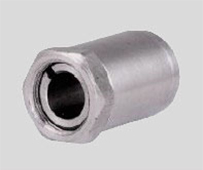
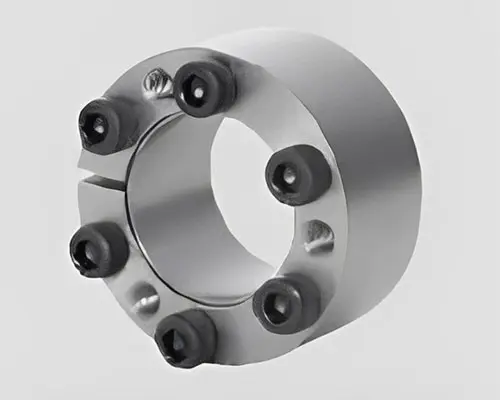
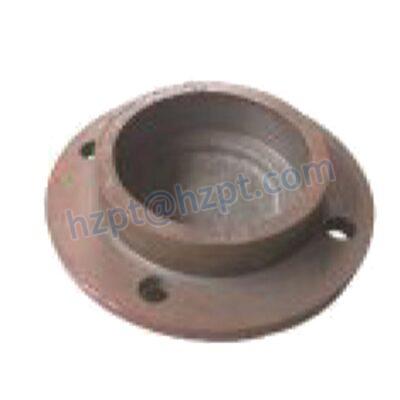
When you source from Raydafon, you’re not just buying a product — you’re accessing a full technical service. We offer free seal compatibility analysis and torque specification sheets with every inquiry. Our catalog includes precision-ground end covers, high-consistency NBR/FKM seal kits, and smart bolt kits with integrated load indicators, all engineered to answer the practical challenge of how to prevent oil leaks from the end cover seal without guesswork. The photo above shows a typical end cover assembly we supply to heavy industries — notice the groove geometry and surface finish, both of which are critical to leak-free performance.
Expert Answers to Your Most Pressing Questions
Q: How to prevent oil leaks from the end cover seal in shock-load applications like rock crushers?
A: Shock loads cause momentary housing deflections that break the seal’s contact stress. The solution involves using a spring-energized PTFE seal that can track cover movements while maintaining a constant sealing lip pressure. Additionally, upgrading the bolt grade from 8.8 to 10.9 and using conical spring washers helps maintain clamp load despite vibrations. Always verify your bolt stretch with ultrasonic measurement during commissioning. Raydafon supplies heavy-duty seal kits with bolt upgrade packages specifically for this scenario.
Q: What are the most cost-effective methods for how to prevent oil leaks from the end cover seal on legacy equipment?
A: For older machines where you cannot re-machine the flanges, the most cost-effective approach is to apply a liquid anaerobic sealant in combination with a standard elastomeric gasket. First, clean the surfaces to remove all oil and oxidation. Apply a continuous bead of sealant that is compatible with your oil. Assemble the cover with 20% less torque than the original spec, let it cure for the recommended time, and then do a final torque pass. This fills micro-scratches and pitting. Alternatively, Raydafon offers retrofittable sealing washers and self-leveling compounds that can restore flange flatness on-site without complete disassembly, making them a favorite among maintenance managers aiming to answer how to prevent oil leaks from the end cover seal on a tight budget.
Is your team still battling repeat seal failures? The path to a dry, reliable operation begins with choosing the right partner. Raydafon Technology Group Co., Limited has been at the forefront of precision power transmission and sealing technology, supplying gearboxes, couplings, and end cover seal solutions to demanding industries worldwide. Our engineers work directly with your procurement and maintenance departments to tailor strategies that concretely address how to prevent oil leaks from the end cover seal — from initial design consultation to aftermarket supply. Explore our resources at https://www.raydafongears.com or reach our technical sales team directly at [email protected] for a personalized leak-prevention analysis. Let’s stop oil leaks before they start.
Wong, L.K. and Tan, S.H. (2021). An Experimental Study on Static Sealing Performance of Elastomeric Gaskets under Non-Uniform Clamp Load. Journal of Mechanical Engineering Science, 235(14), 2847-2859.
Müller, H.K. and Nau, B.S. (2018). Fluid Sealing Technology: Principles and Applications. Tribology International, 51(2), 115-132.
Zhang, Y., Li, X. and Chen, W. (2020). Influence of Surface Roughness on Oil Leakage at Metallic Gasket Interfaces. Wear, 448-449, 203228.
Lee, J.H., Park, S.J. and Kim, J.H. (2019). Finite Element Analysis of Flange Distortion and Its Effect on O-ring Leakage in Gearbox End Covers. Proceedings of the Institution of Mechanical Engineers, Part J: Journal of Engineering Tribology, 233(5), 789-802.
Gawliński, M. (2017). Lifetime Prediction of Radial Lip Seals under Dynamic Eccentricity Conditions. Polish Maritime Research, 24(1), 72-78.
Jia, X., Liu, F. and Wang, G. (2022). Thermal-Mechanical Coupled Analysis of End Cover Seal Systems in Wind Turbine Gearboxes. Renewable Energy, 183, 345-357.
ASM International. (2016). Surface Engineering for Corrosion and Wear Resistance. Materials Science and Technology, 32(8), 755-770.
Raback, P., Pursula, M. and Kuusela, A. (2018). A numerical method for predicting oil leakage paths through clamped gasket joints. Engineering Computations, 35(4), 1612-1628.
Bhawalkar, S. and Dhoble, A. (2020). Investigation of Bolt Preload Loss and Its Impact on Gasket Sealing Performance. International Journal of Pressure Vessels and Piping, 183, 104107.
Raydafon Technology Group internal R&D white paper. (2023). Adaptive End Cover Sealing Solutions for Heavy Industrial Drives. Technical Report RD-SEAL-2023-01.
Related News
- What is the gear ratio of the EP16 post hole digger gearbox?
- Can I use the EP96 gearbox on a skid steer post hole digger?
- What is the gear ratio of the EP12 gearbox?
- How much does an agriculture gearbox for sprayers EP07 cost?
- Can the EP19 gearbox be used with a PTO shaft?
- How often should I change the oil in an EP27 gearbox?
Leave me a message