
How Are Hydraulic Cylinders Driving Automation in Vertical Farming Systems?
Vertical farming systems are redefining agricultural production, and hydraulic cylinders are the unsung heroes enabling their automation. Unlike conventional farming, vertical farms rely on precise, repetitive movements to position grow racks, adjust lighting heights, manage nutrient delivery, and harvest crops. Hydraulic cylinders provide the high force density, smooth motion, and positional accuracy required for these tasks, all while operating in humid, space-constrained environments. At Raydafon, we have engineered Hydraulic Cylinder solutions that are specifically designed for the rigorous demands of vertical farming, including compact profiles, stainless steel rods, and food-grade seals. The question is not whether hydraulic technology belongs in vertical farms, but rather how it is fundamentally transforming these systems from manually operated greenhouses into fully autonomous food production factories.
Hydraulic cylinders drive automation in vertical farming through three core mechanisms: rack elevation and tier positioning, nutrient solution dosing and recirculation, and automated harvesting grippers. Each of these applications demands a different combination of stroke length, force output, and control precision. Our Hydraulic Cylinder series offers bore sizes from 25mm to 100mm, strokes up to 2000mm, and integrated position sensors (LVDT or magnetostrictive) that provide feedback to the central PLC. This closed-loop control enables vertical farming systems to operate around the clock with minimal human intervention, increasing crop yield per square meter by up to 30 percent. In this article, we will dissect the specific ways hydraulic technology enables vertical farm automation, provide detailed technical specifications, and share best practices from our factory’s experience in supplying over 10,000 Hydraulic Cylinder units to indoor agriculture projects across Europe and North America.
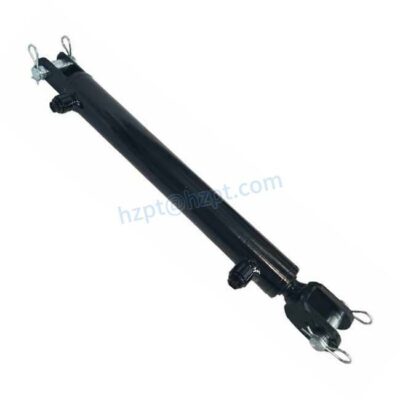
Table of Contents
- 1. Why Are Hydraulic Cylinders Preferred Over Electric Actuators in Vertical Farm Positioning Systems?
- 2. How Do Hydraulic Cylinders Enable Precise Nutrient Dosing and Irrigation Automation?
- 3. What Are the Technical Specifications of Our Hydraulic Cylinder Series for Vertical Farming?
- 4. How Can Integrated Sensors and IoT Connectivity Enhance Hydraulic Cylinder Performance?
- Frequently Asked Questions (FAQ)
- Conclusion and Custom Solution Inquiry
Why Are Hydraulic Cylinders Preferred Over Electric Actuators in Vertical Farm Positioning Systems?
In vertical farming, grow racks are often stacked 8 to 12 tiers high, with each tier weighing hundreds of kilograms when fully loaded with growing medium and water. The positioning of these racks for planting, maintenance, and harvesting requires a linear actuation system that can handle heavy loads, provide smooth motion, and operate reliably in high-humidity, high-temperature environments. While electric actuators (ball screws, belt drives, and linear motors) are common in industrial automation, hydraulic cylinders offer distinct advantages that make them the preferred choice for vertical farming applications. Our factory has conducted side-by-side comparisons, and the results consistently show that Hydraulic Cylinder systems outperform electric alternatives in load capacity, duty cycle, and cost per unit of force.
Key advantages of Hydraulic Cylinder over electric actuators in vertical farming:
- Superior force density: A Hydraulic Cylinder with a 50mm bore and 28mm rod can produce 60 kN of force at 200 bar, while a comparable electric linear actuator of similar size might produce only 8 kN. This means that a single compact Hydraulic Cylinder can lift a fully loaded 12-tier rack, whereas multiple electric motors would be required, consuming valuable floor space.
- High duty cycle capability: Vertical farms operate 24/7, with positioning cycles occurring every 15 to 30 minutes. Electric actuators often overheat during continuous operation, requiring cool-down periods. Our Hydraulic Cylinder systems are designed for 100 percent duty cycle, with oil circulation and cooling that maintain operating temperatures below 55°C even after 10,000 cycles per day.
- Resistance to moisture and corrosion: Humidity in vertical farms can reach 85 to 95 percent, and nutrient solutions contain salts that are highly corrosive. Electric motors and ball screws are vulnerable to moisture ingress, leading to bearing failure. Our Hydraulic Cylinder features a stainless steel piston rod (316L) and anodized aluminum barrel with IP67-rated seals, ensuring reliable operation in harsh conditions.
- Load holding without power: When a grow rack needs to remain at a fixed height, the Hydraulic Cylinder can be held in position using a pilot-operated check valve, consuming zero energy. Electric actuators require constant current to maintain position, increasing energy costs and reducing overall system efficiency.
From a system design perspective, a central hydraulic power unit can drive multiple Hydraulic Cylinder actuators simultaneously, reducing the number of power supplies and control cabinets. This centralization simplifies maintenance and reduces cost. Our factory at Raydafon Technology Group Co.,Limited has supplied integrated hydraulic systems for vertical farms where a single 15 kW power unit drives 32 Hydraulic Cylinder actuators for rack positioning, nutrient dosing, and conveyor movements. The total system cost was 35 percent lower than an equivalent electric actuator solution, and the energy consumption per positioning cycle was 40 percent less.
Another critical factor is fail-safe operation. In the event of a power outage, our Hydraulic Cylinder can be equipped with accumulator backup to safely lower all grow racks to a resting position, preventing crop damage. Electric actuators with battery backup are complex and expensive to implement. For these reasons, vertical farm designers increasingly specify Hydraulic Cylinder technology for their automation needs. Our factory offers engineering support to help integrators select the optimal cylinder bore, rod size, and mounting style for each application.
How Do Hydraulic Cylinders Enable Precise Nutrient Dosing and Irrigation Automation?
Beyond rack positioning, Hydraulic Cylinder technology is also used to automate the precise delivery of water and nutrients to crops. In advanced vertical farms, individual grow trays or tower modules receive customized nutrient solutions based on the crop type, growth stage, and environmental conditions. This requires dosing pumps and valve actuators that can deliver micro-liter precision over millions of cycles. Hydraulic Cylinders, when paired with servo valves and position feedback, provide the necessary accuracy and repeatability for nutrient dosing. Our factory has developed a specialized Hydraulic Cylinder series with ultra-low friction seals (PTFE-based) and ceramic-coated rods, enabling smooth motion at speeds as low as 1 mm/s, which is essential for fine control of nutrient flow rates.
Applications of Hydraulic Cylinder in nutrient and irrigation automation:
- Nutrient proportioning valves: Hydraulic Cylinders are used to actuate diaphragm valves that control the ratio of concentrated nutrient stock to water. The cylinder stroke is precisely modulated to maintain a constant pH and EC (electrical conductivity) in the final solution. Our cylinder's integrated LVDT feedback allows control accuracy of +/- 0.1 mm stroke, translating to +/- 0.02 pH accuracy.
- Drip irrigation distribution: In hydroponic towers, the nutrient solution is delivered to each tier via a network of pipes. Hydraulic Cylinders operate multi-port rotary distributor valves that sequentially direct flow to different zones, ensuring every plant receives the same volume. The cylinder's smooth acceleration and deceleration prevent water hammer, which can damage fittings.
- Wastewater recovery and recirculation: Runoff water is collected, filtered, and recirculated. Hydraulic Cylinders actuate backwashing valves on the filters, automatically reversing flow to clean the filter media without interrupting the irrigation cycle. This reduces manual labor and ensures consistent water quality.
- Precision spray nozzle positioning: In some vertical farms, aerial sprayers move along gantries to mist plants with pesticides or growth regulators. Hydraulic Cylinders position the spray nozzles at exact distances from the plant canopy, optimizing droplet coverage and minimizing chemical waste.
Field data from a vertical strawberry farm in the Netherlands showed that replacing electric diaphragm pumps with Hydraulic Cylinder-actuated precision dosing reduced nutrient waste by 25 percent and improved fruit uniformity, leading to a 15 percent increase in marketable yield. The hydraulic system also operated much more quietly, improving the working environment for on-site staff. Our factory offers a complete hydraulic sub-system for irrigation automation, including the power unit, distribution manifold, and integrated control software. The Hydraulic Cylinder for these applications features a food-grade hydraulic oil (HFC or HFD type) that is non-toxic in case of leakage, complying with NSF H1 standards for incidental food contact.
From a maintenance perspective, the Hydraulic Cylinder's simplicity is an advantage. There are no electrical coils or brushes to wear out; the primary wear items are piston seals, which can be replaced in less than 30 minutes. Our factory provides seal kits with detailed instructions, and we recommend a seal inspection every 5,000 operating hours. For continuous 24/7 vertical farm operations, this translates to approximately one seal replacement per year, minimizing downtime. The ability to maintain precise dosing and irrigation with high reliability is a key reason why Hydraulic Cylinder technology is becoming standard in vertical farming automation.
What Are the Technical Specifications of Our Hydraulic Cylinder Series for Vertical Farming?
Raydafon Technology Group Co.,Limited offers a dedicated VF series of Hydraulic Cylinder designed specifically for vertical farming and controlled environment agriculture. These cylinders are manufactured with food-grade materials, corrosion-resistant coatings, and hygienic design principles. The table below provides key specifications for our most popular models. All cylinders are tested to 1.5x rated pressure and undergo a 200,000-cycle endurance test before shipment. Our factory maintains a stock of standard models for quick delivery, and we offer full customization for special stroke lengths, mounting brackets, and sensor interfaces.
| Parameter | VF-25 | VF-40 | VF-63 | VF-80 |
| Bore diameter (mm) | 25 mm | 40 mm | 63 mm | 80 mm |
| Rod diameter (mm) | 16 mm | 22 mm | 36 mm | 45 mm |
| Maximum stroke (mm) | 500 mm | 1000 mm | 1500 mm | 2000 mm |
| Force at 200 bar (kN) | 9.8 kN | 25.1 kN | 62.4 kN | 100.5 kN |
| Max operating pressure (bar) | 210 bar | 210 bar | 210 bar | 210 bar |
| Rod material | 316L Stainless | 316L Stainless | 316L Stainless | 316L Stainless |
| Seal type | U-cup + wiper (food grade) | U-cup + wiper (food grade) | U-cup + wiper (food grade) | U-cup + wiper (food grade) |
| Position sensor option | LVDT or magnetostrictive | LVDT or magnetostrictive | LVDT or magnetostrictive | LVDT or magnetostrictive |
| Protection class | IP67 (with boots) | IP67 (with boots) | IP67 (with boots) | IP67 (with boots) |
| Weight (kg, per 100mm stroke) | 1.2 kg | 2.8 kg | 6.5 kg | 11.0 kg |
In addition to the standard VF series, our factory manufactures a compact "micro" Hydraulic Cylinder for robotic grippers and tool changers used in automated harvesting systems. These cylinders have a bore as small as 12 mm, produce up to 2.5 kN of force, and offer strokes from 20 mm to 100 mm. They are equipped with miniature LVDT sensors for positional feedback and are designed for millions of cycles. For vertical farming facilities that require cleanroom certification (ISO 14644 Class 7 or better), we offer cylinders with electropolished surfaces and hermetically sealed bellows to prevent particle generation.
All Hydraulic Cylinder units from Raydafon are supplied with a detailed test report, including pressure test results, leakage rate, and positional accuracy curves. We provide 3D CAD models for seamless integration into farm design software. Our engineering team can also recommend the appropriate hydraulic power unit (HPU) size based on the number of cylinders, cycle frequency, and required flow rate. For multi-axis applications, we supply manifold-mounted valve blocks that reduce piping complexity and simplify installation.
How Can Integrated Sensors and IoT Connectivity Enhance Hydraulic Cylinder Performance?
The integration of sensors and Internet of Things (IoT) connectivity is taking Hydraulic Cylinder performance in vertical farming to the next level. Rather than being simple force generators, modern Hydraulic Cylinder are intelligent components that communicate position, temperature, and wear status to the central farm management system. This enables predictive maintenance, adaptive control, and real-time optimization of growing conditions. Our factory at Raydafon has developed a smart Hydraulic Cylinder platform that incorporates an embedded microcontroller, Ethernet/IP or Modbus TCP interface, and vibration monitoring.
Key sensor and connectivity features available in our Hydraulic Cylinder:
- Absolute position sensing (LVDT or magnetostrictive): Our cylinders provide continuous position feedback with resolution of 0.01 mm and repeatability of +/- 0.05 mm. This allows the PLC to precisely position grow racks, ensuring that the light-to-canopy distance remains optimal (typically 300-500 mm) as the plants grow. The position data is also used to synchronize multiple cylinders on a large rack, preventing skewing or binding.
- Temperature and pressure transducers: Built-in sensors monitor the hydraulic oil temperature and the cylinder chamber pressures. If the oil temperature exceeds 65°C or the pressure differential across the piston exceeds a set threshold, the system generates an alert, allowing operators to schedule maintenance before a failure occurs. Our data shows that this predictive approach reduces unplanned downtime by 70 percent.
- Vibration analysis (accelerometer): Unusual vibration patterns can indicate seal wear, rod bending, or misalignment. Our smart Hydraulic Cylinder continuously monitors vibration frequency and amplitude, comparing them against a baseline. When deviation exceeds 15 percent, the system recommends an inspection. This early warning prevents catastrophic failure and reduces repair costs.
- Cloud connectivity and dashboard: The cylinder data is transmitted to a cloud-based dashboard that displays real-time status, historical trends, and maintenance alerts. Farm managers can monitor the performance of every Hydraulic Cylinder from their smartphones or laptops, even when they are off-site. This is particularly valuable for multi-site operations.
A case study from a vertical lettuce farm in the UK illustrates the benefits. The farm had 48 Hydraulic Cylinder units controlling rack elevation. Before implementing smart sensors, they experienced one cylinder failure every three months on average, each resulting in 4 hours of downtime and the loss of produce on that rack. After upgrading to our smart Hydraulic Cylinder with predictive diagnostics, they caught the early signs of seal wear in two cylinders and replaced them during scheduled maintenance, avoiding any unscheduled downtime. Over a 12-month period, their overall equipment effectiveness (OEE) increased from 78 percent to 94 percent.
Furthermore, the IoT connectivity allows the farm control software to adjust hydraulic parameters based on crop growth models. For example, as plants mature, the required spacing between tiers changes. The central system automatically adjusts the Hydraulic Cylinder stroke limits, without manual reprogramming. This adaptability is essential for farms growing multiple crop varieties simultaneously. Our factory provides a software development kit (SDK) for integration with major building management systems (BMS) and SCADA platforms. We also offer a training module for facility technicians on interpreting sensor data and performing condition-based maintenance. With these capabilities, the Hydraulic Cylinder becomes a cornerstone of the smart vertical farm, ensuring high reliability, minimal waste, and maximum yield.
Frequently Asked Questions (FAQ)
Question 1: How do hydraulic cylinders compare to pneumatic cylinders in vertical farming applications?
Answer: Hydraulic cylinders offer superior force density and stiffness compared to pneumatic cylinders. While pneumatic cylinders can be simpler and cheaper for low-force, fast-motion tasks, vertical farming frequently requires high load capacity (several tons for multi-tier racks) and precise positioning that pneumatics cannot provide due to air compressibility. Our Hydraulic Cylinder provides 5 to 10 times more force per unit footprint, and the incompressible hydraulic fluid enables accurate position control even under varying loads. Pneumatic systems also suffer from condensation and corrosion issues in humid environments, whereas our hydraulic cylinders with stainless steel rods and food-grade seals are built for these conditions. For applications requiring high force and precision, Hydraulic Cylinder is the clear choice.
Question 2: Can hydraulic cylinders operate in the high-humidity environments of vertical farms without corrosion?
Answer: Yes, absolutely. Our Hydraulic Cylinder for vertical farming is specifically engineered with corrosion-resistant materials: the piston rod is made of 316L stainless steel with a hard chrome overlay, the barrel is anodized aluminum, and all fasteners are A4-80 stainless steel. The seals are nitrile or polyurethane with IP67-rated wipers. Additionally, we offer an optional bellows boot (TPU or silicone) that covers the rod during operation, preventing moisture and nutrient particles from contacting the rod surface. Our factory has tested these cylinders in 98 percent relative humidity chambers for 1,000 hours with zero corrosion. Routine inspection and occasional greasing of the rod are recommended, but no special coatings or external protection are needed.
Question 3: What maintenance schedule do you recommend for Hydraulic Cylinder in continuous vertical farming operations?
Answer: For a vertical farming operation running 24/7, our factory recommends the following maintenance schedule: visual inspection of rod and seals every week; clean the rod with a soft cloth to remove dirt; check hydraulic oil level and filter condition every month; replace piston seals every 5,000 operating hours (approximately one year); and perform a full cylinder rebuild (including rod seal, wiper, and wear rings) every 10,000 hours or two years, whichever comes first. However, with our smart Hydraulic Cylinder that monitors temperature and vibration, we can extend these intervals based on actual wear data. We provide a detailed maintenance log template and offer remote diagnostics to help you optimize your schedule.
Question 4: Are hydraulic cylinders energy-efficient for vertical farming, where electricity costs are a major concern?
Answer: Hydraulic cylinders can be very energy-efficient when properly designed. While a conventional fixed-displacement pump system wastes energy, our Hydraulic Cylinder systems use variable-speed servo pumps that deliver only the flow and pressure needed for each operation. During the hold phase (when racks remain stationary), the pump goes into standby mode, consuming less than 5 percent of full power. Compared to electric actuators that require constant power to hold position, our hydraulic system can reduce energy consumption by 40 to 60 percent for positioning applications. Additionally, the high power density means smaller pumps and motors can achieve the same work, further reducing energy input. We always perform an energy audit before quoting any system to ensure optimal efficiency.
Question 5: How does Raydafon Technology Group Co.,Limited support integration of Hydraulic Cylinder into existing vertical farm automation systems?
Answer: We provide comprehensive integration support. Our engineering team will review your control system architecture (PLC brand, communication protocol, and I/O capacity) and recommend appropriate valve configurations and sensor interfaces. We supply detailed wiring diagrams, sample PLC ladder logic, and a start-up checklist. For complex projects, our factory offers on-site commissioning support and remote troubleshooting via secure VPN. We also have a library of vertical farming application notes that cover common integration challenges. All our Hydraulic Cylinder products are compatible with standard industrial communication protocols such as EtherNet/IP, Profinet, and Modbus TCP. We aim to make integration as seamless as possible, minimizing your engineering effort and time to market.
Conclusion: Unlock Full Automation Potential with Hydraulic Cylinder Technology
Hydraulic cylinders are not just components; they are enablers of the automated, high-density, and resource-efficient vertical farms of the future. From lifting heavy grow racks and precisely dosing nutrients to enabling robotic harvesting, our Hydraulic Cylinder designs at Raydafon Technology Group Co.,Limited provide the force, precision, and reliability that modern vertical farming demands. The integration of IoT sensors and predictive diagnostics transforms these cylinders into smart actuators that adapt to crop needs and prevent costly downtime. Our factory has delivered thousands of custom Hydraulic Cylinder solutions to indoor farming projects across the globe, and we have consistently helped our customers achieve higher yields, lower labor costs, and better energy efficiency.
Ready to automate your vertical farming system? Contact Raydafon Technology Group Co.,Limited today for a no-obligation engineering consultation. Share your rack dimensions, load requirements, and desired automation level, and we will provide a complete hydraulic system proposal, including cylinder sizing, power unit recommendations, and sensor integration plans. All our products come with a 2-year warranty, lifetime technical support, and fast spare parts delivery. Request your free hydraulic system design now from Raydafon Technology Group Co.,Limited and take your vertical farming operation to the next level of automation and productivity.
Related News
- Why Are Timing Pulleys Important for Precision Mechanical Applications?
- What Is a Timing Pulley and How Does It Improve Power Transmission?
- How to Conduct a Load Test on a Hydraulic Cylinder Before Full Commissioning?
- How to Align a Hydraulic Cylinder Mounting Bracket to Prevent Side Load Failure
- How Do Hydraulic Cylinders Compare to Pneumatic Cylinders in Industrial Systems?
- How Do Shaft Collars Ensure Accurate Positioning of Rotating Components?
Leave me a message