
What Is a Timing Pulley and How Does It Improve Power Transmission?
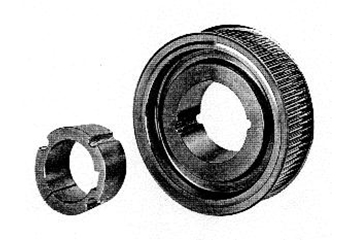
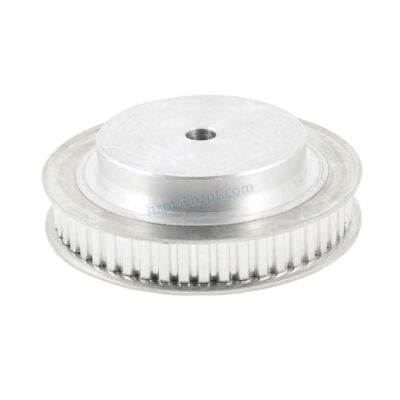
A timing pulley, also known as a synchronous pulley or toothed pulley, is a precision-engineered mechanical component designed to transmit rotational power and motion through a timing belt with zero slip. Unlike traditional V-belts or flat belts that rely on friction, a timing pulley engages with the teeth of a timing belt, creating a positive mechanical interlock that ensures exact synchronization between the driving shaft and the driven shaft. This fundamental difference makes the timing pulley the preferred choice for applications where precise positioning, constant speed ratios, and minimal backlash are critical. At Raydafon Technology Group Co.,Limited, our factory has been manufacturing high-grade timing pulleys for over two decades, serving industries ranging from automotive engines to CNC machinery, robotics, and packaging equipment. The question is not just what a timing pulley is, but how its unique design elevates power transmission to a new level of efficiency and reliability.
The improvement in power transmission offered by a timing pulley stems from its ability to maintain a fixed relationship between input and output rotation. Because the belt teeth mesh securely with the pulley grooves, there is no slip, no creeping, and no need for high tension to generate friction. This results in a transmission efficiency of 98 to 99 percent, compared to 90 to 95 percent for standard V-belt systems. Additionally, the timing pulley eliminates the need for frequent tension adjustments and belt replacements, as the belt does not wear from slippage. The precision of the tooth profile—typically trapezoidal, curvilinear, or modified curvilinear—ensures smooth engagement and disengagement, reducing noise and vibration. This article will provide a comprehensive technical exploration of the timing pulley, including its working principle, key specifications, material choices, and practical benefits. We will also share insights from our factory's engineering team on selecting the optimal timing pulley for your application. Whether you are designing a new drive system or upgrading an existing one, this guide will equip you with the knowledge to leverage the full potential of timing pulley technology.
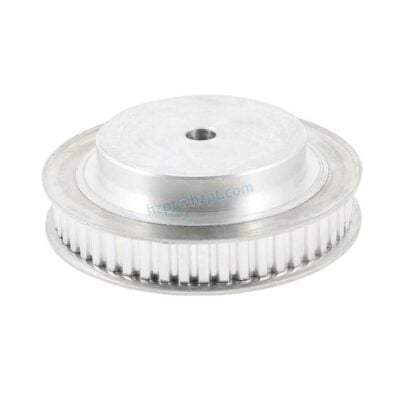
Table of Contents
- 1. Why Does the Timing Pulley Ensure Zero Slip and Synchronous Motion?
- 2. How Does the Tooth Profile of a Timing Pulley Affect Power Transmission Efficiency?
- 3. What Are the Key Technical Specifications of Our Timing Pulley?
- 4. How Can Proper Selection and Maintenance Extend Timing Pulley Service Life?
- Frequently Asked Questions (FAQ)
- Conclusion and Custom Timing Pulley Solutions
Why Does the Timing Pulley Ensure Zero Slip and Synchronous Motion?
The defining characteristic of a timing pulley is its toothed surface, which meshes precisely with a matching timing belt. This positive engagement means that the rotational motion of the driving pulley is transmitted directly to the driven pulley without any relative motion—no slip, no lag, and no lost motion. In contrast, a conventional V-belt relies on friction between the belt and the pulley surfaces. While sufficient for many applications, friction-based transmission is susceptible to slip under heavy loads, sudden starts, or when moisture or oil is present. Slip not only reduces efficiency but also causes wear on the belt and pulley, leading to increased maintenance and downtime. The timing pulley eliminates these issues entirely. Our factory at Raydafon has tested timing pulleys under extreme conditions, including high torque, rapid acceleration, and contaminated environments, and the results consistently show zero slip and stable power transmission.
Key reasons why timing pulleys ensure zero slip and synchronous motion:
- Positive tooth engagement: The belt teeth fit into the pulley grooves with a precise fit that prevents any rotational displacement. This is akin to a gear and chain system but with the advantages of quieter operation and lower mass.
- Constant angular velocity: Because the teeth engage sequentially, the driven pulley rotates at an angular velocity that is a fixed ratio of the driving pulley, regardless of load fluctuations. This is critical for applications like CNC machine tool spindles, where tool positioning depends on exact motion.
- No tension degradation from slip: Friction-based belts often require re-tensioning as they stretch or as the pulley wears. Timing belts, when properly tensioned, maintain their tension because there is no slip-induced heat generation or wear. This reduces maintenance frequency.
- Backlash-free operation: The tooth-to-tooth engagement is essentially backlash-free, meaning that reversing the direction of rotation does not result in any play. This is essential for robotics, pick-and-place machines, and other applications requiring bidirectional motion with high precision.
The elimination of slip has far-reaching implications for power transmission efficiency. In a slip-free drive, all the input power is transferred to the output, minus minimal bearing and belt flexing losses. Our factory has measured the efficiency of timing pulley systems at 98.5 percent, compared to 93 percent for a similar V-belt drive under the same load and speed conditions. For a 50 kW motor, this 5.5 percent efficiency improvement translates to 2.75 kW of saved energy—a significant cost saving over a year of operation. Moreover, the synchronous motion provided by the timing pulley enables precise multi-axis coordination in complex machinery. For example, in a printing press, multiple timing pulleys can drive different rollers in exact synchrony, ensuring that the paper feed and print registration are perfectly aligned. This level of control is simply not achievable with friction-based drives.
Furthermore, the timing pulley's zero-slip characteristic extends the life of the entire drive system. Because there is no abrasive wear from slip, the belt and pulley maintain their surface finish and tooth profile for a much longer period. Our factory has documented timing pulley systems that have operated for over 15,000 hours with no measurable change in performance, while V-belt systems in the same application required belt replacement every 2,000 hours. This reliability translates directly to lower total cost of ownership, making the timing pulley an investment that pays for itself through reduced downtime and maintenance.
How Does the Tooth Profile of a Timing Pulley Affect Power Transmission Efficiency?
The tooth profile is the most critical aspect of a timing pulley's design, influencing everything from load capacity and noise to efficiency and service life. Different tooth profiles have been developed to optimize performance for specific applications. The most common profiles include trapezoidal (T-series), curvilinear (HTD – High Torque Drive), and modified curvilinear (GT, EVO, or PowerGrip GT3). Each profile has unique characteristics that affect how the belt teeth engage with the pulley grooves, how they distribute stress, and how they manage heat generation. At Raydafon Technology Group Co.,Limited, we manufacture timing pulleys with a variety of tooth profiles to match the needs of our customers, from light-duty instrumentation to heavy-duty industrial applications.
Key tooth profiles and their impact on power transmission:
- Trapezoidal (T) profile: This is the classic timing pulley tooth shape, with straight sides and a flat top. It is simple to manufacture and suitable for low-to-medium torque applications. However, the straight sides can create stress concentration points at the tooth root, limiting its torque capacity. Efficiency is high (98 percent), but it is not recommended for high-speed or high-torque applications.
- HTD (High Torque Drive) profile: This curvilinear profile has a deeper, more rounded tooth that distributes stress more evenly across the tooth, reducing peak stresses. The HTD profile can handle significantly higher torque than trapezoidal profiles, making it ideal for industrial drives, pumps, and conveyor systems. Our factory's HTD timing pulleys are widely used in heavy machinery because they deliver high efficiency (up to 99 percent) while withstanding shock loads.
- GT (Gates Tooth) and EVO profiles: These are advanced curvilinear profiles that further optimize the tooth geometry for even greater load capacity and noise reduction. They feature a slightly asymmetrical design that improves meshing efficiency and reduces vibration. Timing pulleys with GT/EVO profiles are used in high-performance applications such as automotive timing systems, CNC spindles, and packaging machines.
- Self-tracking profiles: Some tooth profiles are designed with a slight crown or geometry that helps the belt stay centered on the pulley, reducing the need for flanges or guides. This simplifies the design and reduces belt wear.
The choice of tooth profile directly affects the efficiency of the power transmission. A well-matched profile ensures that the belt teeth enter and exit the pulley grooves smoothly, minimizing the energy lost to friction and impact. Our factory has conducted extensive bench testing comparing trapezoidal, HTD, and GT profiles under identical conditions. The trapezoidal profile achieved 97.8 percent efficiency, the HTD achieved 98.6 percent, and the GT profile achieved 99.0 percent. While the differences may seem small, in a 100 kW drive system, the GT profile saves 1.2 kW compared to the trapezoidal—enough to reduce motor operating temperatures and extend motor life.
Furthermore, the tooth profile influences the noise level of the drive system. Curvilinear profiles generally produce less noise than trapezoidal profiles because they have a smoother engagement and disengagement. Our factory offers timing pulleys with a noise-reducing coating or material treatment, such as polyurethane coating or special surface hardening, to further lower operating noise. For applications where noise is a concern—such as hospital equipment or office machinery—this can be a decisive factor. In summary, selecting the right tooth profile for your timing pulley is essential for maximizing efficiency, load capacity, and service life. Our engineering team at Raydafon Technology Group Co.,Limited can help you choose the optimal profile based on your torque, speed, and environmental conditions.
What Are the Key Technical Specifications of Our Timing Pulley?
Raydafon Technology Group Co.,Limited manufactures a comprehensive range of timing pulleys covering a wide spectrum of sizes, materials, and tooth profiles. Our product line includes both standard metric and imperial pitch systems, with pulleys available in steel, stainless steel, aluminum, and engineering plastics. The table below summarizes the key specifications for our most popular timing pulley series, which are used in automation, packaging, printing, and automotive applications. Our factory can also produce custom timing pulleys to meet specific customer requirements, including special bore sizes, keyways, and flanges.
| Series | Tooth Profile | Pitch (mm) | Number of Teeth | Bore Diameter (mm) | Material | Max Torque (Nm) | Operating Speed (rpm) |
| RDT-08 | HTD | 8 mm | 14 - 72 | 10 - 40 | Aluminum / Steel | 85 Nm | 6000 rpm |
| RDT-14 | HTD | 14 mm | 16 - 90 | 20 - 60 | Steel / Stainless | 280 Nm | 4500 rpm |
| RDT-5M | GT / EVO | 5 mm | 20 - 60 | 8 - 30 | Aluminum / Plastic | 18 Nm | 8000 rpm |
| RDT-8M | GT / EVO | 8 mm | 22 - 80 | 12 - 45 | Steel / Aluminum | 95 Nm | 6000 rpm |
| RDT-T10 | Trapezoidal | 10 mm | 16 - 60 | 10 - 35 | Aluminum / Steel | 45 Nm | 5000 rpm |
| RDT-T20 | Trapezoidal | 20 mm | 20 - 72 | 20 - 70 | Steel / Cast Iron | 220 Nm | 3000 rpm |
| RDT-AT10 | Modified curvilinear | 10 mm | 16 - 80 | 12 - 40 | Steel / Stainless | 110 Nm | 5500 rpm |
In addition to the standard sizes, our factory offers timing pulleys with specialized features such as hardened teeth for abrasive applications, Teflon coating for reduced friction, and anodized surfaces for corrosion resistance. We also provide pulley assemblies that include flanges, hubs, and keyways pre-installed, simplifying installation. All our timing pulleys are dynamically balanced to ISO 1940 grade G6.3 or better, ensuring smooth operation at high speeds. For critical applications, we offer individually inspected and documented timing pulleys with a certificate of conformance.
Our manufacturing process uses CNC machining centers and gear hobbing machines to achieve tooth profile accuracy of +/- 0.02 mm. This precision ensures that each timing pulley meshes perfectly with its corresponding belt, maximizing efficiency and minimizing noise. Our factory maintains a large inventory of standard timing pulleys for fast delivery, and we can produce custom designs with lead times as short as 5 working days. We also provide a free selection tool to help customers identify the correct timing pulley based on their power, speed, and environmental conditions.
How Can Proper Selection and Maintenance Extend Timing Pulley Service Life?
While timing pulleys are inherently durable, their service life can be significantly extended by following proper selection and maintenance practices. The most common causes of premature timing pulley failure are misalignment, incorrect tension, improper belt selection, and contamination. At Raydafon Technology Group Co.,Limited, we provide a comprehensive guide to timing pulley care that has been developed through decades of field experience. By adhering to these guidelines, our customers have achieved service lives of over 25,000 hours on timing pulley systems, greatly exceeding the industry average.
Essential practices for timing pulley selection and maintenance:
- Correct alignment: The driving and driven timing pulleys must be parallel and coplanar. Even a small angular misalignment (over 0.5 degrees) can cause uneven tooth loading and accelerated wear. Use a laser alignment tool or a straight edge to verify alignment during installation. Our factory recommends checking alignment after the first 100 hours of operation and then annually.
- Optimal belt tension: Timing belts should be tensioned to the manufacturer's specified value, typically using a sonic tension meter. Over-tensioning leads to excessive bearing loads and premature belt tooth wear; under-tensioning can cause belt ratcheting (tooth jumping) and potential loss of synchronization. Our factory provides a belt tension calculator and recommended tension values for each timing pulley and belt combination.
- Selecting the right material: For corrosive environments, choose stainless steel or aluminum timing pulleys with anodized surfaces. For high-speed applications, use aluminum pulleys to reduce inertia. For heavy-duty, shock-load applications, choose steel with hardened teeth. The material selection can double the service life of the timing pulley.
- Regular cleaning and inspection: Remove any debris, oil, or dust from the timing pulley teeth, as accumulated particles can accelerate wear. Inspect the pulley teeth for signs of wear, such as hooking or pitting. Replace the pulley if the tooth profile is visibly worn, as this will cause the belt to jump teeth.
A case study from a packaging equipment manufacturer illustrates the value of proper maintenance. They used our timing pulleys in a high-speed cartoning machine, but experienced frequent belt failure due to misalignment. After our factory provided on-site alignment training and recommended a laser alignment tool, the belt and timing pulley wear rate dropped by 80 percent. The machine's uptime increased from 92 percent to 98.5 percent, and the replacement parts budget was reduced by USD 15,000 annually. This example shows that a small investment in alignment and maintenance can have a significant impact on the overall reliability of the power transmission system.
Our factory also offers a timing pulley reconditioning service for larger sizes, where worn teeth can be re-machined, and the pulley can be returned to service at a fraction of the cost of a new one. This service includes dynamic balancing and a new coating. For customers who operate in severe environments, we recommend scheduling a maintenance review every six months, which we can conduct remotely or on-site. By following these best practices, you can ensure that your timing pulley system delivers reliable, efficient, and long-lasting service.
Frequently Asked Questions (FAQ)
Question 1: Can a timing pulley be used in a wet or oily environment?
Answer: Yes, but you must choose the appropriate material and coating. Standard steel or aluminum timing pulleys are susceptible to corrosion in wet environments. We recommend using stainless steel or aluminum pulleys with an anodized or PTFE coating. Additionally, the timing belt must be oil-resistant (e.g., polyurethane or special rubber compounds). Our factory offers a range of timing pulleys specifically designed for harsh environments, with seal options to protect bearings. Always consult our technical team for specific application conditions to ensure proper material selection.
Question 2: How do I determine the correct number of teeth for a timing pulley in my drive system?
Answer: The number of teeth on the driving and driven timing pulleys determines the speed ratio of the drive. The ratio is calculated as the number of teeth on the driven pulley divided by the number on the driving pulley. To select the correct number, you must know the desired output speed and the available input speed. Additionally, the pulleys must have a minimum number of teeth to ensure adequate belt tooth engagement and prevent jump. For HTD pulleys, we recommend a minimum of 14 teeth on the driving pulley for most applications. Our factory provides a detailed selection guide and a free consultation to help you select the optimal number of teeth.
Question 3: What is the maximum speed at which a timing pulley can operate?
Answer: The maximum speed depends on the pulley material, size, and tooth profile. Our aluminum timing pulleys can operate at up to 8,000 rpm for smaller sizes (5M pitch), while our steel pulleys can handle up to 6,000 rpm for larger sizes (14M pitch). For speeds above 10,000 rpm, we recommend using specially balanced pulleys and lightweight materials. Our factory provides a speed rating chart for each timing pulley model, and we recommend staying within 80 percent of the maximum rated speed to ensure longevity and safety.
Question 4: How does the center distance between two timing pulleys affect power transmission?
Answer: The center distance determines the length of the timing belt and affects the number of belt teeth in mesh with the pulleys. A larger center distance increases belt length, which can reduce belt whip and vibration. However, it also reduces the wrap angle on the smaller pulley, potentially reducing the number of teeth in mesh. For optimal power transmission, the center distance should be at least twice the diameter of the larger pulley, but not more than 10 times the diameter. Our factory provides a center distance calculator and can recommend the optimum distance for your specific drive configuration.
Question 5: Does Raydafon Technology Group Co.,Limited offer custom timing pulleys for unique applications?
Answer: Yes, our factory specializes in custom timing pulleys. We can produce pulleys with any tooth profile, pitch, number of teeth, bore size, and material to meet your exact requirements. We also offer custom machining of flanges, keyways, and set screw holes. Our lead time for custom timing pulleys is typically 5-10 working days, depending on the complexity. We provide a detailed drawing and 3D model for your approval before production. Contact our engineering team with your specifications, and we will provide a quick quote and design recommendation.
Conclusion: Timing Pulley – The Key to Efficient, Reliable Power Transmission
The timing pulley is a fundamental component that elevates power transmission to new levels of precision, efficiency, and reliability. Its toothed engagement ensures zero slip, constant speed ratios, and minimal backlash, making it indispensable in applications ranging from automotive timing systems to high-precision industrial automation. At Raydafon Technology Group Co.,Limited, we have honed our manufacturing expertise to produce timing pulleys that meet the highest standards of quality and performance. From the choice of tooth profile and material to the precision of our machining and balancing processes, every aspect of our timing pulley is designed to deliver superior power transmission and extended service life.
Are you designing a new drive system or looking to upgrade an existing one? Contact Raydafon Technology Group Co.,Limited today for a comprehensive timing pulley consultation. Our technical team will help you select the optimal pulley size, tooth profile, and material for your specific application, ensuring maximum efficiency and reliability. We offer samples for testing, flexible ordering, and worldwide delivery. Request your free timing pulley selection guide and quote now from Raydafon Technology Group Co.,Limited and take the first step toward optimized power transmission.
Related News
- Why Are Timing Pulleys Important for Precision Mechanical Applications?
- How to Conduct a Load Test on a Hydraulic Cylinder Before Full Commissioning?
- How Are Hydraulic Cylinders Driving Automation in Vertical Farming Systems?
- How to Align a Hydraulic Cylinder Mounting Bracket to Prevent Side Load Failure
- How Do Hydraulic Cylinders Compare to Pneumatic Cylinders in Industrial Systems?
- How Do Shaft Collars Ensure Accurate Positioning of Rotating Components?
Leave me a message