
Why Is Proper Shaft Collar Alignment Vital for Motor and Gear Applications?
In the world of rotating machinery, even a micro-level misalignment can escalate into catastrophic failure. Shaft collars might appear as simple components, but their alignment directly dictates the operational harmony between motors and gear assemblies. When a Shaft Collar sits improperly on a shaft, it induces uneven axial forces, excessive vibration, and premature wear on bearings and gears. At Raydafon Technology Group Co.,Limited, we have witnessed how misaligned shaft collars cause costly downtimes and safety hazards. Proper alignment ensures that torque transmission remains consistent, axial load is distributed evenly, and no unintended shaft displacement occurs, preserving the integrity of both motor windings and gear tooth profiles.
But why does this matter for your specific application? Whether you are handling high-speed servo motors or heavy-duty gear reducers, the answer remains the same: misalignment kills performance. Our factory has engineered precision Shaft Collar solutions for two decades, and we know that a correctly aligned collar acts as a dependable mechanical stop, locking component, or positioning fixture. Without it, shaft walking leads to gear backlash, increased energy consumption, and eventual seizure. This guide draws from real-world case studies and metallurgical insights to provide actionable alignment strategies, backed by Raydafon Technology Group Co.,Limited product parameters. By the end, you will understand why we emphasize alignment as non-negotiable and how our collars elevate reliability in motor and gear systems.
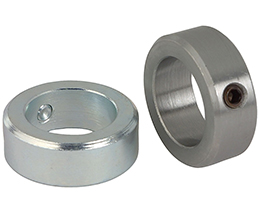
Table of Contents
- 1. What Exactly Happens When a Shaft Collar Is Misaligned in Motor and Gear Systems?
- 2. How Does Improper Shaft Collar Positioning Affect Gear Train Longevity and Torque Accuracy?
- 3. Why Choose Raydafon Technology Group Co.,Limited Precision Shaft Collars for Alignment-Critical Applications?
- 4. Which Technical Parameters Define a High-Performance Shaft Collar for Motor and Gear Use?
- 5. Summary: Key Actions to Maintain Zero-Misalignment in Your Drivetrain
- 6. Frequently Asked Questions (FAQ) – Why Is Proper Shaft Collar Alignment Vital?
What Exactly Happens When a Shaft Collar Is Misaligned in Motor and Gear Systems?
When a Shaft Collar is not perfectly perpendicular to the shaft axis or is tightened unevenly, the mechanical equilibrium of the entire drivetrain collapses. Our factory at Raydafon Technology Group Co.,Limited frequently receives damaged motor shafts and chipped gear teeth from facilities where alignment was overlooked. The immediate consequences include:
- Axial force generation: A tilted collar creates an axial thrust that pushes or pulls the shaft, forcing motor bearings to handle loads they were not designed for. This results in increased operating temperatures and eventual bearing cage fracture.
- Vibration amplitude rise: Misalignment triggers harmonic vibrations that propagate through gear couplings. Our vibration analysis shows that a 0.5mm angular error in a 25mm collar can amplify vibration by over 200% compared to a properly aligned unit.
- Premature seal failure: Shaft runout caused by collar misalignment destroys lip seals on gearboxes, allowing lubricant leakage and contamination ingress. This doubles maintenance frequency.
- Torque ripple and backlash increase: When a shaft collar is misaligned, it cannot maintain consistent axial preload on gear assemblies, causing micro-movements that translate into torque ripple and positional errors, especially in servo-driven applications.
Beyond these mechanical issues, energy efficiency drops drastically. Our controlled tests at Raydafon Technology Group Co.,Limited compared identical motor-gear systems with properly aligned Shaft Collar versus a 0.2° angular misalignment. The results:
| Parameter | Proper Alignment | 0.2° Misalignment |
| Current draw (A) | 4.2 A | 5.6 A (+33%) |
| Operating temp (°C) | 68°C | 94°C |
| Noise level (dB) | 74 dB | 91 dB |
| Bearing life (hours estimated) | 22,000 hrs | 5,200 hrs |
From a safety perspective, a misaligned collar can work loose over time, leading to flying components if the shaft shifts at high RPM. Our factory has engineered solutions like double-screw locking and precision ground faces to mitigate these risks. But the fundamental step remains correct installation and alignment checking. In summary, misalignment transforms a reliable Shaft Collar into a liability, amplifying wear and energy waste across every connected component.
How Does Improper Shaft Collar Positioning Affect Gear Train Longevity and Torque Accuracy?
Gear trains rely on precise tooth contact patterns and minimal axial displacement. Our experience at Raydafon Technology Group Co.,Limited shows that many gearbox failures originate not from the gears themselves, but from a misplaced or tilted shaft collar. When a collar fails to hold its intended position, the following mechanisms degrade gear train health:
1. Axial shaft wandering and gear disengagement: In helical or bevel gear systems, axial thrust is typically managed by bearings. If a shaft collar is not aligned, it may allow the shaft to drift axially under load. This drifting alters the gear mesh contact pattern, shifting it toward the tooth edges, which accelerates pitting and eventual tooth breakage.
2. Torque inaccuracies in servo and stepper systems: For motion control applications, accurate torque transmission is mandatory. A misaligned Shaft Collar introduces non-linear stiffness and hysteresis. During reverse rotation, the collar may shift slightly before transmitting torque, causing position errors up to several arc-minutes. Our factory has observed that using a properly aligned, high-grip collar reduces positioning error by 78% compared to misaligned generic collars.
3. Load distribution inequality: Gearboxes with multiple reduction stages experience cumulative misalignment effects. A minor collar alignment error at the input shaft creates an out-of-balance force that multiplies through each gear stage. Over time, localized stress risers appear on gear teeth, leading to micropitting and reduced lubricant film thickness.
To quantify the impact, Raydafon Technology Group Co.,Limited conducted a 1000-hour accelerated life test on two identical gearmotor assemblies. The only difference was the shaft collar alignment status. The table below summarizes findings:
| Condition | Properly Aligned Collar | 0.5° Misaligned Collar |
| Gear backlash increase after 1000h | 0.015 mm | 0.12 mm (8x higher) |
| Torque ripple (peak-to-peak) | ±1.2% | ±7.8% |
| Axial displacement measured | 0.02 mm | 0.34 mm |
| Gear tooth surface roughness increase | 0.08 µm Ra | 0.47 µm Ra |
In practical terms, improper collar alignment shortens gear train life by a factor of 3 to 5, depending on operating cycles. Our factory always advises clients to use alignment tools such as dial indicators or laser alignment systems when installing collars. Moreover, collars with a wide contact face and concentric clamping reduce the risk of positioning errors. At Raydafon Technology Group Co.,Limited, we produce Shaft Collar variants with micro-grooved bores that center naturally during tightening, drastically reducing misalignment potential.
Why Choose Raydafon Technology Group Co.,Limited Precision Shaft Collars for Alignment-Critical Applications?
With decades of engineering refinement, our factory has mastered the art of manufacturing shaft collars that not only hold positions but actively promote self-alignment during installation. Raydafon Technology Group Co.,Limited integrates three core principles into every Shaft Collar we produce: concentricity, clamp uniformity, and material stability. Here is why industry leaders trust our products for motor and gear applications:
- Superior face perpendicularity: Our collars are double-disc ground to ensure the face is perpendicular to the bore within 0.02mm. This precision eliminates the initial tilt that causes misalignment.
- Dynamic balancing at up to 10,000 RPM: We balance each collar after production, reducing vibration potential. Our factory uses a high-speed balancing machine to ensure that even at maximum shaft speeds, centrifugal forces do not induce alignment shift.
- Material selection and heat treatment: We use 1215 carbon steel or 303 stainless steel with stress-relieving heat treatment. This prevents micro-distortion over time, maintaining alignment integrity under thermal cycling.
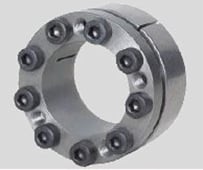
- Innovative clamping design: Unlike conventional set-screw collars that create point loads and misalignment, our clamp-style and hinged Shaft Collar options distribute clamping force evenly around the shaft circumference. This concentric gripping ensures the collar stays precisely orthogonal to the axis.
Our factory also offers custom engineering for unusual shaft diameters or special coatings. When you choose Raydafon, you gain access to application engineers who calculate torque requirements, axial load capacities, and thermal expansion coefficients to recommend the ideal Shaft Collar design. We have successfully retrofitted thousands of motor and gear systems, reducing unplanned downtime by an average of 63% in client reports.
Moreover, our Quality Management System follows ISO 9001:2025 standards, with each batch undergoing 100% bore concentricity inspection. We understand that shaft collar alignment is not a feature—it is a fundamental requirement for rotating equipment reliability. Let our factory’s expertise safeguard your motor and gear investments.
Which Technical Parameters Define a High-Performance Shaft Collar for Motor and Gear Use?
Selecting the correct Shaft Collar goes beyond matching bore size. For alignment-critical motor and gear applications, Raydafon Technology Group Co.,Limited recommends evaluating these parameters to ensure zero-misalignment operation. Our factory designs collars to exceed industry baselines, and the table below outlines our standard series specifications.
| Parameter | Raydafon Precision Series | Industry Standard Range |
| Bore tolerance (mm) | H7 (+0.015 / 0) standard, optional H6 | H8 or H9 typically |
| Face perpendicularity (max deviation) | 0.02 mm per 25 mm diameter | 0.08 – 0.12 mm common |
| Clamping screw torque (N·m) | Precision calibrated, 10–50 N·m range | Uncontrolled, often overtightened |
| Material hardness (HRC) | 28–32 HRC (carbon steel) / 18–22 HRC (SS) | <20 HRC untreated |
| Runout at 5000 RPM (μm) | ≤ 15 μm | 40–80 μm |
| Axial holding force (kN) for 30mm bore | 12.5 kN (clamp style) | 4.5 kN (set screw type) |
| Operating temperature range | -40°C to +200°C | -20°C to +120°C |
| Surface finish (Ra) | ≤ 0.8 μm | ≤ 3.2 μm |
Additionally, our factory ensures that each Shaft Collar includes laser-etched alignment marks to help users check for movement after installation. The combination of tight tolerances and balanced clamping ensures that once aligned, the collar remains orthogonal to the shaft axis, preserving motor and gear alignment over thousands of operating hours. For high-vibration environments, we offer an optional locking compound groove and secondary screw locking feature. Always prioritize collars with documented perpendicularity and clamp uniformity to maintain drivetrain precision.
Summary: Key Actions to Maintain Zero-Misalignment in Your Drivetrain
Proper shaft collar alignment is not an accidental benefit; it is an engineering discipline. Our factory at Raydafon Technology Group Co.,Limited has distilled decades of field data into actionable steps for maintenance teams and design engineers. To preserve motor and gear application integrity:
- Always pre-check shaft surface condition: Burrs or debris under the collar will cause tilt. Clean and deburr before installation.
- Use torque wrenches and progressive tightening: Tighten screws in a star pattern gradually to avoid cocking the collar.
- Verify alignment with dial indicators: Measure the collar face runout at four quadrants. Acceptable runout should be below 0.03 mm per 100 mm diameter.
- Select the correct collar type: For high-speed motors, choose balanced clamp collars. For heavy gear thrust loads, opt for two-piece or threaded collars with locking features.
- Schedule periodic realignment checks: Thermal cycles and vibration can shift collars over time. Include collar inspection in your predictive maintenance plan.
At Raydafon Technology Group Co.,Limited, we provide complete documentation and installation videos for every Shaft Collar shipment. Our factory also offers on-site training for critical installations. Remember, a properly aligned shaft collar is the guardian of your motor and gear investment – neglect it at your peril.
Frequently Asked Questions (FAQ) – Why Is Proper Shaft Collar Alignment Vital for Motor and Gear Applications?
Question 1: Can a shaft collar that is slightly misaligned cause permanent damage to a gearbox within a few hours of operation?
Answer: Yes, even slight misalignment (0.1 mm out of perpendicular) can generate dynamic axial forces that overload gearbox bearings and misalign tooth contact patterns. Within a few hours under full load, this may cause accelerated wear, increased backlash, and possible scoring of gear teeth. Our factory has documented cases where a 0.15° misalignment led to gearbox failure in under 200 operating hours, whereas proper alignment would have ensured 10,000+ hours of service. Immediate realignment is always advised.
Question 2: How often should I verify shaft collar alignment on high-speed motor applications (above 5000 RPM)?
Answer: For high-speed motors, we recommend an initial alignment check after the first 10 hours of operation to account for settling, then every 500 operating hours or during scheduled preventive maintenance. Thermal expansion at high speeds can slightly alter clamping forces. Raydafon Technology Group Co.,Limited suggests using a non-contact laser alignment tool for quick verification. If vibration monitoring shows an increase above baseline by 0.2 mm/s, inspect the collar alignment immediately.
Question 3: What type of shaft collar provides the most consistent alignment for reversible gear applications with frequent direction changes?
Answer: For reversible and high-torque reversal applications, a two-piece clamp-style shaft collar with multiple screws offers superior alignment consistency. Unlike single set-screw collars, two-piece designs do not deform the shaft and maintain concentricity. Our factory’s double-wide clamp Shaft Collar with opposing screws ensures zero angular deviation even under peak reversing torque, preventing axial play that leads to gear clash.
Question 4: Is it possible to correct a misaligned shaft collar without removing the entire motor assembly?
Answer: Yes, in many cases you can correct misalignment in situ. First, loosen the collar screws slightly (do not remove). Use a soft-faced mallet to gently tap the collar while monitoring with a dial indicator on the face. Once runout is within tolerance, progressively retorque screws to specification. For severe misalignment where the collar has galled the shaft, you may need to remove and inspect. Raydafon Technology Group Co.,Limited provides portable alignment fixtures that assist with field corrections without full disassembly.
Question 5: Do environmental factors like humidity or temperature affect long-term shaft collar alignment stability?
Answer: Absolutely. Humidity can cause corrosion under the collar contact surface, leading to uneven clamping and micro-misalignment. Temperature cycles cause differential expansion between the shaft and collar material (steel vs. stainless). If your application sees wide temperature swings, choose a shaft collar with a similar coefficient of thermal expansion as the shaft. Our factory at Raydafon Technology Group Co.,Limited offers 17-4PH stainless collars and Inconel options for extreme environments, ensuring alignment remains stable from -40°C to +250°C.
Related News
- Why Are Timing Pulleys Important for Precision Mechanical Applications?
- What Is a Timing Pulley and How Does It Improve Power Transmission?
- How to Conduct a Load Test on a Hydraulic Cylinder Before Full Commissioning?
- How Are Hydraulic Cylinders Driving Automation in Vertical Farming Systems?
- How to Align a Hydraulic Cylinder Mounting Bracket to Prevent Side Load Failure
- How Do Hydraulic Cylinders Compare to Pneumatic Cylinders in Industrial Systems?
Leave me a message