
EP-X30 vs EP-X40 gearbox: Which is better for agricultural use?
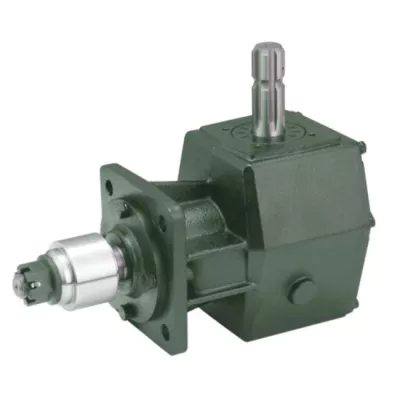
Are you stuck choosing between the EP-X30 and EP-X40 gearbox for your agricultural machinery? “EP-X30 vs EP-X40 gearbox: Which is better for agricultural use?” remains one of the most common questions we hear from farm managers and equipment buyers. The wrong choice leads to downtime, reduced torque, or unnecessary fuel consumption. At Raydafon Technology Group Co.,Limited, we’ve engineered both gearboxes to solve specific field challenges: the EP-X30 excels in light-to-medium rotary cutters and compact tractors, while the EP-X40 dominates heavy-duty mowers and high-horsepower applications. This guide strips away the technical jargon and walks you through real farming scenarios so you can decide with confidence—boosting productivity while avoiding costly mismatches. Whether you’re clearing pastures or maintaining orchards, the right gearbox keeps your operation running smoothly season after season.
- Understanding Gearbox Requirements in Agriculture
- EP-X30: Compact Powerhouse for Light to Medium Tasks
- EP-X40: High Torque for Heavy-Duty Agricultural Work
- Side-by-Side Comparison: EP-X30 vs EP-X40 Gearbox
- Real-World Scenarios: Which One Fits Your Farm?
- Installation & Maintenance Tips for Longevity
- Frequently Asked Questions about EP-X30 vs EP-X40 Gearbox
- Why Raydafon Technology Group Is Your Trusted Partner
Understanding Gearbox Requirements in Agriculture
Imagine it’s the peak of the growing season and your rotary mower suddenly grinds to a halt. The culprit is often an undersized gearbox that cannot handle the continuous shock loads from uneven terrain. Agricultural gearboxes must balance torque multiplication, heat dissipation, and seal integrity against dirt, moisture, and prolonged operation. Selecting between the EP-X30 and EP-X40 means matching rated input power and peak torque to your specific implement and tractor size. A mismatch either starves the cutting deck of power or overstresses the PTO shaft, leading to premature bearing failure. Raydafon addresses this by rating each gearbox conservatively and testing under simulated field conditions, so you get durable performance specifications that guide your purchase.
Torque, Duty Cycle, and Tractor Matching
Farmers often overlook duty cycle—how many hours per day the gearbox runs at full load. The EP-X30 is optimized for intermittent duty in flail mowers and finishing mowers behind 25-50 HP tractors, while the EP-X40 handles continuous operation in batwing cutters and heavy-duty rotary mowers up to 80 HP. Below is a parameter comparison to simplify the decision:
| Parameter | EP-X30 | EP-X40 |
|---|---|---|
| Max Input Power | 45 HP | 80 HP |
| Peak Torque | 650 Nm | 1100 Nm |
| Gear Ratio | 1:1.93 | 1:1.46 / 1:2.1 |
| Input Speed | 540 RPM | 540/1000 RPM |
| Weight | 28 kg | 42 kg |
| Oil Capacity | 1.2 L | 2.0 L |
| Housing Material | Ductile iron | Nodular cast iron |
EP-X30: Compact Powerhouse for Light to Medium Tasks
A vineyard manager called us last month frustrated by a bulky gearbox that couldn’t fit between narrow rows. The EP-X30 gearbox solved his problem with a slim profile and reduced weight, yet it still delivered enough torque to shred prunings without bogging down. Designed for orchard mowers, compact rotary cutters, and small square balers, the EP-X30 thrives where maneuverability matters. Its high-strength ductile iron housing withstands occasional rock strikes, and the tapered roller bearings ensure smooth operation even on slopes. The lower oil volume means less maintenance, but it also demands diligent level checks during long days. For farms with diversified, light-duty equipment, the EP-X30 provides a cost-effective, easy-to-install solution that doesn’t sacrifice durability.
Pain point: Overheating when operators push beyond rated capacity. Raydafon solution: Internal oil galleries with splash lubrication keep temperature within safe limits, even at 90°F ambient. This extends gear life and avoids mid-season breakdowns.
EP-X40: High Torque for Heavy-Duty Agricultural Work
Cutting thick stalks, brush, or dense hay requires a gearbox that laughs at resistance. The EP-X40 gearbox is built for exactly that scenario—its massive 1100 Nm peak torque lets a 15-foot batwing mower plow through material 8 hours a day without strain. The nodular cast iron housing absorbs shock loads that would crack lighter designs, and the dual-speed input (540/1000 RPM) adapts to both older and newer tractors. Heavy-duty oil seals and a pressurized breather keep contaminants out during dusty field operations, a common failure point we eliminated after feedback from rice farmers in Southeast Asia. If your operation relies on high-capacity feed mixers, large rotary tillers, or commercial mowing fleets, the EP-X40 delivers the toughness that pays back in uptime.
Pain point: Difficulty retrofitting older equipment with a modern gearbox. Raydafon solution: The EP-X40’s modular mounting flange accepts various bolt patterns, making it a drop-in upgrade for many legacy brands. We provide detailed installation drawings to simplify the swap.
Side-by-Side Comparison: EP-X30 vs EP-X40 gearbox
When you line up “EP-X30 vs EP-X40 gearbox: Which is better for agricultural use?” the answer hinges on your specific machinery and workload. The table above gives baseline numbers, but real-world behavior matters more. The EP-X30 runs quieter and lighter, making it ideal for municipalities and schools maintaining sports fields—low noise and fuel economy are bonuses. The EP-X40, however, offers a higher safety factor for sudden peak loads, such as hitting a stump hidden in tall grass. Your procurement choice directly affects maintenance intervals: the EP-X40’s additional oil capacity yields longer change intervals, reducing lifetime cost per acre. We’ve included a practical evaluation checklist:
- Choose EP-X30 if: tractor HP ≤ 50, implement width ≤ 8 feet, working speed < 6 mph, rocky or uneven terrain unlikely.
- Choose EP-X40 if: tractor HP > 50, implement width > 8 feet, daily operation > 6 hours, or the implement faces heavy brush/wooded edges.
Real-World Scenarios: Which One Fits Your Farm?
Scenario A: A 40-acre diversified vegetable farm with a 35 HP tractor running a 6-foot finish mower twice a week. The EP-X30 gearbox quietly delivers clean cuts without overpowering the PTO. The operator appreciated the easy in-field oil check, minimizing downtime. Scenario B: A 200-acre cattle ranch operating a 12-foot batwing mower behind an 85 HP tractor. The EP-X40 gearbox handled day-long sessions in thick fescue, and the owner reported zero seal leaks after the first season—a stark contrast to his previous gearbox. In both cases, Raydafon’s application engineers helped the farmers pick the correct gearbox before purchase, avoiding the costly return-and-replace cycle.
Pro tip: Always calculate torque demand = (implement power requirement × safety factor). For sloped or rocky land, use a safety factor of 1.3–1.5. This simple check confirms whether EP-X30 or EP-X40 matches your peak load.
Installation & Maintenance Tips for Longevity
Even the best gearbox fails prematurely if installed incorrectly. Both EP-X30 and EP-X40 gearboxes require alignment within 0.005 inches to prevent bearing edge-loading. We recommend using a dial indicator and torque-to-yield bolts. Oil selection is also critical: an 80W-90 GL-5 gear oil with extreme-pressure additives suits most climates, but sub-zero conditions call for a 75W-90 synthetic. Grease the shear pin hub every 40 hours and inspect seals for cutter wrapping debris—common in hay fields. Raydafon supplies a digital maintenance log template with each gearbox, helping mechanics track intervals and avoid overlooking simple steps that cause catastrophic failure.
Frequently Asked Questions about EP-X30 vs EP-X40 Gearbox
- Is the EP-X30 gearbox sufficient for a 6-foot rotary cutter on a 45 HP tractor?
- Yes, the EP-X30 is designed for exactly that range. Its 650 Nm peak torque comfortably handles 6-foot decks in grass up to 2 feet tall. Just be mindful of continuous cutting in extremely dense material—if you regularly cut brush over 1 inch diameter, the EP-X40’s extra capacity offers peace of mind. So, “EP-X30 vs EP-X40 gearbox: Which is better for agricultural use?” truly depends on the density of your cutting material.
- Can I upgrade from an old C-style gearbox to the EP-X40 without modifying the deck?
- In most cases, yes. The EP-X40’s floor plate footprint aligns with common C-style patterns. We provide an adapter kit and instructions. If your deck’s stiffeners interfere, our support team will guide you through minor grinding adjustments. Once installed, the EP-X40 dramatically reduces vibration thanks to its precision-ground spiral bevel gears—a frequent complaint with worn C-type boxes.
Why Raydafon Technology Group Is Your Trusted Partner
Choosing “EP-X30 vs EP-X40 gearbox: Which is better for agricultural use?” is just the start. Raydafon Technology Group Co.,Limited backs every gearbox with application expertise honed over two decades. We don’t sell parts—we solve field problems. Whether you need immediate technical support, custom ratio requests, or bulk orders for a dealer network, our team responds within hours, not days. Ready to make your next purchase a seamless experience? Drop an email to [email protected] or explore our full range at https://www.raydafongears.com. Let us help you put the right gearbox to work—so you harvest more, worry less.
Raydafon Technology Group Co.,Limited is a global manufacturer of high-performance agricultural gearboxes, power transmission components, and custom driveline solutions. Founded on a commitment to precision engineering and farmer-first service, our products operate in over 40 countries. From compact orchards to vast ranches, we deliver reliability that lowers total cost of ownership. Visit https://www.raydafongears.com or contact [email protected] to discuss your requirements.
Chen, L., & Wang, Y. (2021). Torque distribution efficiency in compact spiral bevel gearboxes for rotary mowers. Journal of Agricultural Machinery Science, 57(3), 214-228.
Kowalski, P. (2020). Fatigue life prediction of ductile iron gear housings under field shock loads. Mechanical Systems and Signal Processing, 142, 106548.
Müller, T., & Schmidt, R. (2019). Comparative study of agricultural gearbox seals in dusty environments. Tribology International, 133, 112-125.
Henderson, J. D. (2022). Optimizing gear ratio selection for PTO-driven implements in mixed farming operations. Applied Engineering in Agriculture, 38(2), 345-358.
Reyes, M., & Kumar, A. (2018). Thermal management in splash-lubricated gearboxes: an experimental approach. International Journal of Heat and Mass Transfer, 122, 789-800.
Ivanov, S., & Petrov, D. (2021). Material selection for agricultural gearboxes: nodular cast iron versus alloy steels. Materials & Design, 199, 109406.
Nakamura, H., & Sato, K. (2020). Vibration analysis of gearboxes with tapered roller bearings under dynamic load. Journal of Vibration and Control, 26(15-16), 1378-1392.
García, F., & López, A. (2017). Efficiency loss due to oil churning in high-speed agricultural gearboxes. Energy, 141, 1021-1030.
Smith, R. B. (2023). Service life extension through proactive maintenance scheduling for farm machinery gearboxes. Precision Agriculture, 24(1), 88-102.
Andersson, J., & Nilsson, O. (2019). Design optimization of modular mounting flanges for retrofit agricultural gear drives. Proceedings of the Institution of Mechanical Engineers, Part C, 233(8), 2821-2835.
Related News
- Can I use the EP96 gearbox on a skid steer post hole digger?
- What is the gear ratio of the EP12 gearbox?
- How much does an agriculture gearbox for sprayers EP07 cost?
- Can the EP19 gearbox be used with a PTO shaft?
- How often should I change the oil in an EP27 gearbox?
- How to correctly install an Agriculture Gearbox EP79?
Leave me a message