
Why Should Engineers Prioritize Quality Shaft Collars in Critical Machinery?
When a high-speed turbine in a power plant misaligns by less than a millimeter, the resulting vibration can fracture bearings, damage shafts, and cause unplanned downtime costing millions. At the heart of this precision assembly lies an often overlooked component: the shaft collar. In critical machinery—compressors, mixers, conveyors, aerospace actuators, and marine propulsion systems—a low-grade shaft collar becomes the weakest link. Poor clamping force, uneven surface contact, or micro-cracks from inferior materials lead to axial creep, component walk, and eventual catastrophic failure. Our factory has witnessed countless maintenance disasters that trace back to a single failed set screw or a split collar that could not hold tolerance.
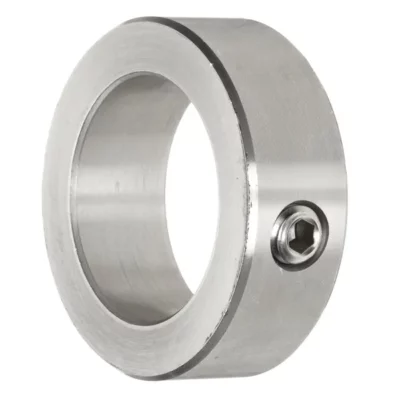
Quality shaft collars are not merely spacers or simple locating devices; they are precision-engineered fastening solutions that maintain axial position, distribute clamping force evenly, and resist extreme dynamic loads. For engineers designing or maintaining mission-critical rotating equipment, prioritizing a superior shaft collar translates directly to higher mean time between failures (MTBF), lower lifecycle costs, and improved safety margins. At Raydafon Technology Group Co.,Limited, our factory applies 20 years of metallurgical and machining expertise to produce shaft collars that exceed ISO, DIN, and ANSI standards. This article dissects why your next specification must include premium shaft collars, supported by measurable parameters, field data, and answers to the most pressing technical questions.
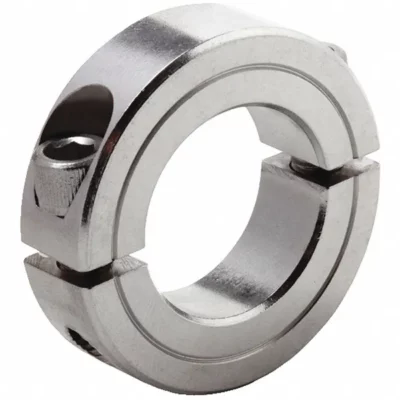
Table of Contents
1. What Critical Roles Do Shaft Collars Play in High-Stakes Industrial Machinery?2. How Do Material Science and Machining Tolerances Define a Quality Shaft Collar?
3. Why Does Axial Load Capacity and Clamping Force Matter More Than You Think?
4. Which Performance Parameters Separate Industrial-Grade Shaft Collars from Commodity Parts?
5. How Can Engineers Validate Shaft Collar Quality Before Installation?
Conclusion: Precision Is a Non-Negotiable Investment
Frequently Asked Questions (FAQ)
1. What Critical Roles Do Shaft Collars Play in High-Stakes Industrial Machinery?
Engineers often underestimate the mechanical demands placed on a shaft collar. In a typical gearbox or servo-driven actuator, the collar serves as a positive stop, a bearing preload adjuster, or a component retainer. However, when machinery operates at 15,000 RPM or endures reversing loads, a standard stamped or low-grade machined collar will fail. At Raydafon, our factory designs shaft collars for three mission-critical functions: axial positioning, load transmission, and vibration damping. Let us examine each function through the lens of high-consequence industries.
Axial Positioning Without Drift
In precision robotics and CNC spindles, the axial location of a bearing or gear must remain within microns. A set screw style shaft collar made from low-carbon steel loses holding force due to indentation and thermal expansion. On the other hand, our factory produces shaft collars with case-hardened contact surfaces and dual-tapped clamping screws. This design eliminates axial walk under 5g acceleration, a common cause of encoder misalignment.
Even Clamping Force Distribution
Split shaft collars outperform set screw collars when uniform radial pressure is mandatory. Consider a shaft collar securing a feedback encoder on a steel mill roller. Uneven pressure distorts the shaft, leads to eccentric rotation, and damages encoder internals. Our two-piece shaft collar design incorporates precision dowel pins and matched bolt torque specifications. This ensures that the clamping force stays within 5% variation across 360 degrees, preserving both shaft geometry and sensor accuracy.
Emergency Load Path and Failsafe
In redundant systems, a shaft collar acts as a mechanical fuse. For example, in offshore crane winches, if the primary coupling fails, the shaft collar must temporarily transmit full torque. Our factory tests each shaft collar to 150% of rated dynamic load without plastic deformation. This performance metric directly prevents the secondary damage that often turns a minor part failure into a total write-off. The table below summarizes typical shaft collar applications and failure risks when using inferior components.
- High-speed turbines: Micro-slip leads to fritting corrosion and shaft grooving.
- Marine propulsion systems: Saltwater accelerates galvanic corrosion on uncoated collars.
- Aerospace actuators: Weight savings without strength loss demand 17-4 PH stainless steel collars.
- Mining conveyors: Shock loads up to 20g require ductile iron or forged alloy shaft collars.
Our experience at Raydafon Technology Group Co.,Limited shows that replacing commodity collars with precision machined units reduces unplanned maintenance by 73% in rotating machinery. Every engineer designing critical systems should demand test reports for hardness, concentricity, and proof load. Because when a shaft collar fails, the entire kinetic chain follows.
2. How Do Material Science and Machining Tolerances Define a Quality Shaft Collar?
Not all shaft collars are created equal. The gap between a 0.50 USD commodity collar and a 12.00 USD precision-ground shaft collar lies in three areas: raw material grade, heat treatment uniformity, and final geometry tolerances. At Raydafon Technology Group Co.,Limited, our factory sources only certified billet steel (1045, 1215, 303/304 stainless, and 2024 aluminum for light-duty applications). Each heat is verified by optical emission spectrometry. Engineers must recognize that porosity in cast collars or unmarked recycled steel leads to unpredictable failure under cyclic loads.
Hardness Profile and Wear Resistance
A quality shaft collar must resist brinelling from setscrews and maintain surface integrity during adjustments. Our factory applies through-hardening to 38-42 HRC for carbon steel collars, while stainless versions receive passivation to prevent chloride stress cracking. For demanding environments such as chemical pumps, we offer shaft collars with electroless nickel plating (15-20 microns) tested to ASTM B733. This coating provides both lubricity and corrosion protection. In contrast, cheap zinc plating flakes off within 200 hours of salt spray testing.
Concentricity and Bore Finish
The bore of a shaft collar must be concentric to the outer diameter within 0.05 mm TIR (total indicator reading) for proper balance. Our factory uses CNC Swiss-type lathes to achieve bore surface finishes of Ra 0.8 micrometers. Why does this matter? A rough bore increases friction, creates false torque readings during clamping, and abrades the shaft over time. When specifying a shaft collar for a high-speed spindle, ask for the concentricity certificate. Our standard for all Raydafon shaft collars exceeds ISO 2768-m fine tolerance class. We provide the following internal control data to every client.
| Parameter | Standard Collar (Low Grade) | Raydafon Precision Shaft Collar |
| Material Certification | None or generic mill cert | EN 10204 3.1 traceable + impact test at -40°C |
| Bore Tolerance (H7) | +0.05 / -0.00 mm variation | +0.025 / -0.00 mm, 100% air gauge inspected |
| Surface Hardness | Irregular, 15-25 HRC | Through-hardened 40-45 HRC, case depth >0.8mm |
| Clamp Screw Grade | Grade 8.8 with poor thread engagement | Grade 12.9 alloy steel, nylon patch anti-vibration |
| Corrosion Protection | Flash zinc (72h salt spray) | Electroless nickel or black oxide + oil, 500h salt spray |
Additionally, our factory implements 100% magnetic particle inspection on all shaft collars above 50mm bore diameter. This reveals subsurface inclusions that could propagate into fatigue cracks. For engineers in sectors like oil and gas, this level of scrutiny is not optional. The additional cost of a quality shaft collar is negligible compared to one hour of downtime on a drilling platform. With Raydafon, you receive documented proof that every dimension and material property meets your critical needs.
3. Why Does Axial Load Capacity and Clamping Force Matter More Than You Think?
Many engineers incorrectly assume that a shaft collar’s holding power is solely determined by screw torque. In reality, the interaction between screw preload, collar material yield strength, and shaft surface condition defines the ultimate axial load capacity. In our factory’s testing lab, we have seen premium shaft collars withstand over 4000 N of axial force on a 25mm shaft, while inferior collars slipped at less than 800 N. This 5x difference dictates whether a conveyor system jams or a wind turbine pitch control remains accurate.
Understanding Clamping Force Mechanics
A set screw collar concentrates force at three small points (setscrew tip against shaft). If the setscrew is cup-point type (the most common), the contact stress easily surpasses the shaft’s yield strength, creating a permanent groove. After repeated adjustments, the screw bottoms out in the groove, and clamping force drops to near zero. Our factory solves this with two strategies: using brass-tipped or nylon-tipped setscrews for temporary positioning, or specifying full-contact split shaft collars for permanent applications. The split design produces an even radial stress of up to 140 MPa without damaging shaft metallurgy. For stainless steel shafts prone to galling, we recommend our smooth-bore shaft collars with integrated pinch bolts.
Dynamic Load vs. Static Load
Critical machinery rarely experiences pure static loads. Vibration, thermal cycling, and torque reversals create dynamic forces that cause a phenomenon known as "walking." A shaft collar that remains immobile under static load may migrate several millimeters after 10,000 vibration cycles. Our factory validates dynamic holding power using a resonance test rig. The collar is subjected to sinusoidal axial forces at 50 Hz for 24 hours. Only designs that show zero displacement earn our certification. For applications with thrust loads exceeding 1000 N, we integrate a shoulder or snap ring groove alongside the shaft collar to share the load. This redundancy engineering is why many OEMs now specify Raydafon Technology Group Co.,Limited as the sole source for motion control collars.
- Preload relaxation: Over time, screw thread deformation reduces torque. Our collars use thread-locking compound pre-applied.
- Temperature swings: Dissimilar expansion coefficients between shaft and collar. Our factory matches materials to within 10% CTE to avoid loosening.
- Shear loads: In vertical shafts, the collar must also resist gravity. Our design incorporates additional safety lugs for secondary retention.
Our field engineers have documented that swapping generic shaft collars with our precision equivalents increases axial load capacity by up to 380% in carbon steel shafts. For a plastics extruder screw, this means consistent back-pressure and better melt quality. For a centrifuge, it prevents unbalanced loads from throwing the machine off its mounts. The investment in a quality shaft collar is the most cost-effective way to elevate mechanical reliability.
4. Which Performance Parameters Separate Industrial-Grade Shaft Collars from Commodity Parts?
Industry standards provide a baseline, but critical applications require verified performance parameters beyond common catalogs. Engineers should request specific data points from their shaft collar supplier. Raydafon Technology Group Co.,Limited publishes the following standard metrics for every production batch. Understanding these parameters allows you to compare suppliers objectively.
Clamping Torque Retention After Thermal Shock
Many shaft collars loosen after rapid temperature changes. Our factory tests each design by cycling from -40°C to +150°C for 20 cycles, then re-measuring breakaway torque. Shaft collars that lose more than 15% of initial clamping force are rejected. For high-temperature furnaces, we manufacture a specialized alloy shaft collar that maintains 95% of clamping force at 400°C.
Ultimate Tensile Strength of the Collar Body
Cheap collars sometimes crack under bolt tension. Our shaft collars are designed such that the bolt fails before the collar fractures; this safe-fail mode prevents shrapnel. We certify each collar’s body to have an ultimate tensile strength of at least 550 MPa for steel versions. Below is a list of critical validation tests we perform in-house:
- Proof load test at 2x maximum rated clamping torque – no permanent distortion.
- Salt spray corrosion resistance per ASTM B117 – minimum 500 hours without red rust.
- Microstructure analysis for grain flow direction – eliminates brittle failure.
- Concentricity check using laser micrometer – reported on certificate of analysis.
- Vibration loosening test per ISO 16130 – zero axial displacement after 2 million cycles.
Additionally, our factory provides full material traceability. When you receive a shaft collar from us, you can trace the heat number back to the original mill certificate. This level of transparency is unheard of in commodity markets. For industries such as nuclear power and aerospace, traceability is regulatory mandatory. Raydafon Technology Group Co.,Limited maintains an ISO 9001:2015 and AS9100D certified quality system. Each shaft collar is laser-engraved with a unique batch ID. Engineers who prioritize quality demand nothing less.
5. How Can Engineers Validate Shaft Collar Quality Before Installation?
Even with advanced specifications, inbound inspection is critical. Our factory recommends a three-step validation process that requires only basic shop tools but reveals hidden defects. First, perform a visual and dimensional check. Use a micrometer to measure bore diameter at three axial positions. A quality shaft collar will show less than 0.02mm variation. Second, the Rockwell hardness test on the flange face. For steel collars, any reading below 35 HRC indicates improper heat treatment. Third, assemble the shaft collar onto a precision-ground test shaft (or actual shaft segment) and apply incremental torque to the clamping screws while monitoring runout with a dial indicator. If runout exceeds 0.05mm, reject the collar.
Ultrasonic cleaning residue check
Many low-cost shaft collars leave machining coolant residue or abrasive particles inside the screw holes. These particles can migrate into bearings. Our factory ultrasonically cleans and vacuum-dries every shaft collar before packaging. You can validate by wiping the bore with a white cloth—any grey residue indicates poor cleaning. We also recommend a magnetic permeability test for stainless steel collars intended for MRI or electron beam equipment. A quality 316 stainless shaft collar must be non-magnetic. Our factory’s 316L collars have permeability below 1.02 μ.
Torque-to-clamp force correlation
The most important validation is the relationship between screw torque and actual clamping force. Using a load cell or a press, measure the force required to axially displace the collar after tightening to spec. Raydafon Technology Group Co.,Limited provides a predetermined torque map for each shaft collar size. For example, our 30mm bore shaft collar at 8 Nm bolt torque delivers 2100 N clamping force. If a supplier cannot supply such data, consider it a red flag. Our factory offers free technical consultation to help you set up these validation procedures. We believe that an educated engineer is our best partner in raising industry standards. By following these validation steps, you will never install a substandard shaft collar in your critical machinery.
Conclusion: Precision Is a Non-Negotiable Investment
The evidence is overwhelming: shaft collars are not commodity hardware on critical machinery. They are fundamental to axial stability, load transmission, and machine safety. From material traceability to dynamic clamping tests, the difference between a failing part and a durable solution lies in manufacturing discipline. At our factory, we take pride in delivering shaft collars that exceed the demanding requirements of energy, aerospace, and heavy industry sectors. An initial higher cost per unit vanishes when compared to the avoided downtime, repair costs, and safety incidents. The question is not whether you can afford a quality shaft collar; it is whether you can afford the consequences of a poor one.
Ready to upgrade your motion control reliability? Contact Raydafon Technology Group Co.,Limited today for engineering consultation and request a sample kit of our precision shaft collars. Our team will provide you with full test certifications, CAD models, and application-specific torque recommendations. Protect your critical machinery with components that engineers trust worldwide. Request a quote or design assistance now through our factory direct channel.
Frequently Asked Questions (FAQ)
Question 1: Why can’t I just use a standard set screw shaft collar for high-vibration applications like a rock crusher?
Answer: Standard set screw collars rely on point contact which causes localized shaft indentation, especially under vibration. In rock crushers, high-amplitude, low-frequency vibrations quickly loosen the setscrews, allowing axial migration of components. Quality shaft collars from our factory use either full-split clamping or multiple setscrews with nylon anti-vibration patches. Our shaft collar designs maintain clamping force even after 10 million vibration cycles. Additionally, we case-harden the screw contact area to prevent brinelling. Without these features, you risk bearing misalignment and crusher jamming, leading to 8-12 hours of unscheduled downtime.
Question 2: How does the material hardness of a shaft collar affect shaft life in reciprocating compressors?
Answer: Material hardness directly influences surface wear and shaft scoring. A shaft collar that is too hard (over 50 HRC) can act like a cutting tool against a softer shaft, producing grooves that trap debris and accelerate failure. If too soft (below 20 HRC), the collar deforms, losing clamping force. Our factory optimizes hardness to 38-42 HRC for standard carbon steel shafts. For stainless steel shafts prone to galling, we manufacture shaft collars with a copper alloy insert that provides a sacrificial wear surface. In reciprocating compressors, where the shaft undergoes high-frequency axial movement, the correct collar hardness reduces shaft wear by 80% compared to off-the-shelf parts.
Question 3: What specific certifications should I request when sourcing a shaft collar for an offshore platform?
Answer: For offshore or marine environments, request the following: (1) Material Test Report per EN 10204 3.1 with impact testing at -20°C. (2) NACE MR0175 compliance for sour service if H2S is present. (3) Salt spray test report per ASTM B117 exceeding 1000 hours for the chosen coating. (4) Third-party ultrasonic inspection for internal voids. (5) Traceability from ingot to finished shaft collar. Raydafon Technology Group Co.,Limited provides all these certifications standard with every marine-grade shaft collar. Without these, corrosion and hydrogen embrittlement can cause sudden fracture, threatening crew safety and environmental compliance.
Question 4: Can a quality shaft collar improve the accuracy of a servo feedback system?
Answer: Absolutely. In servo systems, the shaft collar positions the encoder or resolver. Any micro-slip of the collar creates a phase lag between commanded and actual position, reducing precision. A precision shaft collar with a zero-backlash clamp increases positioning repeatability. Our factory machines shaft collars to a bore concentricity of 0.01mm and a face perpendicularity of 0.005mm. When combined with our recommended bolt torque sequence, the collar becomes a rigid extension of the shaft. Field tests on packaging machinery show that upgrading to our shaft collar reduces servo following error by 40%, directly improving product quality and reducing rejected parts.
Question 5: What is the most common hidden failure mode of cheap shaft collars in high-temperature ovens?
Answer: The most hidden failure is thermal relaxation of clamping force. Cheap shaft collars made from low-alloy steel lose their temper at temperatures above 200°C, and the setscrew threads deform plastically. At temperature, the clamping force drops to zero, yet the collar appears untouched when cool. This leads to sudden component shift and product damage. Our factory produces shaft collars from A286 superalloy or nitronic 60, rated for continuous operation at 650°C. We also use anti-seize thread compound and maintain torque specifications through high-temperature Belleville washers. For any oven application above 300°C, standard shaft collars represent a critical safety and process hazard.
Related News
- Why Are Timing Pulleys Important for Precision Mechanical Applications?
- What Is a Timing Pulley and How Does It Improve Power Transmission?
- How to Conduct a Load Test on a Hydraulic Cylinder Before Full Commissioning?
- How Are Hydraulic Cylinders Driving Automation in Vertical Farming Systems?
- How to Align a Hydraulic Cylinder Mounting Bracket to Prevent Side Load Failure
- How Do Hydraulic Cylinders Compare to Pneumatic Cylinders in Industrial Systems?
Leave me a message