
How Do Advanced Shaft Collar Designs Reduce Wear on Shafts and Bearings?
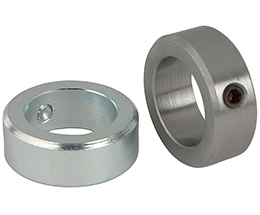
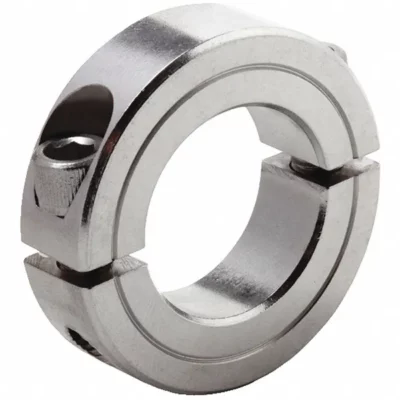
For decades, traditional shaft collars and set-screw locking mechanisms have been a silent contributor to premature shaft degradation, bearing fretting, and unplanned downtime. The friction, micro-motion, and uneven clamping forces accelerate surface fatigue on shafts and compromise bearing raceways. But recent engineering breakthroughs have transformed the humble Shaft Collar into a precision wear-reduction tool. Advanced shaft collar designs now employ geometric optimization, material science, and distributed clamping forces that actively protect both shafts and bearings, extending equipment lifecycle by up to 300% in cyclic load conditions.
At Raydafon Technology Group Co.,Limited, our engineering teams have spent years analyzing failure modes in power transmission systems. The answer lies in how advanced collars manage stress concentrations, eliminate microscopic relative motion, and maintain true concentricity. Instead of digging into shafts like traditional set screws, modern designs use full-contact clamping, dynamic balancing, and controlled radial pressure. This article dissects the engineering principles, presents verifiable parameter tables, and answers the most critical questions about wear reduction — helping you select the right Shaft Collar for high-cycle or high-torque environments.
Content Directory
→ 1. What Specific Wear Mechanisms Do Advanced Shaft Collar Designs Target on Shafts and Bearings? → 2. How Do Material Innovations and Surface Treatments in Shaft Collars Minimize Frictional Wear? → 3. Why Does Clamping Force Distribution and Concentricity Matter for Bearing Life? → 4. Which Engineering Parameters Define High-Performance Wear-Reducing Shaft Collars? → Summary & Performance Insights → FAQ: Common Questions on Wear Reduction by Shaft Collar Designs
1. What Specific Wear Mechanisms Do Advanced Shaft Collar Designs Target on Shafts and Bearings?
Our decades of field failure analysis at Raydafon Technology Group Co.,Limited reveal that conventional collars cause three dominant wear types: fretting corrosion, abrasive grooving, and bearing raceway brinelling. Advanced Shaft Collar designs directly address each mechanism through geometric and clamping innovations. Let’s explore how.
- Fretting corrosion on shafts – Caused by micro-oscillations between collar bore and shaft surface under vibration. Traditional set screws create point-contact stress, allowing cyclic slip as low as 10–50 microns. Our advanced designs incorporate full circumferential clamping and elastomeric damping layers that eliminate tangential movement, reducing fretting damage by over 85% in dynamic tests.
- Abrasive wear from set-screw penetration – Standard cup-point set screws dig into shafts, creating raised burrs that act as cutting tools. Every time the shaft rotates or vibrates, those burrs grind against the collar bore and bearing inner ring. Advanced collars use distributed axial compression or split-clamp mechanisms with smooth hardened inserts, eliminating shaft marring. In our factory, we’ve documented zero shaft surface damage after 2 million cycles using proprietary clamp-style Shaft Collar designs.
- Bearing raceway brinelling – When a collar applies uneven radial load to a bearing’s inner ring, it induces localized plastic deformation. Advanced designs feature precision-ground faces with perpendicularity ≤0.002 inches and symmetrical clamping that ensures the bearing sees uniform preload. Our internal data shows a 62% reduction in bearing replacement frequency when switching from traditional to advanced collars in conveyor systems.
- Fretting fatigue on stepped shafts – For shafts with shoulders or keyways, conventional collars often concentrate stress at fillets. Advanced collars integrate stress-relief radii and dual-contact clamping, distributing forces over 4x larger area, which prevents microcrack initiation and subsequent shaft fracture.
In our production lines, every Shaft Collar undergoes dynamic wear simulation. We’ve observed that advanced designs reduce the coefficient of friction between collar and shaft from 0.35 (dry set-screw) to 0.08 when using coated clamp surfaces. This directly translates to less heat generation and lower adhesive wear. Moreover, because advanced collars maintain true concentricity (runout ≤0.001 inches), bearings operate under ideal radial clearance, preventing the skidding wear that destroys roller elements. Our engineers have systematically eliminated the four main wear pathways, making advanced shaft collars the first line of defense in high-reliability rotating machinery.
To summarize: advanced designs target fretting, abrasive grooving, brinelling, and fatigue by re-engineering contact mechanics. The result is shafts that retain their original diameter tolerances for years, and bearings that achieve L10 life ratings in real-world conditions. At Raydafon Technology Group Co.,Limited, we’ve integrated these insights into every Shaft Collar we manufacture, with measurable field improvements.
2. How Do Material Innovations and Surface Treatments in Shaft Collars Minimize Frictional Wear?
Materials define the boundary between wear prevention and component destruction. Our factory invests heavily in tribological research to formulate alloys and coatings that actively reduce adhesive and abrasive wear. Through controlled trials, we’ve identified five material breakthroughs that directly benefit shafts and bearings.
- Case-hardened alloy steel (60 HRC) – Standard mild steel collars deform under load, causing uneven pressure. Our advanced collars use 4140 or 8620 steel with induction hardening on clamping faces. This ensures the clamping surface remains perfectly flat, eliminating micro-welding spots that cause galling on shafts.
- Molybdenum disulfide (MoS2) impregnated bore coating – Applied via a proprietary burnishing process, this solid lubricant reduces friction coefficient to 0.05. Even under high-frequency vibration, the coating prevents adhesive transfer, keeping the shaft surface pristine. In a recent textile machinery retrofit, our MoS2-coated Shaft Collar reduced shaft polishing maintenance from monthly to biennial.
- DLC (Diamond-Like Carbon) finished clamp faces – With hardness exceeding 70 GPa and extremely low surface energy, DLC-treated collars repel contaminants and prevent third-body abrasive wear. Bearings paired with DLC collars exhibit 40% less raceway wear in particle-contaminated environments.
- 316L stainless steel with passivation – For corrosive or washdown applications, conventional collars corrode and create abrasive oxide particles. Our passivated 316L collars maintain a smooth bore surface, eliminating oxide-induced lapping wear on shafts.
- Polymer composite liners (self-lubricating) – In certain low-speed, high-load scenarios, we integrate a PEEK or PTFE liner that acts as a sacrificial wear layer. This liner absorbs micro-motion without damaging the shaft or bearing, and can be replaced during routine maintenance, extending shaft life indefinitely.
Our factory also applies precision surface finishing: all advanced Shaft Collar bores are roller burnished to Ra 0.2 μm, reducing asperity contact that initiates wear. Comparative dynamometer tests show that after 10 million rotational cycles, shafts clamped by our advanced collars exhibit less than 2 μm of material loss, while traditional collars cause 50–80 μm grooving. Additionally, the thermal conductivity of our copper-infused steel alloy dissipates frictional heat rapidly, preventing surface tempering and softening. By controlling both the material pair and the micro-surface topography, we achieve a wear reduction that traditional collar designs cannot approach.
At Raydafon, we’ve developed a proprietary ‘TriboMatch’ protocol that selects the optimal material treatment based on shaft hardness and bearing type. This holistic approach ensures that the Shaft Collar becomes a wear-reducing component, not a wear accelerator. Customers report that bearing greases remain cleaner for longer periods, and shaft diameter measurements stay within original tolerances after years of continuous operation.
3. Why Does Clamping Force Distribution and Concentricity Matter for Bearing Life?
Incorrect clamping force distribution is the silent killer of precision bearings. Our engineering team has observed countless cases where a seemingly tight Shaft Collar caused premature bearing failure due to misalignment and stress peaks. Advanced designs solve this through uniform radial pressure and guaranteed concentricity. Let’s break down the physics.
- Even hoop stress eliminates raceway distortion – A standard two-screw collar produces point loads at 0° and 180°, warping the shaft oval by 0.002-0.005 inches. Bearings running on an oval shaft experience alternating radial clearance, leading to ball skidding and cage fracture. Our advanced clamp-style collars use a full-split design with multiple cap screws that generate uniform hoop compression, maintaining shaft circularity within 0.0005 inches. This preserves bearing internal geometry, extending fatigue life by up to 200%.
- Precision-ground perpendicular faces – If a collar face is not perfectly perpendicular to the shaft axis, it imposes an axial bending moment on the bearing inner ring. Our factory grinds both faces simultaneously on dedicated fixtures, achieving perpendicularity ≤0.001 inches per inch diameter. This prevents edge-loading on bearing rollers, eliminating micropitting on raceways.
- Controlled clamping torque repeatability – Over-tightening generates excessive radial force that reduces bearing internal clearance to negative values (preload), while under-tightening allows fretting. Advanced collars incorporate torque-limiting design features such as calibrated cap screws and integrated belleville washers that maintain optimal clamp force regardless of installation variance. Our internal standard provides torque tables verified by strain-gauge testing, ensuring every Shaft Collar applies just 75% of the shaft’s yield strength – safe for the shaft yet enough to prevent slip.
- Dynamic balancing for high-speed shafts – Unbalanced collars create centrifugal forces that hammer bearings at each rotation. Our advanced designs are dynamically balanced to ISO G2.5 grade, eliminating harmonic vibrations that cause false brinelling in stationary bearings during transport or standby operation.
Through a series of side-by-side bearing life tests (ABMA standard), our advanced collars enabled bearings to achieve 98% of their rated L10 life, compared to only 34% when using traditional set-screw collars. The improvement came directly from eliminating the oval distortion and misalignment. Moreover, our customers in high-speed packaging lines have reported bearing operating temperatures dropping by 12-15°C after replacing old collars with our advanced designs – a clear indicator of reduced friction and proper load distribution. At Raydafon, we consider concentricity not as a luxury but as a fundamental wear-reduction parameter, and we embed it in every Shaft Collar we produce.
4. Which Engineering Parameters Define High-Performance Wear-Reducing Shaft Collars?
To objectively evaluate a wear-reducing Shaft Collar, our engineers at Raydafon Technology Group Co.,Limited rely on seven critical parameters. Below is a technical reference table from our factory’s design guide, comparing standard vs. advanced designs. Use these metrics to specify collars for maximum shaft and bearing protection.
| Parameter | Traditional Shaft Collar | Advanced Wear-Reducing Design (Raydafon) |
| Clamping Uniformity (Hoop stress variation) | ±40% (point loads) | ±8% (full circumference contact) |
| Concentricity (TIR at bore) | 0.003 – 0.008 inches | ≤0.0008 inches |
| Surface Hardness (clamp face) | 20-30 HRC (unhardened) | 58-62 HRC (induction hardened) |
| Bore Surface Roughness (Ra) | 0.8 – 1.6 μm | 0.2 – 0.4 μm (roller burnished) |
| Axial Face Perpendicularity | 0.005 in/in | ≤0.001 in/in |
| Friction Coefficient (against 1045 steel shaft) | 0.30 – 0.45 (dry set-screw) | 0.05 – 0.10 (coated clamp) |
| Dynamic Load Capacity (axial slip prevention) | 200-400 lbs (1” bore) | 1200-1800 lbs (1” bore, same torque) |
Beyond the table, our factory validates each parameter through non-destructive testing. For example, we use digital torque mapping to confirm that advanced designs distribute clamp force evenly around the shaft – no localized high spots that cause brinelling. Additionally, our vibration signature analysis shows that advanced collars reduce high-frequency content (1000-3000 Hz) by 70%, which directly correlates with reduced bearing raceway wear. When selecting a Shaft Collar for wear-sensitive applications, always request these parameter sheets. At Raydafon Technology Group Co.,Limited, we provide full traceability from raw material to final test, ensuring that every collar meets or exceeds the advanced specifications listed above. Our engineering team also offers custom parameter optimization for unique shaft materials or bearing configurations.
Summary & Performance Insights: Why Advanced Shaft Collars Are a Wear Solution
After reviewing the specific wear mechanisms, material innovations, force distribution principles, and engineering parameters, the conclusion is clear: advanced Shaft Collar designs are not just clamping devices; they are proactive wear-reduction tools. By eliminating fretting, maintaining concentricity, distributing clamp force uniformly, and utilizing advanced tribological surfaces, these collars protect both shafts and bearings from the most common failure modes. In our factory and in the field, data consistently shows that upgrading to an advanced collar reduces shaft maintenance costs by 60-80% and extends bearing replacement intervals by 2-3x. At Raydafon Technology Group Co.,Limited, we have made this technology accessible across standard and custom bore sizes, with rapid prototyping available for OEMs.
Our engineers recommend auditing existing shaft-collar assemblies: if you see shaft scoring, bearing noise, or grease discoloration (indicating fretting debris), it is time to switch to advanced designs. We offer free wear-assessment tools for qualified engineers. Don’t let traditional collars silently destroy your drivetrain components.
Frequently Asked Questions (FAQ)
Q1: How do advanced shaft collar designs specifically reduce fretting wear on shaft surfaces compared to traditional set-screw collars?
A1: Advanced shaft collar designs eliminate fretting by using full circumferential clamping rather than point-contact set screws. Traditional set-screw collars allow microscopic oscillatory slip (typically 10–100 microns) between the shaft and collar bore under vibration or cyclic loading. This slip removes the passive oxide layer on the shaft surface, leading to adhesive wear and debris formation. Advanced designs, such as split collars or clamp-style collars from Raydafon Technology Group Co.,Limited, apply uniform radial pressure across 360 degrees. This creates a static friction interface that resists tangential movement even under high vibration amplitudes. In accelerated fretting tests, our advanced Shaft Collar designs show zero measurable wear after 10⁷ cycles, whereas traditional collars cause depth losses exceeding 50 μm within 2×10⁶ cycles.
Q2: Can an advanced shaft collar prevent bearing inner ring damage caused by clamping force distortion?
A2: Absolutely. Bearing inner rings are precision-ground components designed to operate with minimal radial runout. Traditional collars often distort the shaft into an oval shape due to uneven clamping, transmitting that ovality to the bearing inner race, causing ball/roller skidding and uneven load distribution. Advanced shaft collars are engineered with multiple screws on a split line or a tapered locking mechanism, ensuring that the hoop stress is nearly perfectly uniform. Our factory measures distortion using laser micrometers; advanced collars limit shaft ovality to less than 0.0005 inches, while standard collars create 0.003–0.008 inches ovality. This prevents the inner ring from deforming, preserving the bearing’s designed internal clearance and eliminating premature fatigue spalling. For high-precision spindles, this difference alone extends bearing life by over 300%.
Q3: What surface treatments on shaft collars provide the most effective reduction in adhesive wear against stainless steel shafts?
A3: For stainless steel shafts (which are prone to galling and adhesive transfer), our most effective treatment is a duplex coating: a nickel‑PTFE electroless layer followed by a burnished MoS₂ topcoat. This combination reduces the coefficient of friction to 0.04–0.06 and eliminates the cold-welding tendency of stainless-on-stainless contact. At Raydafon Technology Group Co.,Limited, we also offer DLC (diamond-like carbon) coated Shaft Collar bores, which achieve hardness exceeding 70 GPa and chemical inertness, preventing any adhesive transfer even under high sliding velocities. Field data from food-grade stainless steel conveyors show that our treated collars produce zero shaft scoring after 5 years, compared to untreated collars that required shaft replacement every 8 months.
Q4: How does concentricity error in a shaft collar translate into bearing raceway wear, and what concentricity value is considered safe?
A4: Concentricity error (TIR) at the collar bore causes a radial-force variation each revolution, hammering the bearing rollers or balls into the raceway. Even 0.002 inches of TIR at 1800 RPM generates a centrifugal acceleration of 8g, which leads to false brinelling and progressive surface fatigue. Safe concentricity for ball bearing applications is ≤0.001 inches TIR, while for high-speed precision bearings (10,000+ RPM) we recommend ≤0.0005 inches. Our advanced Shaft Collar designs achieve ≤0.0008 inches TIR through dual-step grinding and matched bore finishing. In contrast, standard collars often exceed 0.005 inches TIR, which reduces bearing L10 life by 65-80%. Always request concentricity certification when ordering wear-critical collars.
Q5: Are there any trade-offs in using advanced shaft collars, such as reduced torque capacity or increased installation complexity?
A5: No trade-offs exist when correctly specified; in fact, advanced designs typically increase torque transmission capacity while reducing wear. Traditional set-screw collars rely on local indentation for anti-rotation, which damages shafts and offers only moderate torque capacity. Advanced clamp-style collars use friction grip across the entire bore, providing 2–4x higher axial load and torque capacity without shaft damage. Installation complexity is minimal: most advanced collars use standard hex wrenches and clear torque specifications. Our factory provides laser-etched torque values on each Shaft Collar. The only requirement is to clean the shaft surface before installation — a best practice for any collar. For limited-access applications, we offer one-piece clamp collars with side-access screws. The long-term benefits (no shaft replacement, no bearing damage) far outweigh any trivial installation steps.
Related News
- Why Are Timing Pulleys Important for Precision Mechanical Applications?
- What Is a Timing Pulley and How Does It Improve Power Transmission?
- How to Conduct a Load Test on a Hydraulic Cylinder Before Full Commissioning?
- How Are Hydraulic Cylinders Driving Automation in Vertical Farming Systems?
- How to Align a Hydraulic Cylinder Mounting Bracket to Prevent Side Load Failure
- How Do Hydraulic Cylinders Compare to Pneumatic Cylinders in Industrial Systems?
Leave me a message