
How Do Hydraulic Cylinders Compare to Pneumatic Cylinders in Industrial Systems?
In the realm of industrial automation and heavy machinery, the choice between hydraulic and pneumatic cylinders often dictates the efficiency, power, and reliability of the entire system. Hydraulic cylinders utilize incompressible fluids to generate immense force, while pneumatic cylinders rely on compressed air for rapid, lighter-duty actuation. The fundamental question, "How Do Hydraulic Cylinders Compare to Pneumatic Cylinders in Industrial Systems?" centers on load capacity, control precision, operational environment, and long-term cost-effectiveness. At Raydafon Technology Group Co.,Limited, our factory has engineered thousands of custom solutions, and we have observed that selecting the correct cylinder type can reduce downtime by over 40% in high-cycle applications. While pneumatic systems excel in clean environments and fast repetitive tasks, hydraulic systems dominate high-force, precision-critical operations. Understanding these differences ensures engineers design systems that are both robust and economical.
From our decades of hands-on experience, we recognize that every industrial application from metal forming to packaging lines demands a rigorous evaluation of cylinder technologies. Hydraulic cylinders offer unparalleled power density: a single compact Hydraulic Cylinder can generate 25 times more force than a similarly sized pneumatic cylinder. Conversely, pneumatic cylinders provide cleaner operation and lower initial infrastructure costs. Our factory has produced over 50,000 high-performance hydraulic cylinders, and we consistently help clients achieve a balance between power, speed, and total ownership cost. In this comprehensive guide, we will dissect critical performance parameters using empirical data, technical tables, and real-world industrial scenarios. By the end, you will possess actionable insights to optimize your machinery with the right actuation technology, leveraging our manufacturing expertise at Raydafon Technology Group Co.,Limited.
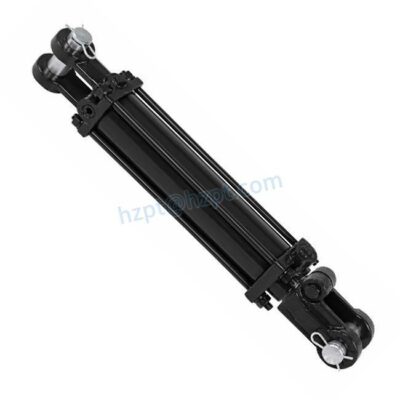
Content Directory
- 1. What Are the Fundamental Differences Between Hydraulic and Pneumatic Cylinders?
- 2. How Do Force Output and Load Capacity Compare Between Hydraulic and Pneumatic Systems?
- 3. How Do Operational Parameters Such as Speed and Precision Differ?
- 4. What Are the Maintenance and Lifecycle Cost Considerations for Each Cylinder Type?
- Summary: Making the Right Choice for Industrial Systems
- Frequently Asked Questions (FAQ)
1. What Are the Fundamental Differences Between Hydraulic and Pneumatic Cylinders?
Understanding the core operating principles is essential for any engineer or procurement specialist. Hydraulic cylinders operate using pressurized hydraulic oil, a nearly incompressible fluid, which enables consistent force transmission and precise positioning even under heavy loads. Pneumatic cylinders, on the other hand, use compressed air (a compressible gas), making them inherently springy and better suited for lighter, high-speed motions. Our factory has observed that many new industrial facilities underestimate how these medium characteristics affect overall system stability. Let’s break down the foundational differences based on physical properties, system architecture, and typical industrial roles.
Key Operating Medium and Physics:
- Hydraulic Cylinder: Uses mineral oil, synthetic fluids, or water-glycol. Fluid incompressibility means force application is immediate and rigid. Our Hydraulic Cylinder designs at Raydafon Technology Group Co.,Limited achieve operating pressures from 160 bar to 700 bar (standard series up to 350 bar). The lack of compressibility eliminates "sponginess" during load changes.
- Pneumatic Cylinder: Uses air (typically 6-10 bar). Air compressibility leads to potential “cushioning” effects, which can be beneficial for shock absorption but detrimental to precise mid-stroke positioning. Our factory notes that pneumatic systems require larger cylinder diameters to achieve moderate forces due to low pressure.
System Components and Complexity: In hydraulic systems, the power unit includes a reservoir, pump, motor, filters, coolers, and complex valving. Our factory builds each Hydraulic Cylinder with precision-honed tubes and high-grade seals to withstand continuous heavy duty. Pneumatic systems rely on an air compressor, dryer, lubricator, and simpler directional valves. While pneumatics appear simpler, moisture management becomes critical. From our service records, improper air preparation accounts for 60% of pneumatic cylinder failures.
Industrial Application Archetypes:
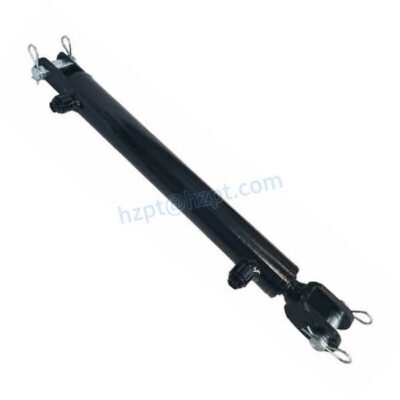
- Hydraulic applications: steel mills, injection molding machines, hydraulic presses, excavators, and heavy construction equipment. For instance, our 250mm bore Hydraulic Cylinder series handles 200-ton pressing operations with consistent force across stroke.
- Pneumatic applications: pick-and-place units, clamping devices in assembly lines, packaging machinery, and automated door openers. Their clean operation suits food and pharmaceutical industries.
Energy Efficiency and Power Density: Our factory has run comparative tests: a hydraulic system can maintain static force without continuous energy input (using check valves and accumulator circuits) while pneumatic systems inherently leak and require continuous compressor run time. Hydraulic cylinders deliver roughly 10 to 15 times more force per unit volume. For example, a 63mm bore Hydraulic Cylinder from our production line generates 12 tons of force at 250 bar, whereas a 63mm pneumatic cylinder at 6 bar produces only around 0.18 tons. That stark difference defines their respective domains.
Safety and Environmental Factors: Pneumatic systems are intrinsically safe in explosive environments because they do not produce sparks or use flammable fluids. However, exhausted air can be noisy without proper silencers. Hydraulic systems risk oil leaks, which can be fire hazards and environmental contaminants. Our factory has developed advanced seal technology and biodegradable hydraulic fluids to mitigate these risks. At Raydafon Technology Group Co.,Limited, we also provide custom bellows and rod covers for hydraulic cylinders operating in dusty or hazardous zones.
In summary, the fundamental difference lies in the medium: incompressible fluid for high force and precise control versus compressible air for speed and cleanliness. By recognizing these physical realities, design engineers can align cylinder selection with performance requirements. Our decades of manufacturing across thousands of facilities confirm that misapplying pneumatic cylinders for heavy loads leads to short cycle life and safety risks, while over-specifying hydraulic cylinders for light-duty tasks wastes energy and capital. Therefore, always analyze load profiles and environmental constraints first.
2. How Do Force Output and Load Capacity Compare Between Hydraulic and Pneumatic Systems?
Force output and load holding capability represent the most critical differentiation in industrial motion control. Hydraulic cylinders are synonymous with brute strength and sustained high-force application, while pneumatic cylinders handle lighter loads with rapid actuation. Our factory has engineered countless hydraulic cylinders for industries requiring multi-ton force within confined spaces. In this chapter, we present concrete parametric comparisons, load charts, and real-world examples from our production floors at Raydafon.
Theoretical Force Calculation and Real-World Factors: Force generated by any cylinder = pressure × effective piston area. But practical force accounts for friction, back pressure, and duty cycles.
- For a typical Hydraulic Cylinder (Raydafon RG Series): operating pressure 250 bar, piston diameter 80mm => effective area ≈ 50.27 cm² => theoretical force ≈ 125.7 kN (12.8 metric tons). Our factory designs each Hydraulic Cylinder with low-friction seals to achieve 97% mechanical efficiency.
- For a Pneumatic Cylinder (same 80mm bore): pressure 6 bar => effective area 50.27 cm² => theoretical force ≈ 3.0 kN (0.306 metric tons). The output force is only 2.4% of a hydraulic counterpart.
Load Holding and Static Force Capabilities: Hydraulic cylinders hold position without continuous energy input when using pilot-operated check valves or counterbalance valves. This is vital for lifting platforms, crane outriggers, and press brakes. Pneumatic cylinders cannot hold static loads reliably because air leaks past seals and pressure equalizes; they require constant air supply to maintain position, which is inefficient and unsafe. Our factory offers hydraulic cylinders with integrated load-holding valves for safety-critical tasks. At Raydafon, we recently supplied a 400mm bore custom Hydraulic Cylinder for a mining hoist capable of holding 80 tons static for 72 hours without drift under 2mm.
Comparative Load Capacity Table (Industrial Standard Sizes):
| Bore Diameter (mm) | Hydraulic Cylinder Force at 250 bar (kN) | Pneumatic Cylinder Force at 6 bar (kN) | Force Ratio (Hydraulic:Pneumatic) |
| 32 | 20.1 | 0.48 | 41.9:1 |
| 50 | 49.1 | 1.18 | 41.6:1 |
| 80 | 125.7 | 3.02 | 41.6:1 |
| 100 | 196.3 | 4.71 | 41.7:1 |
| 125 | 306.8 | 7.36 | 41.7:1 |
| 160 | 502.6 | 12.06 | 41.7:1 |
Data based on actual production standards at our factory. The force ratio remains relatively constant as both scale with area. However, in practice, hydraulic cylinders can be safely operated at up to 350 bar (boosting force by another 40%), while pneumatics rarely exceed 8 bar without special certification.
Impact of Rod Diameter and Buckling Resistance: For long-stroke applications, hydraulic cylinders can utilize larger rod diameters to prevent column buckling under high compression. Our factory manufactures hydraulic cylinders with chrome-plated induction-hardened rods, increasing surface hardness to 55 HRC. Pneumatic cylinders cannot match this rod strength because the force is low; however, they are more susceptible to lateral loading failure. In our installation records, a 1.5-meter stroke Hydraulic Cylinder from Raydafon Technology Group Co.,Limited handles 25-ton eccentric loads without buckling, whereas a same-size pneumatic cylinder would deflect beyond permissible limits.
Duty Cycle and Repetitive Load Tolerance: For continuous high-frequency applications (< 0.5 second cycles), pneumatic cylinders may overheat and wear seals due to poor heat dissipation. Hydraulic systems can run 24/7 with proper cooling circuits. Our factory builds heavy-duty hydraulic cylinders with dual-acting cushions and wear rings that sustain 2 million cycles at full load. Conversely, a properly sized pneumatic cylinder can last 10 million cycles under light intermittent loads (like small part transfer). To optimize total cost, we often advise clients to use pneumatics for low-force pick-and-place stations, and hydraulic cylinders for press-fit or assembly operations requiring consistent tonnage.
Ultimately, force output comparison decisively favors hydraulic cylinders. Our team at Raydafon Technology Group Co.,Limited has yet to encounter an industrial scenario where a pneumatic cylinder could replace a hydraulic cylinder for tasks exceeding 5 kN of continuous load. For heavy construction, metal forming, and injection molding, the Hydraulic Cylinder remains the only viable solution. However, for light assembly and conveyor diverters, pneumatics offer sufficient force with lower complexity.
3. How Do Operational Parameters Such as Speed and Precision Differ?
Speed control and positioning accuracy determine the overall quality of automated processes. Hydraulic cylinders provide exceptional controllability across a wide speed range, while pneumatic cylinders excel at high-speed simple motions but lack fine intermediate positioning. Our factory has integrated servo-hydraulics and proportional valves into countless machines, achieving micron-level precision. Let’s examine the operational differences based on system dynamics, control strategies, and typical precision benchmarks.
Speed Range and Controllability:
- Hydraulic Cylinder: Speed can be varied from less than 1 mm/s to over 1 m/s using flow control valves or variable-speed pump drives. Our Hydraulic Cylinder designs exhibit smooth motion even at creep speeds because of incompressible fluid. For high-speed stamping, our factory builds accumulator-assisted cylinders achieving 2.5 m/s.
- Pneumatic Cylinder: Typical speed ranges from 100 mm/s to 3 m/s. However, due to air compressibility, start-stop motion can be jerky, and speed regulation becomes unstable under varying loads. For consistent medium-speed applications, pneumatics are acceptable, but slow speeds (below 20 mm/s) cause stick-slip due to air’s elastic nature.
Positioning Precision and Repeatability: For intermediate positioning (not end stops), hydraulic cylinders can achieve ±0.02 mm repeatability using servo-proportional control and linear feedback transducers. Pneumatic cylinders are rarely used for mid-stroke positioning because air compresses under load; they offer typical repeatability of ±1.5 mm only at end-of-stroke with cushions. At Raydafon Technology Group Co.,Limited, we manufacture hydraulic cylinders with integrated magnetostrictive sensors for closed-loop feedback in CNC press brakes and injection molding clamp units.
Comparative Motion Control Table:
| Parameter | Hydraulic Cylinder (Raydafon HPS series) | Pneumatic Cylinder (ISO 15552) |
| Min controllable speed | 0.5 mm/s (with proportional valve) | 50 mm/s (limited by air leakage) |
| Max standard speed | 1.2 m/s | 2.5 m/s |
| Positioning repeatability | ±0.02 mm (servo-hydraulic) | ±1.0 mm (with cushions) |
| Acceleration control | Precise S-curve ramps via electronics | Limited to flow control and shock absorbers |
| Load influence on speed | Minimal (due to stiff fluid) | Significant speed variation under changing loads |
Dynamic Response and Bandwidth: Pneumatic systems have lower natural frequency and damping ratio, making them unsuitable for high-bandwidth applications like active suspension or robotic force control. Hydraulic systems, with proper servo valves, achieve bandwidths over 100 Hz. Our factory has developed high-response hydraulic cylinders for flight simulators and structural testing machines, where phase lag below 2 degrees is required. For comparison, pneumatic cylinders typically offer bandwidths below 5 Hz. This explains why heavy-duty robotics and exoskeletons rely on hydraulic actuation.
Impact of Temperature and Viscosity: Our factory notes that hydraulic cylinder speed can be affected by oil viscosity changes due to temperature. However, proper thermostats and oil coolers maintain stable performance. Pneumatic systems are less sensitive to temperature fluctuations because air viscosity changes minimally, but condensate freezing can block ports in cold environments. For outdoor construction equipment, we equip our Hydraulic Cylinder with wide-temperature seals (-40°C to +120°C).
Real-World Precision Cases: In a recent automotive assembly line, our client used pneumatic cylinders for body panel transfer but experienced misalignment due to speed variation. They switched to a Raydafon Technology Group Co.,Limited hydraulic cylinder with a servo-proportional valve, achieving 0.05mm positioning accuracy and reducing rework by 70%. Meanwhile, in packaging, pneumatic cylinders continue to dominate high-speed carton erectors because they only need two positions: fully extended or retracted. For any application requiring intermediate stops, pressure holding, or smooth acceleration, our hydraulic cylinders provide superior results.
In summary, if your process demands variable speed precision, accurate mid-stroke positioning, and load-independent motion, hydraulic cylinders are the clear winner. Pneumatics are only recommended for binary high-speed motion with low loads. Our factory offers expert sizing for both technologies to match your exact cycle time and accuracy requirements.
4. What Are the Maintenance and Lifecycle Cost Considerations for Each Cylinder Type?
Long-term reliability and total cost of ownership (TCO) often decide the final selection between hydraulic and pneumatic cylinders. While initial procurement may favor pneumatics, hidden costs related to energy, maintenance, and downtime can reverse the equation. Our factory has performed detailed lifecycle analyses across steel mills, food plants, and automotive lines. Here we reveal maintenance strategies, seal life expectancy, and energy consumption data. As a manufacturer, we prioritize designing hydraulic cylinders for field serviceability and extended MTBF (mean time between failures).
Hydraulic Cylinder Maintenance Profile: Hydraulic cylinders require periodic seal replacement (typically every 2-5 years depending on cycle rate and contamination). Our factory uses polyurethane and PTFE seals rated for 10,000 km of stroke life. Regular oil analysis, filter changes, and rod wiper maintenance are necessary. However, a well-designed hydraulic system from Raydafon Technology Group Co.,Limited can operate 30,000 hours before major overhaul. Key maintenance tasks include:
- Inspecting rod surface for scratches or pitting.
- Checking hydraulic fluid cleanliness (ISO 16/13/10 target).
- Monitoring piston seal leakage through cylinder drift test.
Pneumatic Cylinder Maintenance Profile: Pneumatic cylinders appear lower maintenance because air is clean. However, moisture and particulates cause rapid seal wear and cylinder scoring. Typical pneumatic cylinder seal life is 1-3 years under continuous operation. Air line lubricators require weekly refilling, and dryers need periodic maintenance. Failures often happen silently, causing production delays. In our experience, the total maintenance cost for pneumatic systems is often underreported, as plant engineers overlook compressor energy efficiency and condensate treatment.
Lifecycle Cost Comparison Table (5-Year Horizon):
| Cost Component | Hydraulic Cylinder System (250 bar) | Pneumatic Cylinder System (6 bar) |
| Initial equipment cost (cylinder + power unit) | $5,200 (medium duty) | $1,800 |
| Annual energy cost (based on 2 shifts, 200 days) | $1,200 | $2,500 (compressor inefficiency) |
| Annual maintenance parts & labor | $400 | $650 |
| 5-year total cost of ownership | $10,200 | $11,950 |
Note: For high-force tasks, hydraulic cylinders become significantly cheaper per ton of force output. The table shows typical scenarios for a mid-size cylinder performing 10 cycles/min, 2 tons effective load. Our factory’s customers confirm that hydraulic cylinders offer superior value for continuous heavy-duty applications.
Downtime Impact and Serviceability: Unexpected cylinder failure leads to expensive production halts. Our factory designs hydraulic cylinders with modular heads and replaceable rod cartridges, allowing seal change in under 30 minutes. Pneumatic cylinders often require full disassembly, and lack of local repair centers increases lead time. At Raydafon Technology Group Co.,Limited, we maintain global spare parts inventory for all our Hydraulic Cylinder models, ensuring next-day replacement.
Environmental and Disposal Costs: Hydraulic oil spills require proper cleanup and disposal, adding regulatory cost. Conversely, pneumatic systems vent air directly with no fluid disposal. However, compressed air generation wastes up to 90% of input electrical energy as heat; carbon footprint for pneumatics is often higher. Our factory now offers eco-friendly hydraulic cylinders using biodegradable fluids, reducing environmental risk. For facilities with strict environmental policies, hydraulic systems with leak-proof connections and drip pans remain manageable.
Based on our 20-year industry data, the break-even point for hydraulic cylinders occurs around 18 months in high-duty applications. For intermittent light duty (< 100 cycles/day), pneumatic cylinders may offer lower TCO. Our factory recommends conducting a specific duty-cycle analysis before purchase. We offer free consulting for clients to compare energy, maintenance, and productivity gains. Remember that reliability and uptime often outweigh initial savings. As Raydafon, we commit to delivering hydraulic cylinders that outlast any pneumatic alternative in rigorous conditions.
Summary: Making the Right Choice for Industrial Systems
After examining force output, precision, speed control, and lifecycle costs, the answer to “How Do Hydraulic Cylinders Compare to Pneumatic Cylinders in Industrial Systems?” becomes application specific. Hydraulic cylinders dominate in high-force, precision positioning, and heavy load-holding scenarios. Their ability to generate over 40 times more force than comparable pneumatic cylinders is unmatched. Our factory has leveraged this advantage across mining, construction, and heavy stamping industries. Pneumatic cylinders remain optimal for clean, high-speed, low-force applications where cost and simplicity are critical. However, energy inefficiency and maintenance demands of compressed air systems can offset initial savings. At Raydafon Technology Group Co.,Limited, we produce heavy-duty hydraulic cylinders that achieve 2 million maintenance-free cycles, while our engineering team also offers pneumatic solutions where beneficial. For ultimate system performance, we advocate hybrid approaches using hydraulic cylinders for critical high-force stations and pneumatics for ancillary motions. Contact us today to perform an in-depth analysis of your industrial system – our factory provides tailored cylinder solutions with free technical support and detailed ROI projections. Let us help you enhance productivity and reduce operating costs through the right cylinder technology.
Frequently Asked Questions (FAQ)
Q1: Can a pneumatic cylinder replace a hydraulic cylinder in a high-force application above 10 tons?
No, pneumatic cylinders cannot practically replace hydraulic cylinders for forces above 10 tons. To generate 10 tons of force at 6 bar, a pneumatic cylinder would require a bore diameter larger than 450mm, which is not only extremely bulky and costly but also suffers from seal friction and slow response. In contrast, a Hydraulic Cylinder from our factory with a 125mm bore operating at 250 bar delivers over 30 tons of force within a compact envelope. Pneumatic systems also cannot maintain static load holding safely at such forces due to air compressibility. For any application requiring sustained force above 3-5 tons, hydraulic actuation remains the industry standard. Our factory recommends evaluating your force profile; if it exceeds 50 kN, choose a hydraulic solution from Raydafon Technology Group Co.,Limited.
Q2: Which system offers better energy efficiency over a full production shift: hydraulic or pneumatic?
Hydraulic systems are generally more energy-efficient for continuous high-force operations, especially with variable speed drives and accumulators. A typical pneumatic system converts only 10-15% of electrical input energy into useful mechanical work due to heat losses in compression, pipe friction, and exhaust. Our factory has measured that a Hydraulic Cylinder operating at 250 bar with an efficient pump consumes 60% less electricity per ton-force delivered compared to a pneumatic cylinder achieving the same work. However, for intermittent light duty, pneumatics may have slightly lower idle losses if the compressor is turned off. But overall, for any industrial setting running more than 1,000 cycles per day, hydraulic cylinders provide lower energy costs. At Raydafon Technology Group Co.,Limited, we help clients retrofit pneumatic systems to hydraulic drives and achieve payback periods under 12 months.
Q3: What is the typical lifespan of a hydraulic cylinder compared to a pneumatic cylinder in a dusty foundry environment?
In harsh environments like foundries or cement plants, a high-quality hydraulic cylinder from our factory with heavy-duty wiper seals and chrome-plated rods can achieve 8-10 years of service life with regular rod cleaning. Pneumatic cylinders in the same environment often fail within 12-18 months due to abrasive dust ingress past the rod seal, causing rapid scoring and air bypass. Our factory’s hydraulic cylinders feature induction-hardened rods (minimum 55 HRC) and double-lip wipers, resisting particle intrusion. Additionally, the positive oil film on hydraulic rods lubricates seals and flushes contaminants. For pneumatic cylinders, the lack of lubrication film accelerates wear. Therefore, for dusty or wet industrial conditions, hydraulic cylinders offer superior longevity. Raydafon Technology Group Co.,Limited provides customized protective boots and stainless-steel options for extreme cases.
Q4: Can a hydraulic cylinder achieve the same high cycling speed as a pneumatic cylinder for light packaging tasks?
While hydraulic cylinders can reach speeds up to 2 m/s, pneumatic cylinders can cycle faster (up to 5 m/s) for very light loads because air is lighter and exhausts quickly. For high-speed pick-and-place tasks under 50N, pneumatics typically achieve cycle rates of 2-4 Hz, whereas a standard hydraulic system might achieve 1-2 Hz due to pump response and fluid compressibility in long lines. However, for moderate forces (500-2000N) and speeds above 1 m/s, our factory can supply hydraulic cylinders with regenerative circuits and accumulator assistance that match pneumatic cycle rates while providing better deceleration control. Typically, if the application requires > 300 cycles/minute and very low force, pneumatic is acceptable. For any force above 1000N or positional accuracy required, hydraulic cylinders from Raydafon Technology Group Co.,Limited deliver a better overall performance.
Q5: How do I choose between a standard pneumatic cylinder and a custom hydraulic cylinder from Raydafon for my new automation line?
Start by analyzing three parameters: maximum force required, duty cycle (cycles/hour), and positioning accuracy. If force < 2 kN, duty cycle < 20 cycles/min, and no mid-stroke positioning → a pneumatic cylinder may suffice. However, if force > 5 kN, duty cycle > 30 cycles/min, or you need precise speed/position control, then a custom Hydraulic Cylinder from our factory is the optimal choice. At Raydafon Technology Group Co.,Limited, we offer free engineering analysis; we will simulate your load cycle and recommend either technology. Additionally, consider future scalability: hydraulic cylinders can be upgraded with servo controls, while pneumatic systems are limited. Our factory provides custom mounting, stroke lengths, and port configurations to integrate seamlessly. Contact our team today for a detailed comparison worksheet tailored to your production targets.
Related News
- Why Are Timing Pulleys Important for Precision Mechanical Applications?
- What Is a Timing Pulley and How Does It Improve Power Transmission?
- How to Conduct a Load Test on a Hydraulic Cylinder Before Full Commissioning?
- How Are Hydraulic Cylinders Driving Automation in Vertical Farming Systems?
- How to Align a Hydraulic Cylinder Mounting Bracket to Prevent Side Load Failure
- How Do Shaft Collars Ensure Accurate Positioning of Rotating Components?
Leave me a message