
How to Align a Hydraulic Cylinder Mounting Bracket to Prevent Side Load Failure
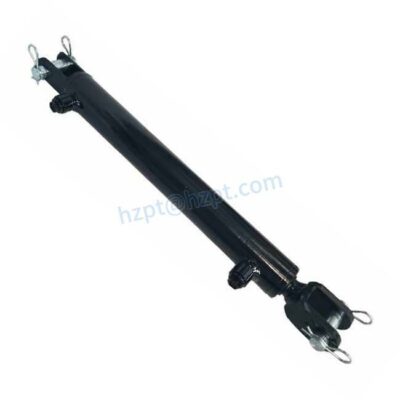
In more than two decades of working with fluid power systems across Southeast Asia, Europe, and the Americas, one recurring nightmare has haunted maintenance engineers and OEM designers alike: the catastrophic side load failure of a hydraulic cylinder. We have seen pristine, high-force cylinders destroyed not by excessive pressure, but by a silent, relentless bending force caused by a millimeter’s misalignment in a mounting bracket. When a mounting bracket forces the rod to extend at even a slight angle, the resulting side load scrapes the piston against the bore, shreds the gland seals, and ultimately bends the rod itself. At Raydafon Technology Group Co.,Limited, our engineering team has spent years dissecting these failures, and the root cause almost invariably traces back to the physical geometry of the installation. This comprehensive guide is crafted to answer the critical question directly: how do you actually achieve perfect alignment to stop side load failure before it starts?
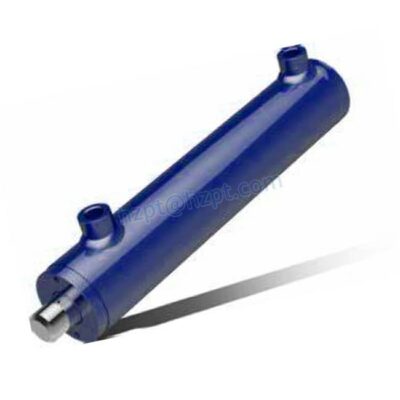
The process is far more nuanced than simply tightening bolts. Proper alignment requires a deep understanding of the distinction between centerline tolerances and angular deflection. When you align a Hydraulic Cylinder mounting bracket, you are not just ensuring the clevis holes line up; you are establishing a theoretical straight line between the trunnion bearings and the load attachment point under full operational stress. A misaligned bracket generates a bending moment that elevates the bearing stress on the rod bushing beyond the material's yield point. Our factory precision-machines every mounting surface to exacting tolerances, yet even our robust Hydraulic Cylinder designs cannot compensate for a mounting structure that twists under weight. In the following sections, we will break down the exact physics of side loading, the step-by-step geometric alignment process, the measurement instruments required, and the precision specifications of the products we manufacture at Raydafon Technology Group Co.,Limited to resist these very forces.
Table of Contents
- Why Does Misalignment Occur in Hydraulic Cylinder Mounting Brackets and Cause Side Load Failure?
- What Precision Tools Are Needed to Accurately Align a Hydraulic Cylinder Mounting Bracket?
- How to Align a Hydraulic Cylinder Mounting Bracket Step-by-Step to Eliminate Side Load?
- How to Verify the Alignment of a Hydraulic Cylinder Under Load to Ensure Long-Term Operation?
- Conclusion
- Frequently Asked Questions
Why Does Misalignment Occur in Hydraulic Cylinder Mounting Brackets and Cause Side Load Failure?
Understanding the root cause of side loading is the first critical step toward preventing it. We often observe a fundamental disconnect on the shop floor: engineers assume that if the base bolts slide in easily, the alignment is correct. This assumption is dangerously flawed. Misalignment does not always announce itself with a glaringly crooked bracket; it often hides within the microscopic elastic deformation of the steel structure. At Raydafon Technology Group Co.,Limited, we define misalignment not as a visual gap, but as any deviation from the concentric cylindrical force envelope that binds the piston rod, the gland, and the load reaction point. When this envelope is broken, the cylinder becomes a lever working against itself.
The Physics of Bending Moments in Hydraulic Cylinder Systems
When a Hydraulic Cylinder extends under pressure, the internal fluid is isotropic—it pushes equally in all directions. However, the piston rod is a slender column connecting the pressurized piston to the external world. If the mounting bracket is fixed and the rod eye is pulled radially even slightly, a bending moment is introduced. Our laboratory tests have consistently shown that a mere 0.5-degree angular misalignment on a 2-inch diameter rod can reduce the bearing life by up to 90%. This happens because the side load creates a brinelling effect on the gland bushing. Instead of sliding smoothly on a hydrodynamic film of oil, the rod edge digs into the soft bronze or ductile iron of the bushing, generating metallic wear particles. These particles circulate back into our Raydafon Hydraulic Cylinder, scoring the piston seals and ultimately causing a catastrophic drop in holding pressure.
Common Installation Scenarios Leading to Misalignment
- Welded Mount Distortion: When a bracket is welded to a structural beam, the heat of the weld pool causes localized expansion. As the steel cools, it contracts unevenly, pulling the mounting face out of a flat plane. We have measured warpage of up to 2mm across a 200mm clevis span, which translates directly into a severe side load vector on the rod.
- Dual Cylinder Synchronization Errors: In applications where two Hydraulic Cylinder units operate in tandem to push a platen, the master and slave cylinder paths must be perfectly parallel. If one mounting bracket is shimmed incorrectly, one cylinder will fight the other, causing a torsional side load that twists the weaker rod.
- Thermal Expansion Constraints: In high-temperature applications like furnace tilting, rigidly fixing the trunnion mount without allowing for the longitudinal expansion of the barrel forces the centerline to bow. As the barrel heats and lengthens, a rigid bracket forces the cylinder into a banana shape, creating an internal side load that scrapes the piston against the inside of the barrel.
- Pivot Pin Binding: Clevis mounts with spherical bearings are designed to accommodate minor angular errors. However, if the clevis gap is too tight or the pin is greased with a dry, high-friction film, the spherical bearing cannot articulate. The bearing seizes, transmitting the bending moment directly into the rod threads, which is the most fragile part of the entire cylinder assembly.
The Cost Implications of Ignoring Side Load Prevention
Ignoring these symptoms is not just a maintenance headache; it is a capital expenditure disaster. The costs cascade quickly. First, a rod seal failure results in external leakage, contaminating the environment (often in sensitive food or marine applications) and creating a slip hazard. Second, the damaged rod surface acts like a rasp against the new seal, ensuring that simple repacking kits fail within weeks. Third, a bent rod will seize mid-stroke, potentially destroying the machine's structural linkage. At our factory, we analyze returned warranty cores, and the evidence is stark: cylinders returned for "rod seal leaks" often show perfect piston seals but utterly destroyed bushings, a classic autopsy report of side load failure. By investing in correct alignment procedures, you are preventing a chain reaction that leads to unplanned downtime, which, in heavy industries like mining or offshore drilling, can cost tens of thousands of dollars per hour in lost production.
What Precision Tools Are Needed to Accurately Align a Hydraulic Cylinder Mounting Bracket?
You cannot manage what you cannot measure. Aligning a hydraulic cylinder bracket by eye or with a builder's level is a game of chance that you will eventually lose. At Raydafon, we equip our field service teams with a specific suite of metrology tools that bridge the gap between rough fabrication tolerances and the micron-level precision a Hydraulic Cylinder demands. The selection of tools depends on the size of the cylinder and the geometric complexity of the mounting configuration, but the underlying principles of measurement remain consistent. The goal is to create a reference datum that represents the theoretical centerline of the force path, and then physically adjust the bracket until the physical metal matches this theoretical line within the specified tolerance.
Essential Measurement Instruments for Bracket Alignment
- Engineer's Dial Indicator with a Magnetic Base: This is the fundamental tool for detecting eccentricity and deflection. We always use a dial indicator with at least 0.01mm resolution. Mount the base on the cylinder rod itself, and rotate the rod by hand. If the indicator’s stylus touches the mounting bracket bore and the needle swings, you have a concentricity error. This dynamic test reveals errors that a static ruler cannot see.
- Cross-Line Laser Level: For long-stroke cylinders (1 meter and above), a laser is indispensable. Place the laser at the fixed pivot point of the bracket and shoot the beam toward the load attachment point. The beam represents the perfect centerline. Our technicians at Raydafon Technology Group Co.,Limited use this to align trunnion mounts by ensuring the laser hits the center of both trunnion pins simultaneously, confirming the barrel is perpendicular to the clevis axis.
- Precision Spirit Level (Sensitivity 0.05mm/m): A standard carpenter's level is useless for this work. You need a master precision level. Place it on the machined surfaces of the cylinder barrel (never on the rough weld seam). We use this to level the cylinder before bolting it down tightly, as a twisted barrel induces a torsional side load.
- Telescoping Bore Gauge Set and Micrometer: If the mounting bracket uses a clevis and pin, the bore of the clevis is critical. We measure the internal bore at multiple points to check for ovality. If the bracket hole is oval from previous wear, the pin will not seat flatly, creating a rocking moment that mimics misalignment.
- Feeler Gauges: Simple but vital. When the bracket is bolted to a flat surface, we try to slide a 0.05mm feeler gauge under the base edge. If it slides in, the bracket is not flat and is likely warped. This "soft foot" condition must be corrected with full-surface stainless steel shims, not just point shimming, which bends the bracket during bolt torquing.
Raydafon Manufacturing Specifications That Simplify Alignment
While the tools handle the measurement, the quality of the bracket and cylinder fundamentally dictates how easy it is to achieve alignment. Our factory integrates specific design features into our standard Hydraulic Cylinder product line to aid in this process. We do not rely solely on the installer's skill; we build a forgiving yet robust interface into the geometry. Below is a technical comparison of the mounting surface specifications we maintain, which directly impact your ability to achieve a true zero-side-load condition.
| Specification Parameter | Raydafon Standard (Clevvis/Foot Mount) | Impact on Side Load Alignment |
| Mounting Face Flatness (per 100mm) | 0.02mm | Ensures the bracket sits flush without introducing a bending moment during bolt tightening. Eliminates the need for corrective shimming. |
| Clevis Bore Roundness | H7 Tolerance (e.g., 30.000mm to 30.021mm) | Ensures a tight pivot fit with no slop. Prevents the pin from tilting inside the bore, which would otherwise create a dynamic side load during stroke reversal. |
| Trunnion Pin Parallelism | 0.05mm over full length | Guarantees that the pivot axis is perfectly perpendicular to the cylinder centerline. A non-parallel trunnion forces the rod to deflect as it extends. |
| Rod End Thread Concentricity | Runout less than 0.03mm | Ensures that the attachment clevis is concentric with the rod bearing axis, preventing the load from being pulled off-center even when the bracket is perfect. |
| Surface Roughness (Ra) of Mounting Feet | Ra 0.8 µm | Provides a high-friction surface coefficient, reducing the tendency of the cylinder to "walk" or shift laterally under heavy vibration, which would alter the original alignment. |
We also manufacture our trunnion pins with hardened and ground surfaces to withstand the Hertzian contact stress from the mount. If a trunnion pin indents under load, it effectively lowers the centerline of the cylinder, introducing an immediate angular misalignment. By selecting a Hydraulic Cylinder from Raydafon Technology Group Co.,Limited, you are starting with a geometric foundation that is flat, parallel, and concentric, allowing your laser and dial indicator measurements to reflect the true mounting conditions rather than manufacturing defects.
How to Align a Hydraulic Cylinder Mounting Bracket Step-by-Step to Eliminate Side Load?
The theoretical ideal of perfect alignment must translate into physical action on the shop floor. This is where the tension between the designer's drawing and the welder's torch often results in failure. The following sequence is the culmination of field installation procedures refined by our senior engineers over decades. It addresses the most common configuration: a rear clevis mount or a foot-mounted cylinder pushing a guided load. The critical philosophy here is "kinematic constraint": you must fully lock down one end of the cylinder and allow the opposing end to find its natural center of rotation before you lock it down. Attempting to bolt both ends tightly while forcing them into position is the primary cause of side load stress.
The Kinematic Alignment Protocol
-
Step 1: Anchor the Load End First.
Begin by disconnecting the rod end from the load. The cylinder rod must be free to slide independently. Align the load attachment point (e.g., a journal bearing on a press platen) with the theoretical centerline of the machine's guide rails. At Raydafon Technology Group Co.,Limited, we always stress that the guide rails of the machine dictate the geometry, not the cylinder. Use your laser level to ensure the load bearing is square to the world (or the machine frame) and lock it down. This is your fixed, immutable point.
-
Step 2: Float the Cylinder Body.
With the load end fixed, slide the rod's clevis onto the load pin, but do not tighten the retaining hardware yet. At this moment, the cylinder body should be supported by an adjustable jack or an overhead crane. We prefer using a soft sling to let the cylinder body hang freely, pivoting at the rod-end joint. Because the rod end is spherical (or at least freely rotating on the pin), the body of the Hydraulic Cylinder will naturally dangle straight down or align itself with gravity, neutralizing any bending moment at the rod threads.
-
Step 3: Sweep the Rear Bracket Position.
With the cylinder hanging naturally, extend the rod approximately 50% of the total stroke. Observe where the rear clevis or foot mount naturally lands on the machine structure. The mounting bracket should be brought to the cylinder, not the other way around. If the rear bracket is already welded in place, this is where you must slot the holes or use offset bushings to make the bracket fit the natural hang of the cylinder. Forcing the rear clevis up or down to meet the bracket will pre-stress the rod.
-
Step 4: Shim for Full-Surface Contact.
Once the rear bracket overlaps the cylinder's clevis, insert the pin. Snug it gently. Now, examine the interface between the bracket base and the machine frame. Insert feeler gauges. Any gap must be shimmed with precision stainless steel foil (0.05mm, 0.1mm, 0.2mm, etc.). Never use stacked slivers of beer cans or scrap sheet metal; this creates edge-loading. Our factory provides pre-cut shim kits for our standard foot mounts to accelerate this critical process.
-
Step 5: Torque Sequence and Dynamic Roll Check.
Torque the rear mounting bracket bolts in a cross pattern to 30% of the final torque. Then, cycle the cylinder by hand (if using a manual pump) or at very low pressure (50 PSI) through its entire stroke. Watch the rod closely. If the rod deflects visibly or the cylinder body shudders during the stroke, stop immediately. The bracket is still forcing the cylinder off-axis. Loosen and adjust the shim stack. Repeat until the stroke is silky smooth at low pressure, then perform the final torqueing to the specified value.
Alignment Tolerances for Specific Cylinder Parameters
General alignment guidelines are helpful, but precise tolerances depend on the cylinder's dimensional characteristics. Our engineering department uses the following maximum permissible deviation guide for rigidly mounted Hydraulic Cylinder systems. These values are derived from the allowable rod bearing stress of our standard gland bushings, ensuring the hydraulic oil film remains unbroken.
| Rod Diameter (mm) | Stroke Length (mm) | Max Angular Error (Degrees) | Equivalent Lateral Offset at Bushing (mm) |
| 25 | 300 | 0.15 | 0.78 |
| 50 | 800 | 0.08 | 1.11 |
| 80 | 1500 | 0.05 | 1.30 |
| 120 | 2500 | 0.03 | 1.30 |
| 200 | 4000 | 0.015 | 1.04 |
As the table indicates, longer stroke cylinders are dramatically more sensitive to angular error. A large, long-stroke Hydraulic Cylinder from our factory must be mounted with extreme precision. We recommend using self-aligning spherical rod eyes for these configurations, which can absorb up to 3 degrees of misalignment without transmitting the moment, though this reduces overall system rigidity slightly. If the application cannot tolerate the backlash of a spherical eye, the rigid alignment method described above is non-negotiable.
How to Verify the Alignment of a Hydraulic Cylinder Under Load to Ensure Long-Term Operation?
A cold, static alignment check is only half the battle. A cylinder that extends smoothly under zero load might still bend violently when the system pressure hits 250 bar and the machine frame deflects. We have investigated failures where the mounting brackets were perfectly aligned on the bench, but the structural steel of the machine twisted so severely under the reactive force that the alignment was lost during the exact moment of peak stress. Therefore, verification must be an active process that simulates the operational stress state. This is where the mechanical integrity of the installation proves its worth, and where the inherent strength of a Raydafon engineered product provides a safety margin against transient deflections.
Dynamic Stress Testing Without Disassembly
You cannot open the cylinder to look inside while it is running, but you can read the external symptoms with high precision. Our field technicians use a combination of vibration analysis, pressure differential monitoring, and thermal imaging to infer the presence of side loading while the machine cycles. These non-invasive techniques allow you to verify alignment without removing the Hydraulic Cylinder from the machine, saving significant downtime.
- Proximity Probe Monitoring of the Rod: Mount an eddy current probe (non-contact displacement sensor) on the cylinder's head, aimed at the naked rod surface near the gland. As the rod extends, the probe measures the gap between the probe tip and the rod. A perfectly aligned cylinder will show a constant gap. An increase or decrease in the gap signifies that the rod is drifting radially, meaning the bracket is steering it off course. A sudden spike in the gap reading at a specific point in the stroke indicates a localized bend.
- High-Frequency Acoustic Emission (AE) Analysis: When a dry side load occurs, the rod squeezes the oil film out of the gland bushing, resulting in micro-spalling of the metal. This generates an ultrasonic acoustic signature, typically in the 100kHz to 1MHz range. We attach a piezoelectric AE sensor to the cylinder gland. A clean, well-aligned cylinder is virtually silent. Crackling, intense acoustic bursts at the stroke reversals confirm metal-to-metal contact caused by side loading.
- Thermal Gradient Mapping of the Gland: Under normal hydraulic operation, the fluid friction generates a uniform, moderate heat across the gland circumference. We use a thermal camera with a macro lens to scan the gland immediately after a 15-minute duty cycle. A side load force concentrates the friction on one side of the bushing. If the thermal image shows a distinct "hot spot" (a temperature differential of 5 degrees Celsius or more localized on the 12 o'clock position, for example), this indicates that the rod is pressing hard against that specific side of the bearing, confirming misalignment.
- Drift Rate Analysis in Counterbalance Circuits: If the cylinder is held statically by a counterbalance valve, a side load can deform the seal and create a slow leak path. By monitoring the linear potentiometer (string pot), we check for cylinder drift. If the drift rate increases exponentially over a short period, it implies the side load is degrading the seal lip, not just a standard internal bypass. Replace the bracket alignment immediately before installing a new seal kit.
Post-Operation Inspection Signs of Side Loading
Verification continues even during scheduled downtime. When you pull the chrome rod for re-sealing, treat the steel surface as a logbook of the machine's life. At our factory, we examine warranty parts using microscopic 3D surface profilometry. Here is what we look for, and what you should look for on your own equipment:
- One-Sided Polishing: If the rod has a mirror-bright, burnished stripe running longitudinally down one side, while the opposite side retains the standard matte chrome finish, it is a definitive sign of a persistent side load bending the rod into the bushing. The bright stripe is essentially a wear band.
- Step-Shaped Wear on the Gland Bushing: Remove the gland. If the internal bushing (often bronze) is worn into a distinct "bell mouth" shape on only one side, the cylinder has been operating at an angle. Concentric wear is acceptable; eccentric bell-mouth wear is a red alert.
- Polished Brackets: Check the mounting bolts and the bracket itself. If the paint is worn away in a circular pattern around the bolt heads, it indicates the base was shifting and walking under load, dynamically altering the alignment during the cycle. We recommend using Hytorc tensioners or equivalent tightening methods to ensure these bolts never loosen.
Verification closes the loop on quality control. By combining the precise kinematic installation methods with these dynamic diagnostic checks, you ensure that your Hydraulic Cylinder operates within the safety envelope designed by our team. Remember, the goal is not just to have a machine that runs today, but one that maintains its efficiency and seal integrity for millions of cycles. The cost of a thermal camera or an acoustic sensor is trivial compared to the price of replacing a custom-engineered, long-stroke cylinder from our inventory, and even more trivial compared to the loss of your operation's uptime.
Conclusion: Precision Alignment is the Foundation of Hydraulic Reliability
Side load failure is not a material defect; it is a geometric error. Throughout this guide, we have moved beyond the simplistic advice of "eyeballing" the bracket, diving deep into the micron-level tolerances that separate a decade of leak-free service from a catastrophic rod seizure in six months. We have established that the proper alignment of a Hydraulic Cylinder mounting bracket requires a fusion of metrology, kinematic mounting theory, and an unflinching commitment to dynamic verification under load. From the laser-guided centering of trunnion pins to the careful shimming of soft feet, every step serves to protect the rod from a bending moment that exceeds its column strength.
At Raydafon Technology Group Co.,Limited, our factory is not just a place where metal is cut; it is a quality assurance hub where every Hydraulic Cylinder is built on a foundation of absolute geometric precision. We hold our mounting surfaces to a flatness of 0.02mm per 100mm and our clevis bores to H7 tolerances precisely because we know these numbers are the first and last line of defense against side loading. However, the finest engineering in the world cannot rescue an installation that twists the cylinder under load. You need a partner who provides not only the product but also the technical knowledge to integrate it successfully. Our team is ready to support your alignment challenges with expert field guidance, custom shim sets, and precision measurement protocols.
Ready to eliminate side load failures in your hydraulic systems? Contact Raydafon Technology Group Co.,Limited today to discuss your application requirements. Our engineering department will review your mounting configuration and ensure that your next actuator installation maintains perfect linear force, extending the seal life and maximizing your operational productivity. Do not let a millimeter of misalignment cost you a fortune in downtime. Reach out to our technical sales team now for a consultation and discover the difference that true geometric precision makes in fluid power applications.
Frequently Asked Questions
What is the maximum acceptable side load for a standard hydraulic cylinder?
The maximum acceptable side load for a standard hydraulic cylinder is generally zero. Standard fluid power cylinders are designed exclusively for linear thrust and are not intended to bear significant radial forces. At Raydafon Technology Group Co.,Limited, our engineering standard dictates that the side load should never exceed 5% of the axial thrust capacity unless the specific design incorporates an external stop tube or dual piston bearings. If a side load is unavoidable due to the design of the machine, you must either install external guide rails to absorb the radial force or use a cylinder with a purpose-built oversize rod bearing and a spherical rod eye. Attempting to absorb a substantial side load with a standard tie-rod or welded cylinder will instantly compromise the oil film on the gland bushing, leading to rapid seal extrusion and rod galling. The tolerance is so tight that any force that visibly deflects the rod during low-pressure cycling is already exceeding safe limits, which is why we emphasize static laser alignment to remove any source of radial stress before the system is pressurized.
How does a spherical bearing in a clevis mount help prevent side load failure?
A spherical bearing prevents side load failure by introducing two additional rotational degrees of freedom at the pivot point, allowing the cylinder to articulate slightly without transmitting a bending moment to the piston rod. When a standard clevis uses a rigid plain bore bushing, any angular misalignment between the cylinder centerline and the load pin axis forces the rod to bend. The spherical bearing absorbs this angular displacement internally, allowing the inner ring to rotate within the outer race while the rod maintains a pure linear push. Our factory installs high-capacity PTFE-lined spherical bearings in our specialized linkage cylinders, which can accommodate up to 6 degrees of angular misalignment in static conditions. However, it is crucial to note that a spherical bearing cannot compensate for structural instability or heavy side thrust; it only relieves the bending stress caused by geometric installation tolerances. The bearing still requires proper gap maintenance to prevent it from seizing under load, which would negate its protective function and immediately reintroduce the bending moment directly into the hardened rod threads.
Can welding a mounting bracket directly to a hydraulic cylinder cause side loading?
Welding a mounting bracket directly to a hydraulic cylinder barrel is one of the most common and destructive causes of induced side loading and should be strictly avoided unless performed under specific, controlled factory conditions. The heat generated during the welding process causes the steel in the barrel wall to expand unevenly. As the weld pool cools and solidifies, it contracts, creating a permanent internal stress field that shrinks the inner diameter of the barrel locally. This creates a tight spot in the bore. When the piston ring passes through this heat-affected zone, it experiences increased friction or physical interference, which manifests as a pulsating side load and can score the cylinder bore. At Raydafon Technology Group Co.,Limited, we do perform welding on custom mounts, but only before the final honing operation. We stress-relieve the entire assembly in a heat-treat oven, then hone the bore to size, effectively removing the local distortion. Field welding on a finished cylinder ruins the geometric integrity, immediately voiding warranty and setting the stage for rapid piston seal failure and gland bushing galling. Always use mechanical clamping or bolted flange connections for field installations.
Why is my hydraulic cylinder bending even after aligning the bracket statically?
If a hydraulic cylinder bends despite a perfect static alignment, the root cause is almost always dynamic structural deflection of the machine frame or the supporting foundation under load. During static setup, the bracket and cylinder are aligned with zero force running through them. However, when the system pressurizes to push a heavy load, the reaction force can elastically deform the steel structure to which the bracket is bolted. For example, a vertical press platen might twist slightly, pulling the rod end off-center during the compression stroke. This dynamic deflection creates a side load condition that only exists when the pump is running. To diagnose this, our engineers use real-time proximity probes to monitor the rod position during a loaded cycle. The solution involves stiffening the machine frame or isolating the cylinder using trunnion mounts that allow the cylinder to "float" and self-align with the shifting load vector, ensuring the bending force is not transferred into the rod. Additionally, check for foundation settling; a concrete base that shifts under the massive reactive force of a long-stroke cylinder will tilt the entire actuator assembly, creating the same bending symptom.
What specific tolerances do Raydafon Technology Group Co.,Limited hold on mounting surfaces to minimize side loading?
To actively minimize the risk of side loading, Raydafon Technology Group Co.,Limited maintains a strict geometric dimensioning and tolerancing profile on all mounting interfaces. Our standard specifications demand a mounting face flatness of 0.02 millimeters per 100 millimeters of surface length, ensuring that no "soft foot" condition exists that would twist the base during bolt tightening. The clevis bores are precision-machined to an H7 tolerance to provide a snug pivot fit with zero lateral slop, preventing the pin from tilting within the bore. Furthermore, the trunnion pins on our pivot-mounted cylinders are ground to a parallelism tolerance of 0.05 millimeters over their full length, which guarantees that the axis of rotation is perfectly perpendicular to the cylinder centerline. We also control the runout of the piston rod thread relative to the rod bearing journal to within 0.03 millimeters, ensuring the load attachment point does not pull the rod off-center even when the bracket is perfectly aligned. These precision manufacturing tolerances provide a flat, square, and concentric foundation that significantly reduces the installer's burden and directly prevents the geometric errors that cause side load failure.
Related News
- Why Are Timing Pulleys Important for Precision Mechanical Applications?
- What Is a Timing Pulley and How Does It Improve Power Transmission?
- How to Conduct a Load Test on a Hydraulic Cylinder Before Full Commissioning?
- How Are Hydraulic Cylinders Driving Automation in Vertical Farming Systems?
- How Do Hydraulic Cylinders Compare to Pneumatic Cylinders in Industrial Systems?
- How Do Shaft Collars Ensure Accurate Positioning of Rotating Components?
Leave me a message