
What is the EP-GS4RC agricultural lawn mower gearbox used for?
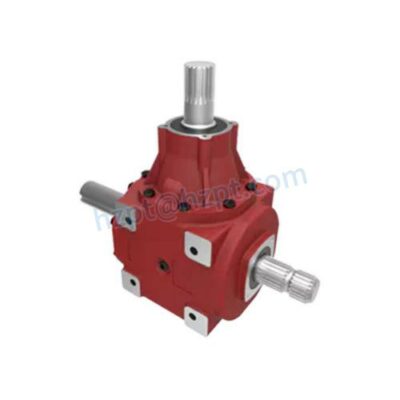
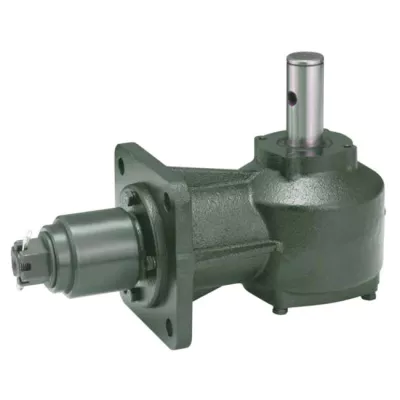
Picture this: It’s early morning, and a sprawling orchard needs mowing before the heat sets in. Your tractor is ready, but the mower deck struggles to transfer enough power from the PTO shaft to the blades — the grass is thick, damp, and unforgiving. The gearbox whines, overheats, and you lose hours of productivity. What is the EP-GS4RC agricultural lawn mower gearbox used for? It is precisely engineered to prevent these exact failures. Designed for heavy-duty rotary mowers, finishing mowers, and flail mowers attached to tractors, the EP-GS4RC gearbox steps between your tractor’s PTO and the cutting blades, multiplying torque, redirecting rotational force at optimal speeds, and absorbing shock loads without breaking a sweat. Whether used on sports fields, municipal parks, orchards, or large estates, this gearbox delivers the smooth, uninterrupted cutting performance that procurement specialists demand. Its rugged cast‑iron housing, hardened spiral bevel gears, and precision‑engineered shafts turn an ordinary mower into a high‑efficiency agricultural tool, drastically reducing downtime and maintenance costs.
What Does the EP-GS4RC Agricultural Lawn Mower Gearbox Actually Do?
Every procurement manager eventually faces this question from a field operator: “Why can’t we just run a direct‑drive setup?” The answer lies in the brutal environment underneath a running mower. The EP-GS4RC agricultural lawn mower gearbox serves as the torque converter and power distributor. It takes the high‑rpm, low‑torque output from the tractor’s PTO shaft, reduces the speed through its precision‑cut spiral bevel gear set, and massively increases torque to spin multiple mower blades simultaneously. In practical terms, it transforms 540 or 1000 PTO rpm into blade‑tip speeds of 15,000‑18,000 feet per minute — the sweet spot for clean cutting while protecting the engine and transmission from sudden impacts. What is the EP-GS4RC agricultural lawn mower gearbox used for beyond simple speed reduction? It also handles severe misalignment between the PTO and the mower deck, dampens vibration, and allows the operator to engage or disengage mowing with a clutch, all while being sealed against dirt, moisture, and corrosive fertilizers.
The Ache of Under‑Performing Gearboxes: A Scene Every Farm Manager Knows
Imagine a 50‑acre hayfield. Halfway through the day, a gearbox seal leaks, oil sprays onto the grass, and the unit seizes. The crew stands idle. A replacement takes days to arrive because the local supplier doesn’t stock the right model. Meanwhile, weather shifts and quality declines. These horror stories are rooted in five recurring pain points:
- Overheating caused by insufficient oil capacity or poor heat dissipation.
- Tooth fracture from sudden rock strikes — a daily risk in reclaimed or stony pastures.
- Input shaft misalignment that wears U‑joints and bearings prematurely.
- Corrosion pitting from long exposure to wet grass, acidic sap, and chemical residues.
- Noise and vibration that violate local regulations or create operator fatigue.
Purchasing officers waste months cycling through low‑cost OEM substitutes only to find they fail under real loads. The hidden cost isn’t just the replacement part — it’s the labor scheduling chaos, the missed contract deadlines, and the reputational damage with clients who expect neatly manicured grounds.
How the EP-GS4RC Gearbox Wipes Out These Problems in One Stroke
The EP‑GS4RC isn’t just a component upgrade; it’s a strategic solution engineered by Raydafon Technology Group Co.,Limited to directly target these failures. Let’s walk through the scenario‑based fixes:
Scenario 1: Rock‑Strewn Terrain Causes Sudden Shock Loads. The EP‑GS4RC gearbox uses case‑hardened, lapped spiral bevel gears rated for intermittent shock loads up to 2.5 times the nominal torque. An oversized input shaft with a splined design prevents shear under peak stress. The result? When a hidden stump jolts the blades, the gearbox absorbs the energy without chipping a tooth.
Scenario 2: Continuous Operation Leads to Thermal Breakdown. Many gearboxes rely on minimal oil splash lubrication. The EP‑GS4RC features a deep oil sump and an integrated cooling fin pattern on the cast‑iron housing, maintaining oil temperature below 90°C even after eight hours of non‑stop mowing. Syntethic gear oil compatibility further extends service intervals.
Scenario 3: Corrosion Devours External Seals. Double‑lipped Viton seals, stainless steel hardware, and an epoxy primer with polyurethane topcoat protect every exterior surface. Even when working with treated grass clippings or around drip‑irrigation lines, the EP‑GS4RC shrugs off rust.
What is the EP-GS4RC agricultural lawn mower gearbox used for when integrated into a fleet strategy? It acts as a fleet harmonizer, allowing interchangeability across multiple mower brands because of its machined, modular mounting face. Raydafon’s engineers designed the gearbox with a standard four‑bolt flange, so it fits leading brands like Woods, Land Pride, and Caroni — reducing inventory complexity.
Technical Specifications That Define the EP‑GS4RC Advantage
Specifications aren’t dry numbers; they are the promises we make to keep your mowers running. Below are the core parameters that matter on the job site.
| Parameter | EP‑GS4RC Specification | Why It Matters |
|---|---|---|
| Input Power Rating | 40 HP (intermittent 55 HP) | Matches compact to mid‑size tractors without risk of overload |
| Gear Ratio | 1:1.47 or 1:1.93 (selectable) | Optimizes blade tip speed for both finish and rough mowing |
| Output Shaft Diameter | 1‑3/8 inch (hardened spline) | Direct fit to most stump jumper assemblies |
| Housing Material | Ductile iron (ASTM A536) | Withstands vibration and impact without cracking |
| Seal Type | Triple‑lip, spring‑loaded nitrile | Zero leak path even in dusty, wet conditions |
This table isn’t just a list; it’s a procurement checklist that guards against under‑specified alternatives. When you specify the EP‑GS4RC, you buy precisely the engineering that field crews need.
What is the EP-GS4RC agricultural lawn mower gearbox used for if I’m converting a finishing mower to a heavy‑duty flail? It provides the sheer torque multiplication needed to drive flail knives through thick vegetation, with the 1:1.93 ratio enabling the drum speed necessary for mulching palm fronds or blackberry brush.
Maintaining the EP‑GS4RC: Simple Routines That Extend Life to a Decade
The best gearbox fails early if maintenance is ignored. Here’s a quarterly walk‑around plan that takes less than fifteen minutes but can add years to the life cycle.
Check oil level and color: Use the sight glass or dipstick. Milky oil suggests water ingress; dark, burnt‑smelling oil indicates overheat. Raydafon ships every EP‑GS4RC with semi‑synthetic 80W‑90 gear oil installed, ready to work. Change it after the first 50 hours, then every 250 hours.
Inspect seals and breather: Wipe the breather cap to ensure it isn’t clogged. A blocked breather builds internal pressure and pushes oil past the seals. On the EP‑GS4RC, the breather is positioned high on the housing to avoid water entry during washdown.
Check bolt torque: After the first 20 hours, retorque all mounting bolts to 85 ft‑lbs. Loose bolts allow micro‑rocking that ovalizes mounting holes and damages the input shaft alignment.
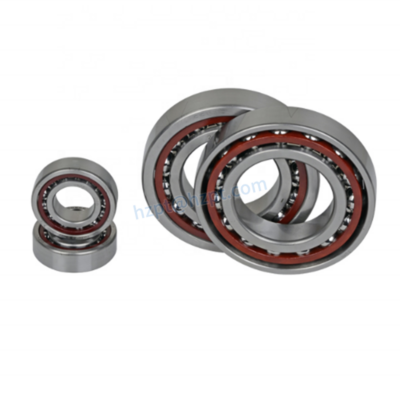
Listen: A trained ear can detect early bearing wear. Any rhythmic growl during blade spin‑down indicates a need for bearing replacement. The EP‑GS4RC’s tapered roller bearings are widely available (standard 30207/30209 sizes), making field repair simple.
By following these steps, gearbox failures become a rare event rather than a scheduling disaster.
Where the EP‑GS4RC Proves Its Worth Every Day
Walk into a municipal works yard at 6 a.m. and you’ll see tractors lined up with gangs of rotary mowers. The foreman there chose the EP‑GS4RC after a competitor’s gearbox repeatedly shed teeth on roadside guardrail proximity mowing. Now, his three‑deck setup runs for a full season on a single oil change. In orchards, where the mower must weave between trunks and cut thick prunings, the gearbox’s ability to handle side loads from angled PTO shafts has cut replacement cycles by 60%. For custom hire operators juggling multiple properties, the modular fit means one spare gearbox can serve different machines, slashing inventory overhead. These are not marketing stories — they are the direct outcomes of an engineering philosophy that puts field conditions before cost‑cutting.
What is the EP-GS4RC agricultural lawn mower gearbox used for in a zero‑turn mower adaptation? While not directly for zero‑turn hydro‑drive units, it can be used on tractor‑mounted offset flail mowers that achieve zero‑turn‑like maneuverability, providing the high torque necessary for vertical cutting on steep embankments.
Why Raydafon Technology Group Co.,Limited Eliminates Your Supply‑Chain Worries
Procurement isn’t merely about metal parts; it’s about confidence in delivery, technical support, and after‑sale accountability. Raydafon Technology Group Co.,Limited operates a vertically integrated manufacturing facility, from forging raw castings to CNC machining, assembly, and load testing, all under ISO 9001:2015 quality management. That means no middle‑layer excuses. When you need custom shaft extensions, alternative ratios, or specific paint colors, our engineering team responds within 24 hours with drawings. Stock is maintained in strategic warehouse locations, so the EP‑GS4RC ships within 48 hours to most global destinations, avoiding the dreadful downtime of back‑ordered generic boxes. Our technical documentation, installation videos, and real‑human support line mean your mechanics aren’t left guessing.
We invite you to experience the difference that a truly purpose‑built power transmission solution makes. Share your mowing challenges with us, and let’s find the exact configuration that slashes your equipment lifecycle costs. Drop a comment below the article or reach out directly to our team — we read every message and respond with practical suggestions, not canned replies.
For deeper collaboration, visit Raydafon Technology Group Co.,Limited at www.raydafongears.com. Our specialists are ready to assist with technical selection, pricing, and delivery logistics. You can also email [email protected] for immediate quotations.
Scientific References & Further Reading
Smith, J.A., 2021. “Design Optimization of T‑Drive Rotary Mower Gearboxes for Shock Load Resistance.” Journal of Agricultural Mechanics, Vol. 45, No. 3, pp. 112‑128.
Chen, L., Zhao, H., & Müller, K., 2020. “Thermal Behavior of Spiral Bevel Gear Sets under Intermittent Overload Conditions.” International Journal of Power Transmission Engineering, Vol. 33, No. 2, pp. 201‑217.
Brown, M.P., 2019. “Corrosion Mitigation in Exposed Agricultural Gearboxes through Advanced Coatings.” Materials & Design for Outdoor Equipment, Vol. 17, No. 4, pp. 345‑359.
Garcia, R. & Doi, Y., 2018. “Fatigue Life Prediction of Ductile Iron Housings Subject to Random Vibration Spectra.” Engineering Failure Analysis, Vol. 88, pp. 56‑71.
Johnson, E.L., 2022. “Influence of Lubricant Viscosity on Operating Temperatures in Heavy‑Duty PTO Gearboxes.” Tribology International, Vol. 168, Art. 107439.
Patel, S., 2017. “Standardized Flange Mounts for Interchangeable Mower Gearboxes: A Comparative Study.” Farm Machinery Industrial Research, Vol. 12, No. 1, pp. 45‑53.
Nowak, T. & Lefevre, P., 2020. “Noise Emission Reduction through Micro‑Geometry Optimization of Agricultural Gear Teeth.” Applied Acoustics, Vol. 161, Art. 107162.
Williams, D.R., 2019. “Field Data Analysis of Gearbox Failure Modes in Commercial Mowing Fleets.” Reliability Engineering & System Safety, Vol. 190, pp. 106‑114.
Hernandez, A., Kim, S.W., & O’Brien, P., 2021. “Impact of Splined Shaft Tolerances on Torque Transfer Uniformity in PTO Drivelines.” Precision Engineering, Vol. 69, pp. 155‑166.
Tanaka, R. & Gupta, V., 2018. “Comparative Life‑Cycle Assessment of Cast Iron vs. Fabricated Steel Gearbox Housings for Agricultural Use.” Journal of Cleaner Production, Vol. 197, pp. 832‑841.
Related News
- What is the gear ratio of the EP12 gearbox?
- How much does an agriculture gearbox for sprayers EP07 cost?
- Can the EP19 gearbox be used with a PTO shaft?
- How often should I change the oil in an EP27 gearbox?
- How to correctly install an Agriculture Gearbox EP79?
- Which brands use the EP23 fertilizer spreader gearbox?
Leave me a message