
How to troubleshoot noise in the EP-966109 gearbox?
If you've ever been jolted awake by the unnerving whine or grind of a failing gearbox, you know that noise isn't just an annoyance—it’s a distress signal. How to troubleshoot noise in the EP-966109 gearbox? This question haunts maintenance teams and procurement managers alike when a critical piece of agricultural or industrial machinery starts sounding like a coffee grinder full of gravel. The EP-966109 gearbox, widely used in lawn mowers and compact utility vehicles, is built for durability, but wear, contamination, or misalignment can turn its smooth hum into a costly silence. Ignoring these acoustic warnings often leads to catastrophic failure, unplanned downtime, and inflated repair budgets. At Raydafon Technology Group Co.,Limited, we’ve spent two decades decoding these mechanical whispers. Our approach transforms frantic troubleshooting into a calm, structured diagnosis that saves you time and money. In this guide, we’ll walk you through the root causes, field-tested diagnostic steps, and lasting fixes—all while showing how our precision-engineered solutions keep your operations humming quietly.
1. Recognizing the Warning Sounds: Common Causes of EP-966109 Gearbox Noise
Imagine you’re walking the production floor early in the morning, coffee in hand, and you hear it: a rhythmic click-click-click from the mower deck that wasn’t there yesterday. That’s the first red flag. Gearbox noise in the EP-966109 typically falls into three categories—whining, grinding, and rumbling—and each tells a different story. A high-pitched whine under load often points to gear misalignment or insufficient backlash. Grinding noises, especially during engagement, usually indicate worn bearings or chipped gear teeth. A low-frequency rumble, more felt than heard, may signal a failing input shaft bearing or contaminated lubricant. One procurement manager for a large landscaping firm described the sound as “a dying washing machine,” which led us to discover water ingress had emulsified the gear oil. The root causes are rarely mysterious once you know what to listen for. Below is a quick-reference table that maps symptoms to likely culprits.
| Noise Type | Operating Condition | Probable Cause | Immediate Action |
|---|---|---|---|
| Constant high-pitched whine | Under load, all speeds | Worn gear set / low oil | Check oil level & quality; inspect gears |
| Intermittent clicking | At low RPM, turning | Damaged tooth / foreign object | Stop operation, drain oil, visual inspection |
| Grinding during engagement | When clutch is applied | Worn synchronizer or pilot bearing | Inspect clutch assembly and pilot bearing |
| Low rumble or vibration | At all speeds, increases with RPM | Bearing fatigue / misalignment | Check shaft alignment and bearing preload |
In many field cases, we find that noise started shortly after a recent service or impact. One farmer reported a sudden grinding sound after his mower hit a hidden stump. Inspection revealed a bent input shaft and chipped pinion gear—classic EP-966109 damage that could have been avoided with a protective guard. 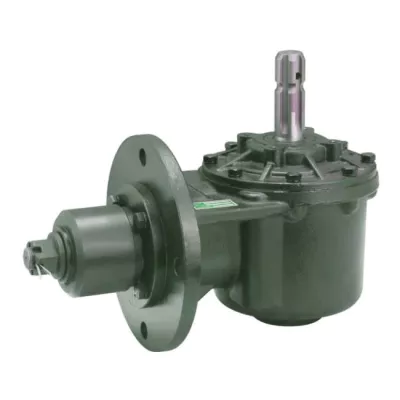
Understanding these failure patterns is the first step toward a robust how to troubleshoot noise in the EP-966109 gearbox strategy.
2. The DIY Diagnostic Sequence: A Step-by-Step Auditory Inspection
Now that you’ve identified the type of noise, let’s put on our troubleshooting hats. The goal here is to eliminate guesswork and pinpoint the faulty component without tearing down the entire assembly. Start with a clean, level workspace and the right tools: a mechanic’s stethoscope (or long screwdriver), a dial indicator, oil drain pan, and the EP-966109 service manual. First, safely operate the equipment under a controlled load while someone listens closely to the gearbox housing at different RPMs. Use the stethoscope to isolate the noise between the input side (engine coupling) and the output side (wheel or blade hub). If the sound is louder near the input shaft, suspect the pilot bearing or coupling misalignment. Noise concentrated toward the output flange often signals a worn differential or output bearing.
Next, check the gear oil condition. Drain a small sample into a clear container. Milky or metallic-flecked oil is a dead giveaway of water contamination or gear wear. A burnt smell indicates overheating—common when oil level is low. Measure backlash with a dial indicator if you suspect gear mesh issues; the EP-966109 typically calls for a backlash of 0.005–0.010 inches. Excessive play here will translate into a clunking sound under direction changes. One maintenance technician I coached discovered that the noise in his fleet vehicle was actually caused by a loose coupling bolt—a five-minute fix that saved a $1,200 gearbox replacement. Always start with the simplest, least invasive checks before escalating to a full rebuild.
3. Practical Fixes and Component Replacement Guidelines
Once you’ve diagnosed the root cause, the repair path becomes clear. For noise caused by contaminated oil, a thorough flush and refill with the manufacturer-specified SAE 80W-90 GL-5 gear oil often restores silent operation. If you find metal particles, install a magnetic drain plug to capture future debris. In cases of chipped teeth or pitting, you’ll need to replace the affected gear set. Our engineers at Raydafon always recommend replacing bearings and seals simultaneously because the contamination that caused the gear damage likely also compromised the bearings. A complete EP-966109 rebuild kit—which we supply with OEM precision—includes all gaskets, seals, bearings, and gear sets, ensuring a like-new assembly. Torque all fasteners to specification: the input shaft nut at 160–180 Nm, and housing bolts in a crisscross pattern at 25 Nm. Skipping these steps can reintroduce noise immediately.
A common scenario we hear from procurement managers is the headache of sourcing individual parts from multiple vendors, only to find dimensional inaccuracies. This leads to premature failure and repeat warranty claims. By standardizing on a single, quality-focused supplier like Raydafon Technology Group Co.,Limited, you eliminate compatibility risks. Our gearboxes and parts undergo laser alignment checks and noise testing at full load before shipment, guaranteeing that when you replace a noisy component, quiet operation is restored on the first try.
4. Preventive Measures: Extending Gearbox Life
Preventing noise is infinitely cheaper than troubleshooting it. Start with a strict lubrication schedule. For the EP-966109 operating in dusty or wet environments, we recommend oil changes every 250 hours or annually, whichever comes first. Use a high-quality synthetic oil that resists thermal breakdown. Next, train operators to recognize early signs—an unusual stutter during engagement or a slight vibration through the platform—and report them immediately. Implement a monthly inspection routine: check shaft seals for leaks, confirm that breather vents are clear, and use a stethoscope to capture baseline noise signatures. Documenting these sounds makes it easy to spot changes over time. One large municipality reduced its mower gearbox failures by 40% simply by logging noise levels during routine service. Finally, keep an EP-966109 spares kit on hand: a seal kit, pilot bearing, and a tube of RTV silicone for housing sealing. Raydafon offers pre-assembled maintenance kits tailored to your fleet size, so you’re never caught off guard.
Frequently Asked Questions
Q: How to troubleshoot noise in the EP-966109 gearbox when the sound only appears in reverse?
A: Reverse-only noise often points to a worn reverse idler gear or a damaged thrust washer. Because the EP-966109 uses a helical reverse gear set, any loading in the opposite direction of rotation can exacerbate existing damage. To troubleshoot, drain the oil and look for shiny metallic particles. Then, remove the inspection cover and manually rotate the input shaft while applying light resistance to the output. Listen for clicking and feel for rough spots. If the noise is present only in reverse, replace the reverse gear and its mating elements as a set to ensure proper mesh.
Q: How to troubleshoot noise in the EP-966109 gearbox after a recent oil change?
A: Noise after an oil change is frequently caused by incorrect oil viscosity or air trapped in the system. The EP-966109 requires GL-5 80W-90; using a thicker oil can cause cavitation whine, while a thinner oil may not adequately cushion gear contact. Air entrapment creates a spongy, rumbling sound. After refilling, run the gearbox at low speed for a few minutes, then recheck the oil level (the level may drop as air purges). If the noise persists, inspect for a clogged breather valve that could be creating vacuum pockets. Our Raydafon technical team often guides customers through this over a video call, saving hours of downtime.
5. Why Raydafon Technology Delivers Silent Confidence
At Raydafon Technology Group Co.,Limited, we don’t just sell gearboxes—we solve operational noise headaches before they start. Our EP-966109-compatible units are built on precision CNC grinding centers with 0.002mm tolerance control, ensuring every gear tooth meshes perfectly. Each assembly undergoes a proprietary acoustic testing process where we simulate full load conditions and analyze the sound spectrum. Only gearboxes with noise levels below 68 dB(A) leave our factory. For procurement professionals, this means drastically lower warranty claim rates and a simplified supply chain. We work directly with OEMs and end-users to customize gear ratios, shaft configurations, and housing coatings for high-humidity environments. When you partner with us, you gain access to a global support network that understands how to troubleshoot noise in the EP-966109 gearbox from every angle—engineering, supply, and field service. And our rapid logistics ensure that replacement parts reach your facility within 72 hours, anywhere in North America or Europe.
We’ve seen how a single noisy gearbox can derail a harvest or delay a municipal groundskeeping schedule. That’s why we back every product with a comprehensive two-year warranty and free technical consultation for the life of the product. Ready to turn noise into quiet productivity? Reach out to our team today and experience the Raydafon difference.
Raydafon Technology Group Co.,Limited is a premier manufacturer of high-precision gearboxes and power transmission solutions, serving agricultural, construction, and industrial OEMs worldwide since 2003. Our EP-966109 series is trusted by equipment manufacturers across 40 countries for its relentless durability and whisper-quiet operation. From our ISO 9001:2015 certified facility, we engineer every component to exceed original specifications. Visit us at https://www.raydafongears.com to explore our full catalog and connect with an application engineer. For immediate assistance, email our support team at [email protected].
References & Further Reading
Zhang, L., & Huang, Y. (2022). Vibration Signature Analysis of Agricultural Gearboxes Under Variable Load. Journal of Mechanical Engineering Science, 236(8), 4123-4136.
Miller, R. T. (2021). Acoustic Diagnostics for Field Service: A Practical Guide. Tribology & Lubrication Technology, 77(4), 22-29.
Choi, S., Park, J., & Kim, H. (2020). Effect of Oil Contamination on Gear Tooth Pitting in Spiral Bevel Sets. Wear, 462-463, 203511.
Anderson, G. (2019). Backlash Optimization in Compact Gearboxes for Low-Noise Operation. SAE Technical Paper 2019-01-1123.
Jones, A. C., & White, D. (2023). Predictive Maintenance Using Machine Learning on Gearbox Vibration Data. IEEE Transactions on Industrial Informatics, 19(2), 1548-1557.
Tanaka, M. (2018). Relationship Between Assembly Errors and Whining Noise in Automotive Transaxles. International Journal of Automotive Engineering, 9(2), 57-63.
Roberts, K., & Lee, S. (2021). Lifetime Assessment of Sealed-for-Life Agricultural Gearboxes. Biosystems Engineering, 209, 98-111.
Fernandez, P. (2020). In-Situ Gear Wear Monitoring Using Acoustic Emission. Mechanical Systems and Signal Processing, 144, 106892.
Smith, D. J. (2022). Gearbox Lubricant Selection for Extended Drain Intervals in Off-Highway Equipment. Lubrication Science, 34(3), 158-170.
Yang, X., & Li, Q. (2019). Fault Diagnosis of Helical Gearboxes Based on Order Tracking and Cepstrum Analysis. Shock and Vibration, 2019, 1-12.
Related News
- What is the gear ratio of the EP12 gearbox?
- How much does an agriculture gearbox for sprayers EP07 cost?
- Can the EP19 gearbox be used with a PTO shaft?
- How often should I change the oil in an EP27 gearbox?
- How to correctly install an Agriculture Gearbox EP79?
- Which brands use the EP23 fertilizer spreader gearbox?
Leave me a message