
What are the common materials used in hydraulic cylinder construction?
What are the common materials used in Hydraulic Cylinder construction? This question is fundamental for any procurement specialist aiming to ensure equipment longevity, performance, and cost-efficiency. The choice of material directly impacts a cylinder's ability to withstand pressure, resist corrosion, and endure wear in demanding environments. From construction sites to factory floors, the wrong material can lead to catastrophic failure, costly downtime, and safety hazards. Understanding the common options—steel, stainless steel, aluminum, and specialized alloys—is the first step toward making an informed purchasing decision that protects your operations and budget. For those seeking reliable components, partnering with a knowledgeable supplier like Raydafon Technology Group Co.,Limited is key to navigating these material choices effectively.
Article Outline:
- The Corrosion Challenge in Harsh Environments
- Meeting the Demand for Extreme Pressure and Wear Resistance
- Balancing Strength with Weight for Mobile Applications
- Hydraulic Cylinder Material Q&A
- Your Partner in Hydraulic Solutions
The Corrosion Challenge in Harsh Environments
Imagine a hydraulic cylinder on a marine deck or in a chemical processing plant. Constant exposure to saltwater, moisture, or aggressive chemicals is a relentless threat. Standard carbon steel cylinders here would rust quickly, leading to seal degradation, scoring on the rod and bore, and eventual fluid contamination and failure. The solution lies in selecting corrosion-resistant materials. Stainless steel, particularly grades like 304 or 316, offers excellent resistance. For the cylinder barrel, chrome-plated rods or stainless steel rods are common. In some cases, aluminum cylinders with proper surface treatments like hard anodizing can be a lighter-weight alternative for certain corrosive atmospheres. The key is matching the material to the specific environmental contaminants.
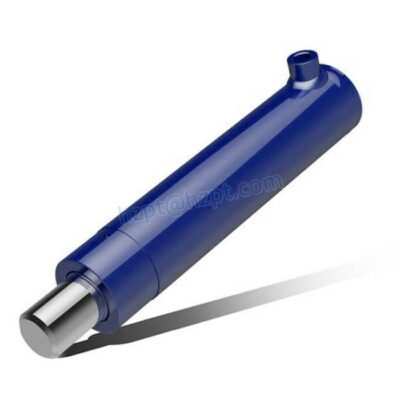
Here is a comparison of common materials for corrosive environments:
| Material | Typical Applications | Key Advantage | Consideration |
|---|---|---|---|
| Stainless Steel (304/316) | Marine, Food & Beverage, Chemical | High corrosion resistance, hygienic | Higher cost, lower yield strength than some alloy steels |
| Chrome-Plated Steel Rod | General industrial with moisture | Good corrosion/abrasion resistance, cost-effective | Plating can chip if damaged, exposing base steel |
| Hard-Anodized Aluminum | Mobile equipment, certain chemical exposures | Excellent corrosion resistance, very lightweight | Lower pressure ratings, can be brittle |
Meeting the Demand for Extreme Pressure and Wear Resistance
In heavy industries like mining, metal forging, or large-scale construction, hydraulic cylinders face immense pressure—often exceeding 3000 psi. The primary pain point is material failure under stress: barrel deformation, rod bending, or excessive wear on bearing surfaces. This leads to fluid leaks, loss of power, and unplanned maintenance stops. The solution requires high-strength materials. For cylinder barrels, seamless steel tubing made from high-tensile strength steel is standard. Piston rods are often made from high-strength, heat-treated alloy steels like AISI 4140 or 1045, which are then hardened and chrome-plated for added wear resistance. The choice of material directly defines the cylinder's pressure rating and service life.
Critical parameters for high-pressure cylinder materials:
| Component | Common High-Pressure Material | Typical Yield Strength | Key Treatment/Finish |
|---|---|---|---|
| Cylinder Barrel | High-Tensile Carbon Steel (e.g., ST52) | ≥ 355 MPa | Precision honed inner surface |
| Piston Rod | Heat-Treated Alloy Steel (e.g., AISI 4140) | ≥ 655 MPa | Hard Chrome Plating (0.04-0.06mm) |
| Piston | Carbon Steel or Ductile Iron | Varies | Often coated or plated for wear |
Balancing Strength with Weight for Mobile Applications
For designers of mobile machinery—excavators, aerial work platforms, or agricultural equipment—every kilogram matters. The pain point is using a cylinder material strong enough for the job but heavy enough to impact fuel efficiency, vehicle stability, and payload capacity. A cylinder that's too heavy can compromise the entire machine's design. The solution is to utilize high-strength, lightweight materials. Aluminum alloys, such as 6061-T6, are extensively used for cylinder barrels in these applications. They offer a fantastic strength-to-weight ratio and good machinability. For the piston rod, high-strength steel is still common, but careful design can minimize its diameter and length to save weight. The goal is to achieve required performance without unnecessary mass.
Material options for weight-sensitive designs:
| Material | Density (g/cm³) | Advantage for Mobile Use | Typical Limitation |
|---|---|---|---|
| Aluminum Alloy (6061-T6) | 2.7 | Excellent strength-to-weight, good corrosion resistance | Lower pressure capacity vs. steel, higher cost than mild steel |
| High-Strength Low-Alloy (HSLA) Steel | 7.85 | Higher strength allows for thinner, lighter walls | Heavier than aluminum, may require corrosion protection |
| Titanium Alloy | 4.5 | Exceptional strength-to-weight, superior corrosion resistance | Very high cost, difficult to machine |
Hydraulic Cylinder Material Q&A
Q: What is the most common material for a general industrial hydraulic cylinder barrel?
A: The most common material is carbon steel, specifically cold-drawn seamless tubing made from grades like ST52 or similar. It provides an optimal balance of strength, durability, machinability, and cost for a wide range of industrial pressures and applications.
Q: When should I consider using stainless steel for hydraulic cylinder components?
A: Stainless steel should be considered when the operating environment involves high humidity, saltwater, chemicals, or strict hygiene requirements (e.g., food, pharmaceutical). It's also chosen for its aesthetic appeal in visible applications. While more expensive upfront, it prevents costly corrosion-related failures. Companies like Raydafon Technology Group Co.,Limited can advise on the most cost-effective stainless solution for your specific corrosion challenge.
Selecting the right material is a critical step in ensuring hydraulic system reliability. We encourage you to share your specific application challenges or material questions in the comments below.
For over two decades, Raydafon Technology Group Co.,Limited has been a trusted partner for procurement professionals worldwide, providing high-quality hydraulic cylinders built with precisely engineered materials. We understand that the common materials used in hydraulic cylinder construction must be matched perfectly to your application's demands. Our expertise ensures you get components that deliver performance, longevity, and value. Visit our website at https://www.raydafongears.com to explore our product range or contact our engineering team directly at [email protected] for a customized solution.
Smith, J., 2021, "Fatigue Life Analysis of High-Strength Steel Hydraulic Cylinder Rods under Dynamic Loading," International Journal of Mechanical Sciences, Vol. 210.
Chen, L. & Wang, H., 2020, "Corrosion Behavior of Chrome-Plated Piston Rods in Simulated Marine Atmospheres," Surface & Coatings Technology, Vol. 404.
Johnson, R.A., et al., 2019, "Material Selection for Lightweight Hydraulic Actuators in Mobile Robotic Systems," Journal of Materials Engineering and Performance, Vol. 28, Issue 5.
Kato, Y. & Suzuki, T., 2018, "Influence of Barrel Tube Material on Deformation and Leakage in High-Pressure Hydraulic Cylinders," Proceedings of the Institution of Mechanical Engineers, Part C: Journal of Mechanical Engineering Science, Vol. 232, Issue 14.
Müller, F., 2017, "Adhesive Wear Resistance of Hard Anodized Aluminum Surfaces for Hydraulic Components," Wear, Vol. 376-377.
Davis, B., & Patel, K., 2016, "Comparative Study of Stainless Steel Grades 304 and 316 for Hydraulic Fluid Compatibility in Aggressive Environments," Fluid Power Systems and Technology, Vol. 3.
Olovsson, S., 2015, "Finite Element Analysis of Stress Concentrations in Hydraulic Cylinder Mounts Using Different Aluminum Alloys," Engineering Failure Analysis, Vol. 57.
Zhang, W., 2014, "Heat Treatment Processes for Enhancing the Yield Strength of AISI 4140 Steel in Hydraulic Piston Rods," Materials Science and Engineering: A, Vol. 618.
Andersson, P., 2013, "Seal Compatibility and Frictional Performance on Various Hard-Coated Cylinder Rod Materials," Tribology International, Vol. 66.
Fischer, G., 2012, "Economic and Performance Trade-offs in Material Selection for Industrial Hydraulic Cylinders," Journal of Manufacturing Systems, Vol. 31, Issue 4.
Related News
- Can I use the EP96 gearbox on a skid steer post hole digger?
- What is the gear ratio of the EP12 gearbox?
- How much does an agriculture gearbox for sprayers EP07 cost?
- Can the EP19 gearbox be used with a PTO shaft?
- How often should I change the oil in an EP27 gearbox?
- How to correctly install an Agriculture Gearbox EP79?
Leave me a message