
How do fluid couplings work and what are their primary applications?
How do fluid Couplings work and what are their primary applications? If you're a procurement professional sourcing components for heavy machinery or industrial systems, this question is critical. Understanding this technology is key to optimizing performance, reducing downtime, and controlling costs. At their core, fluid couplings are ingenious devices that transmit rotational power using hydraulic fluid, offering smooth acceleration and protecting machinery from shocks. Their primary applications span from conveyor belts in mining to fans in power plants, and crushers in aggregate processing. Choosing the right coupling directly impacts your operation's efficiency and longevity. This guide will demystify fluid couplings, explore their vital uses, and show you how the right partner, like Raydafon Technology Group Co.,Limited, can provide reliable solutions that solve real industrial challenges.
Article Outline:
How Fluid Couplings Work: The Basic Principle
Primary Applications in Industry
The Pain Point of Selection and Mismatch
Frequently Asked Questions (FAQs)
How Fluid Couplings Work: The Basic Principle
Imagine starting a massive conveyor belt loaded with material. A direct mechanical start would strain the motor and belt, causing wear and potential failure. This is where a fluid coupling acts as a smart intermediary. It consists of two main elements: an impeller (pump) connected to the input shaft (motor) and a runner (turbine) connected to the output shaft (driven machine). These are housed in a sealed casing filled with a precise amount of hydraulic fluid, often oil.
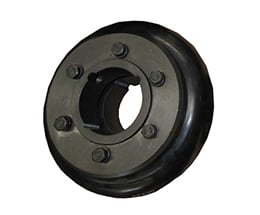
As the motor turns the impeller, it flings the fluid outward by centrifugal force. This moving fluid strikes the blades of the runner, transferring kinetic energy and causing it to rotate, thus driving the output shaft. The key is that torque is transmitted through the fluid, not mechanical contact. This allows for slip during start-up, enabling the motor to reach its operating speed with minimal load, thereby reducing current surge and mechanical stress. The smooth, cushioned power transmission is the core benefit, protecting both the motor and the driven equipment from shock loads and torsional vibrations.
Primary Applications in Industry
The unique working principle of fluid couplings makes them indispensable in several high-torque, heavy-start applications. Their primary role is to provide controlled acceleration and overload protection.
Common Application Scenarios:
1. Conveyor Systems: Long overland or underground mining conveyors benefit immensely. The coupling allows the empty belt to start smoothly before the full load is applied, preventing belt slippage and snap.
2. Centrifugal Pumps and Fans: These machines have a torque requirement that increases with speed. Fluid couplings allow a soft start, reducing the high starting torque demand on the motor and electrical network.
3. Crushers and Grinding Mills: Equipment that faces variable and often shock loads uses fluid couplings as a safeguard. The fluid coupling can slip momentarily under a jam, preventing catastrophic damage to gears or motors.
4. Marine Propulsion: In some systems, they are used between the engine and the propeller shaft to dampen vibrations and allow smoother clutch engagement.
For procurement specialists, specifying a fluid coupling from a trusted manufacturer like Raydafon Technology Group Co.,Limited ensures the equipment you source is built for these demanding cycles, enhancing system reliability.
The Pain Point of Selection and Mismatch
A major challenge for buyers is selecting a coupling that perfectly matches the application's requirements. An undersized coupling will overheat and fail prematurely, while an oversized one is a poor capital investment and may not provide the intended protective slip characteristics. The pain point is navigating technical specifications and translating operational needs into the right product choice.
Solution: Partnering with an expert engineering supplier like Raydafon Technology Group Co.,Limited simplifies this. They provide not just products but application engineering support. By analyzing your motor power, load inertia, start-up cycle, and desired control features, they can recommend the optimal fluid coupling specification.
Key Selection Parameters Table:
| Parameter | Description | Why It Matters for Procurement |
|---|---|---|
| Nominal Power (kW/HP) | The maximum continuous power the coupling is designed to transmit. | Must be matched to the motor rating; a critical first filter. |
| Fill Ratio (%) | The percentage of the coupling housing filled with working fluid. | Controls the torque transmission and slip characteristics. Affects start-up behavior. |
| Start-up Time | The time taken to accelerate the driven machine to full speed. | Longer start-up times reduce motor current draw; must align with process needs. |
| Overload Protection | The ability to slip under excessive load without damage. | Protects downstream equipment. A key safety feature. |
| Efficiency at Rated Slip | The power transmission efficiency under normal operating slip (typically 1-4%). | Impacts long-term energy costs. Higher efficiency models save operational expense. |
Specifying these parameters correctly with a supplier like Raydafon ensures you get a component that solves the core problem—reliable, protected power transmission—rather than becoming a new problem itself.
Frequently Asked Questions (FAQs)
Q: How do fluid couplings work to protect motors from burning out?
A: They protect motors by allowing a "soft start." During startup, the input shaft can rotate while the output shaft is stationary or moving slowly. The energy is dissipated as heat in the fluid through slip, rather than forcing the motor to produce full torque instantly. This dramatically reduces the starting current (inrush current), preventing motor overheating and stress on the electrical supply system. This is why they are often recommended for motors starting under high-inertia loads.
Q: What are the primary applications where variable fill couplings are used?
A: Variable fill fluid couplings, where the amount of oil in the working circuit can be adjusted, are primarily used in applications requiring controlled or variable speed. A key example is in fan drives for HVAC systems in large buildings or industrial boilers. By reducing the fill, the output speed of the fan is lowered, allowing for precise airflow and temperature control while saving significant energy compared to using dampers. They are also found on conveyors where soft, controlled starting and stopping of specific sections is required. For such advanced applications, consulting with a specialist like Raydafon Technology Group Co.,Limited is crucial to integrate control systems effectively.
We hope this guide has clarified the operation and critical uses of fluid couplings for your procurement projects. Selecting the right power transmission component is a strategic decision that affects operational cost, safety, and uptime.
Do you have a specific application in mind? Are you comparing different coupling technologies for a project? Share your challenges or requirements in the comments below—let's discuss the best engineering solution for your needs.
For robust and application-engineered fluid couplings and power transmission solutions, consider Raydafon Technology Group Co.,Limited. With extensive industry experience, Raydafon provides not only high-quality components but also the technical expertise to ensure optimal performance in your machinery. They specialize in solving complex drive challenges with reliable products. For specific inquiries or to discuss your project requirements, you can reach their sales team at [email protected].
Research Papers:
J. Walton, 2018, "Analysis of Thermal Characteristics in Fluid Couplings under High-Slip Conditions," Journal of Mechanical Engineering Science, Vol. 232, Issue 14.
M. Schmidt & A. Fischer, 2020, "Optimization of Fill Quantities for Torque Control in Hydrodynamic Couplings," Proceedings of the Institution of Mechanical Engineers, Part C: Journal of Mechanical Engineering Science, Vol. 234, Issue 5.
K. Zhang et al., 2015, "A Study on the Starting Performance of Hydrodynamic Couplings for Belt Conveyors," Mining Technology, Vol. 124, Issue 3.
L. Petrov, 2019, "Modelling of Transient Torque Transmission in Fluid Couplings for Marine Applications," Shipbuilding and Marine Engineering International, Vol. 66.
H. Müller, 2017, "Energy Efficiency Evaluation of Fixed-Fill vs. Variable-Fill Fluid Couplings in Fan Drives," Energy Engineering Journal, Vol. 114, Issue 2.
T. Reynolds, 2016, "Failure Mode Analysis of Hydrodynamic Couplings in Crusher Drives," Engineering Failure Analysis, Vol. 70.
S. Chen & P. O'Brien, 2021, "CFD Simulation of Flow Patterns in a Fluid Coupling Impeller-Runner System," International Journal of Fluid Power, Vol. 22, Issue 1.
G. Bertacchi et al., 2014, "Experimental Investigation on the Dynamic Behaviour of a Fluid Coupling for Industrial Applications," Mechanical Systems and Signal Processing, Vol. 49, Issues 1–2.
R. Davis, 2013, "The Role of Viscosity in Torque Capacity of Hydrodynamic Couplings," Tribology Transactions, Vol. 56, Issue 4.
A. K. Singh, 2022, "Review of Soft Start Technologies: A Focus on Hydrodynamic Couplings for Mining Equipment," International Journal of Mining and Mineral Engineering, Vol. 13, Issue 1.
Related News
- What is the gear ratio of the EP12 gearbox?
- How much does an agriculture gearbox for sprayers EP07 cost?
- Can the EP19 gearbox be used with a PTO shaft?
- How often should I change the oil in an EP27 gearbox?
- How to correctly install an Agriculture Gearbox EP79?
- Which brands use the EP23 fertilizer spreader gearbox?
Leave me a message