
How Can Shaft Collars Prevent Axial Movement in High-Speed Machinery?
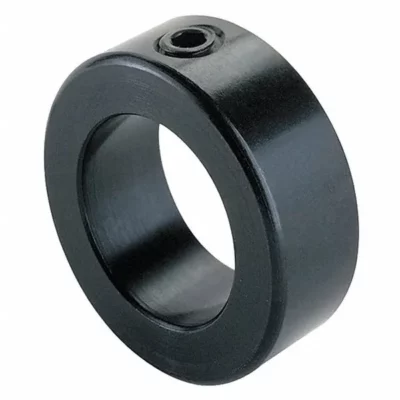
In high-speed machinery, axial movement is one of the most overlooked yet critical mechanical challenges. When components shift along the shaft axis during rotation, even a minor displacement can result in vibration, misalignment, bearing wear, or catastrophic system failure. The answer to this problem lies in a precision-engineered Shaft Collar that locks components securely in position while maintaining rotational balance and mechanical integrity.
How Can Shaft Collars Prevent Axial Movement in High-Speed Machinery? The solution involves a combination of clamping force, surface contact precision, material strength, and design optimization. A well-designed Shaft Collar applies uniform radial pressure around the shaft, creating frictional resistance strong enough to eliminate axial displacement without damaging the shaft surface. At Raydafon Technology Group Co.,Limited, we manufacture advanced Shaft Collar solutions specifically engineered for high-speed industrial applications where accuracy, durability, and safety are non-negotiable.
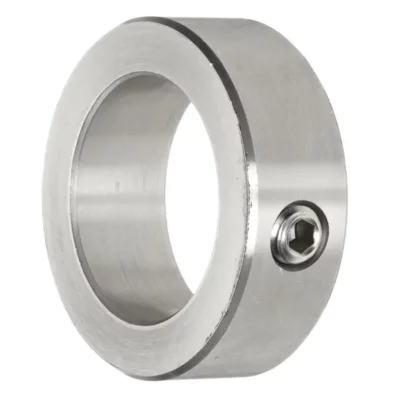
Table of Contents
- What Causes Axial Movement in High-Speed Machinery?
- How Does a Shaft Collar Mechanically Lock Components in Place?
- Why Do Material and Design Choices Determine Performance?
- How Do Our Product Parameters Meet Industrial Demands?
- Conclusion
- FAQ
What Causes Axial Movement in High-Speed Machinery?
Axial movement occurs when rotating components shift along the shaft direction rather than remaining fixed in position. In high-speed environments, this movement becomes amplified due to centrifugal forces, vibration cycles, thermal expansion, and torque fluctuations. Understanding these causes explains why a precisely engineered Shaft Collar is essential.
Primary Causes of Axial Displacement
-
High Rotational Speed
As RPM increases, even microscopic clearances can lead to measurable axial drift. -
Thermal Expansion
Shafts expand under heat generated by friction and load, altering dimensional tolerances. -
Vibration and Dynamic Load
Imbalance or shock loads push components along the shaft axis. -
Improper Bearing Positioning
If bearings are not properly retained, axial shifting becomes inevitable. -
Torque Reversal
Frequent directional changes create repeated axial stress cycles.
Without a properly selected Shaft Collar, these forces accumulate over time, resulting in:
- Bearing damage
- Coupling misalignment
- Gear wear
- Reduced equipment lifespan
- Unexpected downtime
At Raydafon Transmission, we analyze real-world industrial scenarios to ensure our solutions address these high-speed challenges. Our engineering team in our factory performs dynamic load simulations to verify that each Shaft Collar maintains holding strength even under extreme RPM conditions. In automated production lines, CNC spindles, packaging systems, and high-speed conveyors, axial retention is not optional. It is foundational to operational stability. This is precisely why the Shaft Collar remains one of the most critical positioning components in modern mechanical assemblies.
How Does a Shaft Collar Mechanically Lock Components in Place?
The mechanical principle behind a Shaft Collar is straightforward yet highly engineered. It converts tightening torque into radial clamping force. That force generates sufficient friction between the collar bore and the shaft surface, preventing axial displacement.
Core Mechanical Principles
-
Uniform Radial Clamping
Split collars distribute pressure evenly, preventing shaft deformation. -
Friction-Based Retention
The holding power depends on the friction coefficient between collar and shaft material. -
Surface Contact Optimization
Precision machining ensures maximum contact area. -
Balanced Mass Distribution
Prevents imbalance at high rotational speeds.
Different types of Shaft Collar designs offer different advantages:
- Set screw collars for compact assemblies
- One-piece clamp collars for moderate load applications
- Two-piece clamp collars for superior holding power
- Double-wide collars for increased axial load capacity
Raydafon Technology Group Co.,Limited produces each Shaft Collar using high-precision CNC machining centers. Our production standards ensure bore concentricity, face perpendicularity, and surface roughness are tightly controlled to maintain consistent clamping force. In high-speed machinery, imbalance can cause vibration amplification. Our factory performs rotational symmetry inspection to ensure each collar maintains dynamic balance, especially in applications exceeding 6,000 RPM. By integrating advanced machining tolerance control, our Shaft Collar solutions deliver reliable axial positioning across industries such as robotics, automation, medical devices, food processing equipment, and aerospace assemblies.
Why Do Material and Design Choices Determine Performance?
Material selection is not simply about strength. It directly affects friction coefficient, corrosion resistance, fatigue life, and temperature stability. A high-speed environment requires a Shaft Collar built for long-term endurance.
Common Materials and Their Advantages
| Material | Tensile Strength | Corrosion Resistance | Typical Applications |
| Carbon Steel 1045 | 570 MPa | Moderate | General industrial use |
| Alloy Steel 4140 | 655 MPa | Moderate | High load systems |
| Stainless Steel 304 | 515 MPa | High | Food and medical machinery |
| Stainless Steel 316 | 580 MPa | Very High | Marine and chemical systems |
| Aluminum 6061 | 310 MPa | Good | Lightweight assemblies |
At Raydafon Technology Group Co.,Limited, we provide multiple material options depending on the mechanical demands. Our engineering team evaluates torque requirements, temperature exposure, and environmental factors before recommending the most suitable Shaft Collar configuration.
Design Enhancements for High-Speed Stability
- Black oxide surface treatment for improved corrosion resistance
- Zinc plating for extended durability
- Precision ground bore finishing
- High-grade alloy socket screws
- Custom keyway and threaded configurations
Our factory implements strict inspection protocols including hardness testing, dimensional verification, and torque validation to ensure consistent holding capacity.
How Do Our Product Parameters Meet Industrial Demands?
Technical specifications determine real-world performance. At Raydafon Technology Group Co.,Limited, our Shaft Collar products are engineered to meet demanding industrial standards.
Standard Product Parameters
| Parameter | Specification Range |
| Bore Diameter | 3 mm to 150 mm |
| Outer Diameter Tolerance | ±0.02 mm |
| Bore Tolerance | H7 Precision Fit |
| Surface Roughness | Ra 1.6 µm |
| Maximum Operating Temperature | 300°C depending on material |
| Maximum RPM Capacity | Up to 10,000 RPM |
| Clamping Screw Grade | 12.9 Alloy Steel |
Our Shaft Collar products undergo:
- Axial load testing
- Dynamic balance inspection
- Salt spray corrosion testing
- Torque resistance validation
- Fatigue life cycle testing
Through advanced manufacturing systems, our factory ensures consistent batch quality and traceability. Raydafon Technology Group Co.,Limited maintains strict ISO-compliant production processes, ensuring every Shaft Collar delivered meets global industrial requirements. Our commitment to precision manufacturing and reliable engineering solutions positions Raydafon Technology Group Co.,Limited as a trusted supplier in global markets.
Conclusion
How Can Shaft Collars Prevent Axial Movement in High-Speed Machinery? The answer lies in precision engineering, proper material selection, optimized clamping force, and strict manufacturing control. A high-quality Shaft Collar transforms tightening torque into stable axial retention, protecting critical machinery components from displacement and wear.
At Raydafon Technology Group Co.,Limited, we combine advanced machining, rigorous inspection, and application-focused design to ensure long-term performance. If you are looking for a reliable supplier capable of meeting demanding industrial requirements, our team is ready to provide technical support, custom solutions, and competitive quotations. Contact us today to discuss your project requirements and experience professional engineering support from our factory.
FAQ
Q1: How Can Shaft Collars Prevent Axial Movement in High-Speed Machinery?
They generate uniform radial clamping force that creates friction between the collar and shaft surface, resisting axial displacement caused by vibration, torque, or thermal expansion.
Q2: How Can Shaft Collars Prevent Axial Movement in High-Speed Machinery under extreme RPM conditions?
By maintaining concentric machining tolerances and balanced mass distribution, high-quality collars prevent vibration amplification while sustaining holding power at speeds up to 10,000 RPM.
Q3: How Can Shaft Collars Prevent Axial Movement in High-Speed Machinery compared to set screws alone?
Clamp-style collars distribute pressure evenly around the shaft, avoiding surface damage and providing stronger, more consistent holding force than single-point set screw designs.
Q4: How Can Shaft Collars Prevent Axial Movement in High-Speed Machinery exposed to high temperatures?
Using heat-resistant materials such as alloy steel or stainless steel ensures dimensional stability and clamping integrity even when exposed to elevated operating temperatures.
Q5: How Can Shaft Collars Prevent Axial Movement in High-Speed Machinery while extending equipment lifespan?
By eliminating component drift and reducing bearing stress, properly selected collars minimize wear, lower vibration levels, and extend the overall operational life of rotating systems.
Related News
- Why Are Timing Pulleys Important for Precision Mechanical Applications?
- What Is a Timing Pulley and How Does It Improve Power Transmission?
- How to Conduct a Load Test on a Hydraulic Cylinder Before Full Commissioning?
- How Are Hydraulic Cylinders Driving Automation in Vertical Farming Systems?
- How to Align a Hydraulic Cylinder Mounting Bracket to Prevent Side Load Failure
- How Do Hydraulic Cylinders Compare to Pneumatic Cylinders in Industrial Systems?
Leave me a message