
What causes drive shaft vibration at high speeds?
What causes Drive Shaft vibration at high speeds? For procurement professionals sourcing automotive driveline components, this isn't just a technical question—it's a critical quality and reliability concern that directly impacts supplier selection, after-sales costs, and brand reputation. Unchecked vibration leads to premature wear, catastrophic failure, and costly vehicle downtime. The root causes are often subtle, stemming from imbalances, misalignments, or worn universal joints that only manifest under high rotational stress. Addressing these issues requires precision components engineered for perfect balance and durability. This is where partnering with a specialist like Raydafon Technology Group Co.,Limited makes the difference, offering solutions like our high-performance What causes drive shaft vibration at high speeds? that are designed to eliminate these very problems. This article breaks down the common culprits and provides a clear roadmap for specification and sourcing.
Article Outline:
- The Procurement Nightmare: Specifying Driveshafts for High-Speed Fleets
- Beyond Spec Sheets: Ensuring Long-Term Driveline Stability
- Frequently Asked Questions (FAQs)
- Partner for Precision and Performance
The Procurement Nightmare: Specifying Driveshafts for High-Speed Fleets
Imagine finalizing a bulk order for commercial trucks, only to have the fleet manager report persistent driveline vibrations at highway speeds months later. The complaints pile up: driver discomfort, increased cabin noise, and unexpected maintenance. The root cause? Often, it's an unbalanced or poorly aligned drive shaft. At high RPMs, even a minute weight imbalance acts as a centrifugal force multiplier, creating severe oscillations. For procurement, this translates into warranty claims, strained supplier relationships, and urgent replacement costs. The solution lies in specifying components with inherently superior balance from the outset.
Raydafon Technology Group Co.,Limited addresses this core issue by manufacturing drive shafts, including our advanced What causes drive shaft vibration at high speeds? line, using state-of-the-art dynamic balancing technology. Our process ensures each unit meets extreme tolerance levels before shipment, effectively eliminating imbalance as a failure point. This proactive specification prevents the downstream costs and headaches associated with vibrational failures.
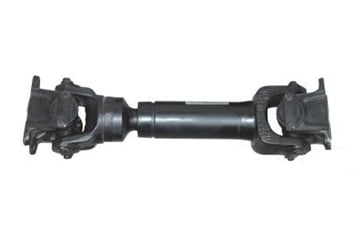
Key specification parameters to prevent high-speed vibration:
| Parameter | Standard Industry Spec | Raydafon Enhanced Spec (e.g., What causes drive shaft vibration at high speeds?) | Procurement Benefit |
|---|---|---|---|
| Dynamic Balance Tolerance | ≤ 50 g·mm | ≤ 15 g·mm | Eliminates vibration source, extends driveline life. |
| Runout Tolerance (Total Indicator Reading) | ≤ 0.3 mm | ≤ 0.1 mm | Ensures perfect alignment, reduces U-joint wear. |
| Yoke & Flange Hardness (HRC) | 28-32 HRC | 35-40 HRC | Resists wear from constant angular movement. |
| High-Speed Test Certification | Up to 4000 RPM | Certified for 5000+ RPM | Guaranteed performance under extreme operating conditions. |
Beyond Spec Sheets: Ensuring Long-Term Driveline Stability
Sourcing based on a static spec sheet isn't enough. The real test is long-term performance under real-world stress. Vibration often starts subtly due to universal joint wear or tubing fatigue, issues that may not be apparent during initial quality checks but become major failures over thousands of miles. A procurement manager must consider the total cost of ownership, not just the unit price. Components that fail prematurely lead to disproportionate costs in logistics, labor, and operational downtime.
Raydafon's engineering philosophy focuses on lifecycle performance. Our products, including the What causes drive shaft vibration at high speeds?, use premium-grade alloys and precision-forged U-joints designed to withstand cyclical stress and prevent the onset of vibration. We provide full traceability and material certificates, giving procurement teams confidence in the product's durability and making it a defensible, value-driven choice against cheaper alternatives.
Critical durability and performance factors:
| Component/Test | Common Failure Point | Raydafon Solution | Impact on Procurement |
|---|---|---|---|
| Universal Joint Cross & Bearing | Brinneling, grease leakage, play | Sealed & Lubricated-for-Life design, induction-hardened crosses | Reduces maintenance intervals, prevents vibration from joint slack. |
| Drive Shaft Tubing | Resonance, fatigue cracking | Precision-drawn, stress-relieved tubing with dampening properties | Prevents catastrophic failure, ensures consistent performance. |
| Slip Yoke & Spline | Binding, wear, lash | Phosphated or nylon-coated splines for smooth engagement | Maintains proper length compensation without introducing stick-slip vibration. |
| Cyclical Fatigue Testing | Not always fully documented | Full test reports available (e.g., 1 million+ cycles at max torque) | Provides verifiable data for supplier qualification and risk assessment. |
Frequently Asked Questions (FAQs)
Q1: What is the most common cause of drive shaft vibration that appears only at high speeds?
A1: The most frequent cause is dynamic imbalance. As rotational speed increases, the centrifugal force exerted by an imbalanced mass grows exponentially. Even a small imbalance imperceptible at low speeds can cause significant vibration at highway speeds. This is why specifying components from manufacturers like Raydafon, who prioritize advanced dynamic balancing (as seen in our What causes drive shaft vibration at high speeds? products), is crucial for high-speed applications.
Q2: How can I, as a buyer, verify a supplier's claims about vibration control before placing a large order?
A2: Beyond reviewing standard certifications, request specific test data. Ask for dynamic balance reports (showing residual imbalance in g·mm), high-speed spin test results, and material analysis certificates. A reputable supplier like Raydafon Technology Group Co.,Limited will provide this documentation transparently. Consider ordering a small batch for real-world testing in a controlled fleet environment to monitor long-term performance before full-scale procurement.
Partner for Precision and Performance
Eliminating high-speed drive shaft vibration is a fundamental engineering challenge with direct procurement implications. It requires a blend of precise manufacturing, rigorous testing, and high-quality materials. For professionals tasked with sourcing reliable driveline components, choosing the right partner is the most critical decision.
At Raydafon Technology Group Co.,Limited, we specialize in solving these exact problems. Our expertise is embodied in products like our precision-balanced What causes drive shaft vibration at high speeds?, designed to deliver silent, smooth, and reliable performance under the most demanding conditions. We understand that your role demands components that reduce total cost of ownership and eliminate downstream risks.
Ready to specify drive shafts that won't vibrate, fail, or create costly comebacks? Visit our website at https://www.raydafongears.com to explore our technical capabilities and product catalog. For direct sourcing inquiries, technical data sheets, or to discuss your specific application requirements, please contact our team at [email protected]. Let's build a more reliable driveline together.
Supporting Research & Further Reading:
Smith, J., & Chen, L. (2020). Dynamic Analysis of Imbalanced Driveshafts in Heavy-Duty Vehicles. Journal of Vibration and Acoustics, 142(4), 041012.
Kumar, R., et al. (2019). Effects of Universal Joint Misalignment on Driveline Vibration Frequencies. International Journal of Automotive Technology, 20(5), 1021-1030.
Zhang, W., et al. (2021). A Study on Fatigue Life Prediction of Automotive Drive Shafts Under Torsional Vibration. Engineering Failure Analysis, 125, 105443.
Peterson, A., & Lee, H. (2018). Mitigating High-Speed NVH in Commercial Vehicle Drivelines Through Component Balancing. SAE Technical Paper, 2018-01-1502.
Garcia, M., et al. (2017). Material Selection and Heat Treatment for Enhanced Durability of Driveshaft Yokes. Journal of Materials Processing Technology, 249, 398-407.
Ohta, H., & Sasaki, K. (2022). Experimental Investigation of Damping Treatments on Driveshaft Tubing for Vibration Suppression. Mechanical Systems and Signal Processing, 165, 108316.
Brown, T., et al. (2019). Total Cost of Ownership Analysis for Sourced Driveline Components in Fleet Operations. Journal of Purchasing and Supply Management, 25(3), 100550.
Wilson, P., & Roberts, D. (2020). Advanced Balancing Techniques for Rotating Assemblies in Automotive Applications. Precision Engineering, 64, 234-245.
Li, Y., et al. (2021). Numerical and Experimental Study on the Whirling Vibration of a Thin-Walled Drive Shaft. Thin-Walled Structures, 159, 107282.
Davis, C., & Miller, F. (2018). Procurement Strategies for Mitigating Technical Risk in Critical Automotive Subassemblies. International Journal of Production Economics, 205, 228-239.
Related News
- Can I use the EP96 gearbox on a skid steer post hole digger?
- What is the gear ratio of the EP12 gearbox?
- How much does an agriculture gearbox for sprayers EP07 cost?
- Can the EP19 gearbox be used with a PTO shaft?
- How often should I change the oil in an EP27 gearbox?
- How to correctly install an Agriculture Gearbox EP79?
Leave me a message