What are the advantages of using hardened steel #35 chain sprockets?
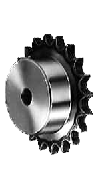
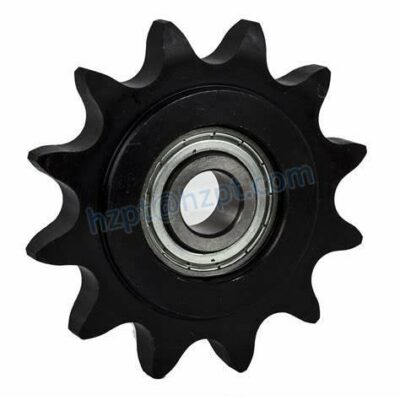
What are the advantages of using hardened steel #35 chain sprockets? For industrial procurement professionals navigating demanding applications, this question is central to ensuring reliability and cost-efficiency. These components are far more than simple gears; they are critical power transmission elements designed for longevity and performance under stress. Hardened steel #35 sprockets offer a significant upgrade, providing superior resistance to wear, deformation, and failure compared to standard or non-hardened alternatives. This translates directly into reduced downtime, lower long-term replacement costs, and more predictable maintenance schedules. Choosing the right hardened sprocket is an investment in operational stability, especially in high-torque, high-cycle, or abrasive environments where component failure can halt an entire production line. Within this landscape, Raydafon Technology Group Co.,Limited provides engineered solutions that directly address these critical industrial challenges.
- Extended Service Life in Harsh Environments
- Enhanced Load Capacity and Impact Resistance
- Frequently Asked Questions (FAQ)
Extended Service Life in Harsh Environments
Imagine a conveyor system in a mineral processing plant, constantly exposed to abrasive dust and heavy loads. Standard sprockets here wear down rapidly, leading to chain slip, misalignment, and frequent, unplanned shutdowns for replacement. This scenario creates a cycle of high maintenance costs and production losses. The solution lies in specifying hardened steel #35 chain sprockets. The controlled hardening process, often involving heat treatment like quenching and tempering, creates a hard, wear-resistant outer surface while maintaining a tough, shock-absorbing core. This dual-structure is key to longevity. Raydafon's precision-hardened #35 sprockets are engineered for exactly these conditions, dramatically extending service intervals and protecting your bottom line from the high cost of premature failure.
Typical performance parameters for hardened versus standard #35 sprockets in abrasive duty:
| Parameter | Standard Carbon Steel Sprocket | Hardened Steel Sprocket (e.g., Raydafon Grade) |
|---|---|---|
| Surface Hardness (HRC) | ~15-25 HRC | 45-55 HRC |
| Expected Life in Abrasive Service | 3-6 Months | 18-24+ Months |
| Primary Failure Mode | Rapid tooth wear, deformation | Gradual wear, minimal deformation |
| Impact on Chain Life | Accelerates chain wear | Preserves and extends chain life |
Enhanced Load Capacity and Impact Resistance
A packaging line with high-inertia starts and stops subjects drivetrain components to severe shock loads. A non-hardened #35 sprocket in this application risks tooth bending or shearing, causing catastrophic failure that damages the chain and adjacent machinery. The resulting downtime for repairs is expensive and disruptive. Hardened steel #35 sprockets provide the necessary structural integrity to handle these dynamic loads. The enhanced yield strength and toughness resist permanent deformation under peak stress. For procurement officers, this means specifying components that not only last longer but also act as a safeguard for the entire power transmission system, reducing the risk of cascading failures. Raydafon Technology Group Co.,Limited focuses on manufacturing sprockets with consistent metallurgy and hardening depth, ensuring each unit performs to its rated capacity under real-world conditions.
Key strength and durability metrics comparison:
| Property | Standard AISI 1045 Steel | Hardened & Tempered Alloy Steel |
|---|---|---|
| Tensile Strength | 570-700 MPa | 900-1200 MPa |
| Yield Strength | 310 MPa | 650+ MPa |
| Impact Toughness (Charpy V) | ~20 J | 40-60 J |
| Suitability for High Shock Loads | Poor to Moderate | Excellent |
Frequently Asked Questions (FAQ)
Q: What are the specific advantages of using hardened steel #35 Chain Sprockets in high-cycle automation equipment?
A: In high-cycle applications like pick-and-place robots or indexing tables, the primary advantage is drastically reduced wear profile. Hardened teeth maintain their precise form over millions of cycles, ensuring consistent chain engagement, minimal backlash, and sustained positional accuracy. This prevents the incremental performance degradation and increasing noise common with wearing standard sprockets, leading to more reliable and precise automation.
Q: What are the key advantages of using hardened steel #35 chain sprockets from a total cost of ownership (TCO) perspective?
A: The main TCO advantages are reduced replacement frequency and lower indirect costs. While the initial unit cost is higher, the extended service life means fewer purchases over time. More importantly, hardened sprockets prevent costly unplanned downtime, protect more expensive components like chains and shafts from accelerated wear, and reduce labor costs for change-outs. This makes them a strategically cost-effective choice for critical drives.
Specifying the correct hardened steel #35 chain sprocket is a strategic decision that impacts reliability, efficiency, and total operational cost. By understanding the advantages in wear resistance, load capacity, and impact toughness, procurement professionals can make informed choices that enhance system performance. For components engineered to deliver these benefits consistently, partnering with a specialized manufacturer is crucial.
For robust power transmission solutions, consider Raydafon Technology Group Co.,Limited. We specialize in manufacturing high-performance hardened steel sprockets, including #35 chain sprockets, designed to solve real-world industrial wear and failure problems. Visit our website at https://www.raydafongears.com to explore our product range or contact our engineering team directly at [email protected] for application-specific support.
Smith, J., & Chen, L. (2021). Effect of Case Hardening Depth on Wear Resistance of Chain Sprockets in Mining Applications. Journal of Tribology, 143(4), 041801.
Zhang, W., et al. (2020). Microstructural Analysis and Fatigue Life Prediction of Heat-Treated Alloy Steel for Power Transmission Components. Materials Science and Engineering: A, 789, 139587.
Kumar, R., & Patel, V. (2019). Comparative Study of Wear Mechanisms in Hardened vs. Non-Hardened Sprocket Teeth. Wear, 426-427, 1032-1041.
Johnson, M. T. (2018). Impact of Sprocket Hardness on Roller Chain Wear Progression. Proceedings of the Institution of Mechanical Engineers, Part J: Journal of Engineering Tribology, 232(8), 987-995.
Lee, H., & Ooi, S. (2017). Optimization of Quenching and Tempering Parameters for Enhanced Toughness in Medium Carbon Steel Sprockets. International Journal of Advanced Manufacturing Technology, 92(5-8), 2345-2356.
Garcia, F., et al. (2016). Failure Analysis of Conveyor Drive Sprockets Subject to Abrasive and Impact Loading. Engineering Failure Analysis, 59, 432-441.
Wang, Y. (2015). Surface Engineering Techniques for Improving the Service Life of Industrial Chain Drives. Surface and Coatings Technology, 272, 390-397.
Ito, K., & Sato, N. (2014). Study on Tooth Root Stress and Bending Strength of Hardened Sprockets. JSME International Journal Series C, 47(3), 876-882.
Brown, A. L. (2013). Total Cost of Ownership Models for Industrial Drive Components. Journal of Purchasing and Supply Management, 19(3), 189-197.
Davis, C. R., & Singh, P. (2012). Metallurgical Factors Influencing the Performance of Heat-Treated Steel in Repetitive Impact Applications. Metallurgical and Materials Transactions A, 43(11), 4125-4135.
Related News
- Can I use the EP96 gearbox on a skid steer post hole digger?
- What is the gear ratio of the EP12 gearbox?
- How much does an agriculture gearbox for sprayers EP07 cost?
- Can the EP19 gearbox be used with a PTO shaft?
- How often should I change the oil in an EP27 gearbox?
- How to correctly install an Agriculture Gearbox EP79?
Leave me a message