
What are the common signs of wear in an EP70 rotary tiller gearbox?
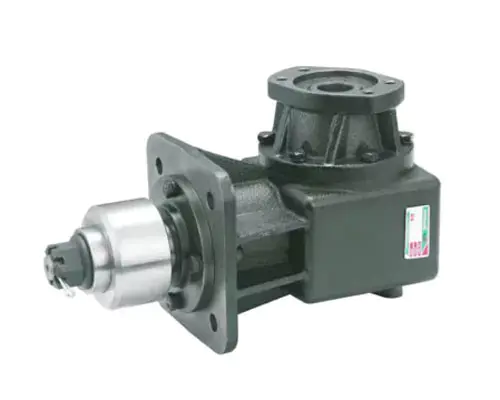
What are the common signs of wear in an EP70 rotary tiller gearbox? Imagine a procurement team receiving a field photo from a dealer: a thin oil film under the tiller, a faint grinding note at low speed, and a gearbox that runs hotter than it did last season. Those clues matter because an EP70 rotary tiller gearbox often works in dust, shock loads, and long field days, so wear rarely appears as one dramatic failure. It usually starts with seal seepage, bearing rumble, increased backlash, darkened oil, or a slight loss of rotor speed. For buyers, service managers, and importers, reading these signals early protects replacement budgets, avoids downtime during planting or soil preparation, and helps confirm whether a seal kit, bearing set, shaft, or complete unit is the smarter purchase. Raydafon Technology Group Co.,Limited supports procurement teams with practical inspection guidance and replacement options for rotary tiller gearboxes. A gearbox can look clean on the outside while wear is already changing oil color, vibration, and gear mesh sound. This guide translates field symptoms into inspection points, buying decisions, and measurable checks you can use before placing an order.
On this page
- Leaks, Seals, and External Clues
- Noise and Gear Mesh Changes
- Heat, Vibration, and Bearing Stress
- Oil Condition and Contamination
- Field Performance Drop
- Rapid Inspection Parameters
- Procurement FAQs
- Sourcing Support from Raydafon
- Research References
Leaks, Seals, and External Clues
Pain scene: A buyer opens a crate or inspects a used tiller and sees oil weeping around the output shaft, a dusty film on the housing, or a breather that keeps collecting dirt. The unit may still run, but a leaking EP70 rotary tiller gearbox is often the first visible sign that a lip seal, gasket, or shaft journal is wearing.
Solution: Clean the housing, run the gearbox for 30 minutes under normal load, and check every joint with a dry paper towel. Record leak location, oil level change, and shaft play. If the leak returns after a seal change, inspect the shaft journal and bearing seat before ordering another seal kit. Raydafon Technology Group Co.,Limited can help match seal kits, shafts, and housing components to the correct EP70 build.
| Wear signal | What to measure | Procurement action |
|---|---|---|
| Oil film at output shaft | Seal lip condition; oil trace after 30-minute run | Start with seal kit; inspect shaft journal |
| Dirty breather | Breather blockage; pressure build-up | Replace breather; check oil condition |
| Gasket seepage | Leak path around cover plates | Gasket set; verify flatness |
| Shaft groove | Visible wear step under seal lip | Replace shaft or use approved repair option |
Noise and Gear Mesh Changes
Pain scene: A dealer reports that the tiller “sounds different” after a season of heavy soil work. At first, the operator turns up the radio; later, the grinding note appears under load. Noise is one of the most common signs of wear in an EP70 rotary tiller gearbox because gear tooth contact, bearing preload, and shaft alignment all change as parts wear.
Solution: Compare noise cold and warm, at idle and under load. Listen near the input shaft, output shaft, and bearing seats. Check backlash at three points on the output shaft and inspect gear contact patterns if the unit is opened. A whine that rises with speed points to gear mesh; a rumble that continues after load removal points to bearings; a knock under shock load points to backlash or spline wear.
| Noise quality | Likely wear point | Check parameter | Buying decision |
|---|---|---|---|
| High-pitched whine | Gear tooth wear or poor contact | Backlash and contact pattern | Gear set or complete unit |
| Low rumble | Bearing race or roller wear | Vibration and end play | Bearing kit |
| Rattle at idle | Backlash or spline looseness | Backlash at three points | Shaft, gear, or spline repair |
| Grinding under load | Bearing seizure risk or tooth damage | Temperature rise and oil debris | Stop use; inspect before order |
Heat, Vibration, and Bearing Stress
Pain scene: The gearbox housing feels too hot to touch after a short run, or the operator notices more vibration through the tiller frame. Heat and vibration are quiet budget killers: they may not stop the machine today, but they shorten bearing life and can turn a small parts order into a complete gearbox replacement.
Solution: Use an infrared thermometer at the same housing point each time, and compare left and right sides or against a known good unit. Record vibration velocity if a meter is available. Check bearing end play, shaft runout, and mounting bolt torque. If temperature rise is clearly above the normal baseline, stop the unit and inspect lubrication, bearing preload, and shaft alignment.
| Check | Field parameter | Alert condition | Action |
|---|---|---|---|
| Housing temperature | Reading at bearing seat after 20 minutes | Clear rise above normal baseline | Check oil, bearing preload, alignment |
| Vibration | Velocity RMS at housing | Rising trend across inspections | Inspect bearings and gear mesh |
| Bearing end play | Dial indicator reading | Exceeds OEM service limit | Bearing kit or shaft review |
| Shaft runout | Indicator at output shaft | Visible bend or seal misalignment | Shaft replacement |
Oil Condition and Contamination
Pain scene: The drain plug comes out with a fuzzy gray paste, or the oil looks dark and thin after fewer hours than expected. In dusty field conditions, oil contamination is an early warning that seals, breathers, or bearings are not protecting the inside of the EP70 rotary tiller gearbox.
Solution: Drain a small oil sample into a clear cup and check color, smell, water droplets, and metal particles. Wipe the magnetic plug with a white cloth; fine gray film is normal, but bright flakes, chunks, or a heavy paste need investigation. Confirm oil grade, fill level, and breather condition before blaming the gearbox itself.
| Oil clue | What it suggests | Parameter to record | Procurement action |
|---|---|---|---|
| Milky oil | Water ingress | Water droplets; oil color | Seal and breather kit; flush |
| Bright metal flakes | Gear or bearing wear | Particle size and amount | Open inspection before parts order |
| Heavy gray paste | Bearing or gear break-in debris | Magnetic plug deposit | Check bearings and oil change interval |
| Dark, thin oil | Overheating or wrong oil | Oil grade and hours | Correct lubricant; inspect heat source |
Field Performance Drop
Pain scene: The tiller still turns, but the operator needs a lower gear, the soil finish is uneven, or the tractor shows higher load in the same field. A performance drop is easy to blame on soil conditions, yet it is often one of the common signs of wear in an EP70 rotary tiller gearbox when combined with noise, heat, or oil debris.
Solution: Compare rotor speed, tractor load, and soil finish against a known baseline. Check for blade damage and driveline slip first, then inspect gearbox input splines, output shaft play, and bearing drag. If the gearbox is the source, use the inspection table to decide between a seal and bearing refresh or a complete replacement unit.
| Symptom | Possible gearbox cause | Measurement | Buying action |
|---|---|---|---|
| Rotor speed drops under load | Bearing drag or gear wear | RPM at same engine speed | Bearing and gear inspection |
| Higher tractor load | Misalignment or bearing preload | Load comparison in same field | Check shaft alignment and bearings |
| Uneven soil finish | Output shaft play or backlash | Shaft play and backlash | Shaft or gear set review |
| Frequent seal failure | Shaft groove or heat | Seal life hours; temperature | Shaft and heat diagnosis |
Rapid Inspection Parameters
Pain scene: A procurement officer needs a fast answer before approving a parts order, but the service team sends only “it leaks and makes noise.” Without a shared checklist, buyers risk ordering the wrong kit or missing a worn shaft that will destroy a new seal.
Solution: Use a simple inspection sheet with photos, hours, oil condition, temperature, noise, backlash, and shaft play. Ask the supplier to confirm the EP70 build, shaft configuration, and mounting details. Raydafon Technology Group Co.,Limited can review your photos and measurements to help narrow the replacement scope before shipment.
| Inspection point | How to check | Record | Use for procurement |
|---|---|---|---|
| External leaks | Clean and run 30 minutes | Location and size of trace | Seal or gasket kit |
| Noise | Cold, warm, idle, loaded | Type and location | Bearing or gear set |
| Temperature | Infrared at bearing seat | Rise above baseline | Heat diagnosis |
| Backlash | Dial indicator at output | Three readings | Gear, shaft, or unit |
| Oil debris | Drain sample and magnetic plug | Color, water, flakes | Flush and parts scope |
Procurement FAQs
Q1: What are the common signs of wear in an EP70 rotary tiller gearbox?
The practical signs are oil seepage at seals, a changing gear mesh noise, housing heat above the normal baseline, higher vibration, dark or milky oil, metal flakes on the magnetic plug, increased backlash, output shaft play, and a drop in rotor performance under the same field conditions. One sign may be minor; two or three together usually justify an inspection before the next season.
Q2: Which EP70 rotary tiller gearbox wear signs should procurement teams prioritize before ordering a replacement?
Prioritize leaks that return after seal replacement, grinding under load, bright metal in the oil, and measurable shaft play. These clues often mean a seal kit alone will not solve the problem. Share photos, running hours, oil condition, and backlash readings with Raydafon Technology Group Co.,Limited so the replacement scope can be checked against the actual EP70 configuration.
Sourcing Support from Raydafon
Send your inspection photos, oil sample notes, running hours, and required replacement quantity to the Raydafon team. A clear symptom list helps buyers compare a seal kit, bearing set, shaft, gear set, or complete EP70 rotary tiller gearbox without guesswork.
Raydafon Technology Group Co.,Limited supplies rotary tiller gearbox components and replacement support for distributors, repair shops, and procurement teams. The company helps buyers confirm EP70 fitment, review wear symptoms, and choose practical replacement options through its website https://www.raydafongears.com and contact email [email protected].
Research References
Randall, R. B., & Antoni, J., 2011, Rolling element bearing diagnostics—A tutorial, Mechanical Systems and Signal Processing, 25(2).
Antoni, J., 2007, Fast computation of the kurtogram for the detection of transient faults, Mechanical Systems and Signal Processing, 21(1).
Barszcz, T., & Randall, R. B., 2009, Application of spectral kurtosis for detection of a tooth crack in the planetary gear of a wind turbine, Mechanical Systems and Signal Processing, 23(4).
Lei, Y., Lin, J., He, Z., & Zuo, M. J., 2013, A review on empirical mode decomposition in fault diagnosis of rotating machinery, Mechanical Systems and Signal Processing, 35(1-2).
Jardine, A. K. S., Lin, D., & Banjevic, D., 2006, A review on machinery diagnostics and prognostics implementing condition-based maintenance, Mechanical Systems and Signal Processing, 20(7).
McFadden, P. D., 1987, Examination of a technique for the early detection of failure in gears by signal processing of the time domain average of the meshing vibration, Mechanical Systems and Signal Processing, 1(2).
Wang, W. J., & McFadden, P. D., 1996, Application of orthogonal wavelets to early gear damage detection, Mechanical Systems and Signal Processing, 10(5).
Peng, Z. K., & Chu, F. L., 2004, Application of the wavelet transform in machine condition monitoring and fault diagnostics: a review with bibliography, Mechanical Systems and Signal Processing, 18(2).
Tandon, N., & Choudhury, A., 1999, A review of vibration and acoustic measurement methods for the detection of defects in rolling element bearings, Tribology International, 32(8).
Sadeghi, F., 2000, A review of rolling contact fatigue, Journal of Tribology, 122(1).
Related News
- Is the Rotary Tiller Gearbox EP17 Compatible With My Tractor or Tiller?
- How do I troubleshoot a Rotary Tiller Gearbox EP18 that is overheating?
- What are the symptoms of low oil in a rotary tiller gearbox EP80?
- What is the gear ratio of the EP16 post hole digger gearbox?
- Can I use the EP96 gearbox on a skid steer post hole digger?
- What is the gear ratio of the EP12 gearbox?
Leave me a message
New Products
News Recommendations